

Business Casual for Men: The No-Guesswork Guide
Business casual for men is the most common dress code in the working world and somehow still the most confusing. Every office defines it slightly differently, nobody writes the rules down, and the penalty for guessing wrong is a full day of feeling out of place. So here's the clear version: the formula, the pieces, the mistakes, and the finishing details that make business casual look sharp instead of shrugged-on.
The one-sentence definition
Business casual is a dress shirt or refined knit, tailored non-denim trousers, and leather shoes — no tie required, no suit required. Everything else is adjusting that formula up or down for your specific office.
If your office is on the dressier end, add a blazer. If it's on the casual end, dark jeans and clean leather sneakers might pass. Watch what the well-regarded people two levels above you wear — that's your real dress code, not the HR handbook.
The building blocks
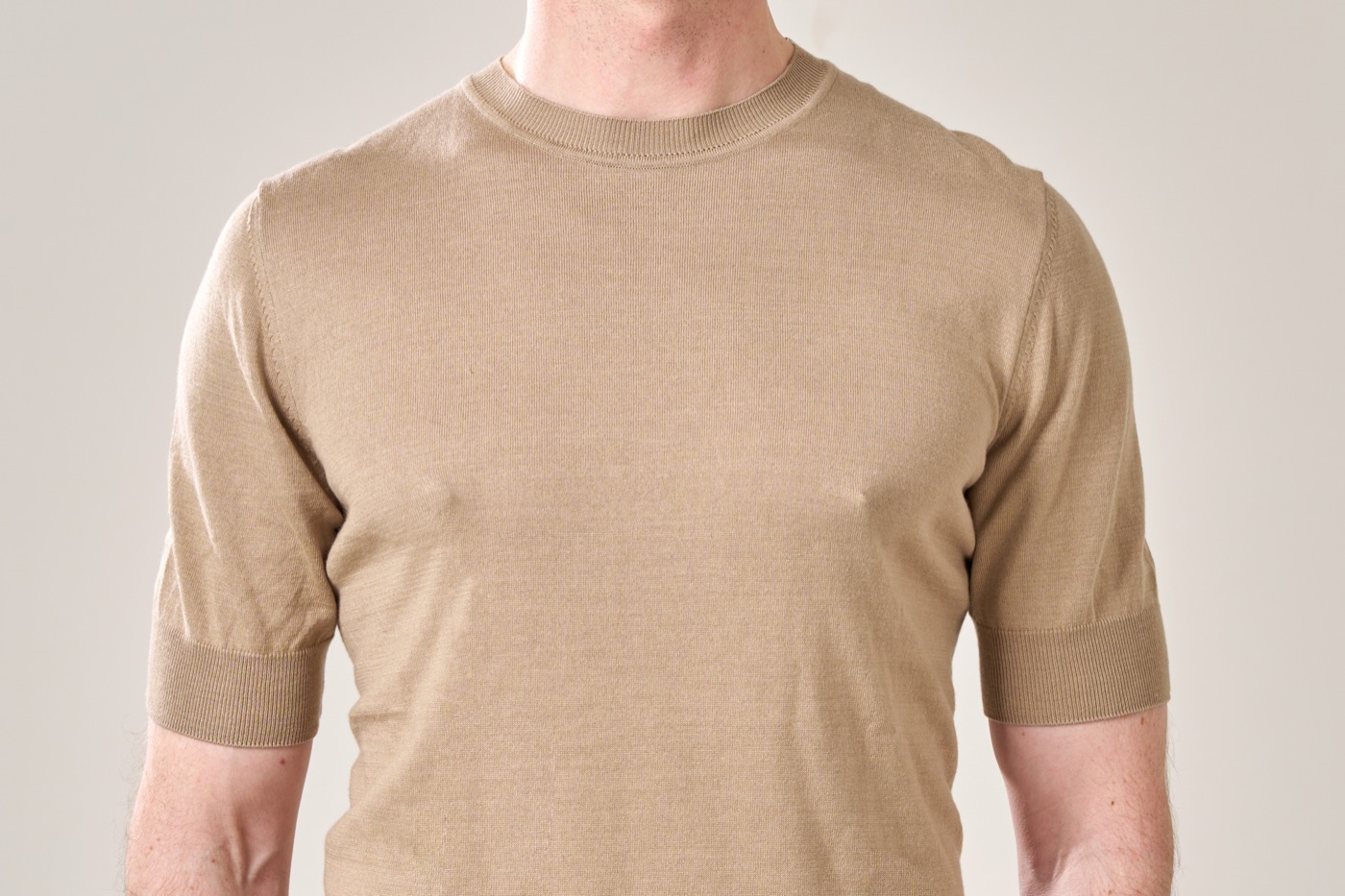
Shirts (the core of the whole look): - Oxford button-downs in white, light blue, and subtle patterns — the backbone - Fine-knit polos (merino or heavy pique, not the baggy golf kind) - Lightweight sweaters or knit blazers in cooler months
Trousers: - Chinos in navy, stone, olive, and grey - Wool or wool-blend dress trousers for dressier days - Dark, untorn jeans only if your office has explicitly blessed them
Shoes: - Leather loafers, derbies, or chukka boots in brown or black - Minimal leather sneakers (white, clean, no athletic branding) at casual offices
Layers: - An unstructured navy blazer is the single highest-leverage item — it upgrades every outfit above - Overshirts and merino quarter-zips for casual-leaning offices
Five shirts, three trousers, two pairs of shoes, one blazer: a full business casual rotation that never repeats an exact outfit in two weeks.
What business casual is not
- Shorts, athletic wear, or hoodies
- T-shirts with graphics (plain, heavyweight tees are borderline — know your office)
- Ripped or faded jeans
- Running shoes
- Anything wrinkled — the fastest way to make good pieces look bad
The finishing details that separate sharp from sloppy
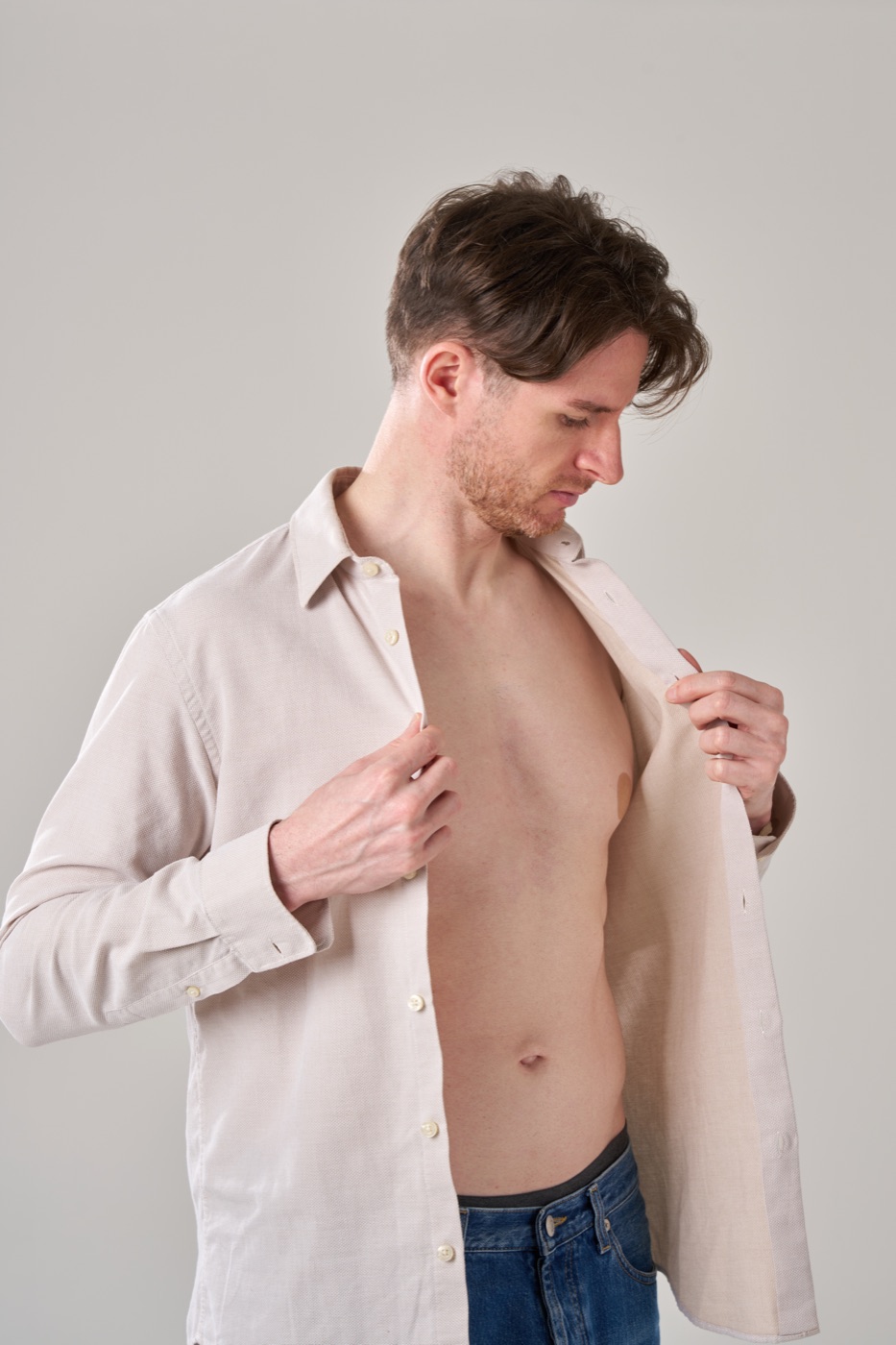
Business casual has a dirty secret: because there's no suit jacket doing the heavy lifting, your shirt is the outfit — and the shirts that look best (crisp oxfords, fine merino polos, lightweight summer button-ups) are thin. Under office lighting, thin fabric shows what's under it, and the traditional fix — an undershirt — adds heat, shows at the collar, and defeats the point of a nice knit.
The cleaner fix is a skin-tone nipple patch: a thin adhesive patch that sits flat under the shirt so nothing shows through, all day, through a commute and back-to-back meetings. It's sometimes searched as a nipple cover, but purpose-made patches for men are thinner, sweat-resistant, and invisible even under a white oxford. It's the difference between a shirt that looks pressed and intentional and one that makes you keep your arms crossed in the standup.
The rest of the checklist:
- Iron or steam everything. Wrinkled business casual reads as pajamas with a collar.
- Fit: Shirts fitted through the torso, trousers tapered with minimal break.
- Belt matches shoes. Brown with brown, black with black. Small thing, always noticed.
- Grooming: Regular haircuts and tidy facial hair carry half the look.
Like a patch under a thin dress shirt, none of these details get compliments individually — they just add up to "that guy always looks put-together."
Three outfits you can copy tomorrow
- The default: Light blue oxford, navy chinos, brown loafers, brown belt. Works in any business casual office in the world.
- The dressier day: White dress shirt, grey wool trousers, black derbies, unstructured navy blazer. Client meeting, big presentation, or any day you want to look promotable.
- The casual-office version: Merino polo in navy or charcoal, stone chinos, clean white leather sneakers. Sharp without a single "formal" piece in it.
Seasonal adjustments
- Summer: Lightweight cottons and linens, lighter colors, loafers — and skip the undershirt; that's exactly when the patch replaces it.
- Winter: Flannel trousers, merino layers, boots, a wool topcoat.
- Friday: Whatever your office's casual Friday means, keep the shoes and the fit — those are what preserve the "business" half.
FAQ
Are jeans business casual? Depends entirely on your office. If they're allowed: dark, well-fitting, no rips, dressed up with a proper shirt and leather shoes. If you've never seen a senior person in jeans, don't be first.
Do I need an undershirt with business casual shirts? Not necessarily — undershirts add warmth and often show at the collar of an open-neck oxford or polo. A thin nipple patch keeps a light shirt looking clean without the extra layer.
Is a polo shirt business casual? Yes, if it's a structured, fitted polo in merino or heavy pique — not a loose golf polo. Pair it with tailored trousers and leather shoes to keep it on the business side of casual.