

How to Remove Nipple Patches Painlessly
Warm the patch first, then peel it off slowly at a low angle — parallel to your skin, not straight up — pulling the skin taut behind it with your other hand. That's it. Ninety percent of removal pain comes from ripping a patch off dry at a ninety-degree angle like you're starting a lawnmower, and the fix for that is about eight seconds of patience.
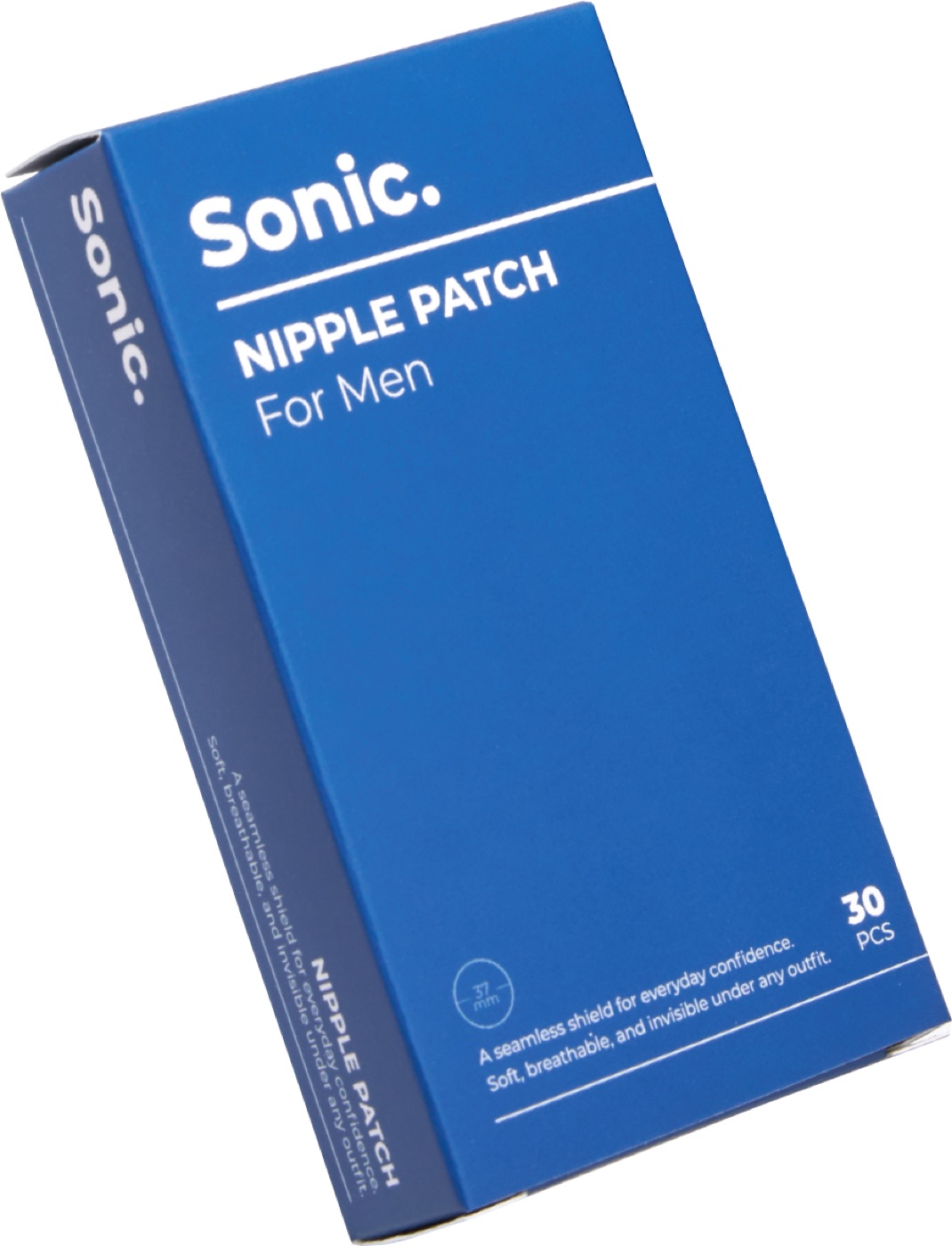
If you've done that once and flinched, you're not alone. Most guys learn removal the hard way, decide patches "hurt," and go back to a wardrobe of black crewnecks and thick oxford cloth. That's a bad trade for a problem this easy to solve.
The 20-second method
- Warm it. A shower is ideal — the steam and warm water soften skin-safe adhesive fast. No shower? Hold a warm, damp washcloth over the patch for 20–30 seconds, or just rub your palm over it for a few seconds. Warmth is doing the work here, not force.
- Anchor the skin. Put two fingers on the skin just outside the patch edge and press down. This is the step everyone skips, and it's the one that matters most — you're removing the patch, not moving your skin.
- Peel low and flat. Lift one edge and pull it back across itself, almost flat against your chest. A low angle shears the adhesive off; a high angle lifts skin with it.
- Go slow. Three to five seconds, steady. Fast pulls hurt more, not less. The "just rip it off" instinct is inherited from childhood band-aids and it was wrong then too.
- Chest hair? Peel in the direction the hair grows, not against it. Same rule barbers use.
If it's still gripping, don't fight it — a little oil (baby oil, body oil, even conditioner in the shower) along the edge will release it in seconds. Rinse after, since oil residue is the one thing that will sabotage tomorrow's patch.
Why removal hurts in the first place
Three usual suspects:
Wrong product. Band-aids, medical tape, and duct-tape-tier fashion tape use aggressive adhesive designed to survive a wound dressing, not to sit on chest skin all day and come off politely. They hurt because they're built to hurt coming off. If your "nipple patch" is actually a plaster from the first-aid drawer, the removal method isn't your problem.
Dry skin. Dry, flaky skin means adhesive bonds to loose surface cells and takes them with it. Moisturizing your chest in the evening — not right before you apply — fixes this within a few days.
Technique. Straight up, fast, no anchor. See above.
The honest range of alternatives
Since you're here, you've probably already tried the workarounds. Quick verdict on each:
Thicker fabric. Works perfectly. Also means you own eleven black t-shirts and quietly refuse every white-shirt occasion. It's not a solution, it's a shrinking wardrobe.
Undershirt layering. Effective under a dress shirt, useless under a tee, and miserable in July. It also adds bulk exactly where a slim knit is supposed to sit clean.
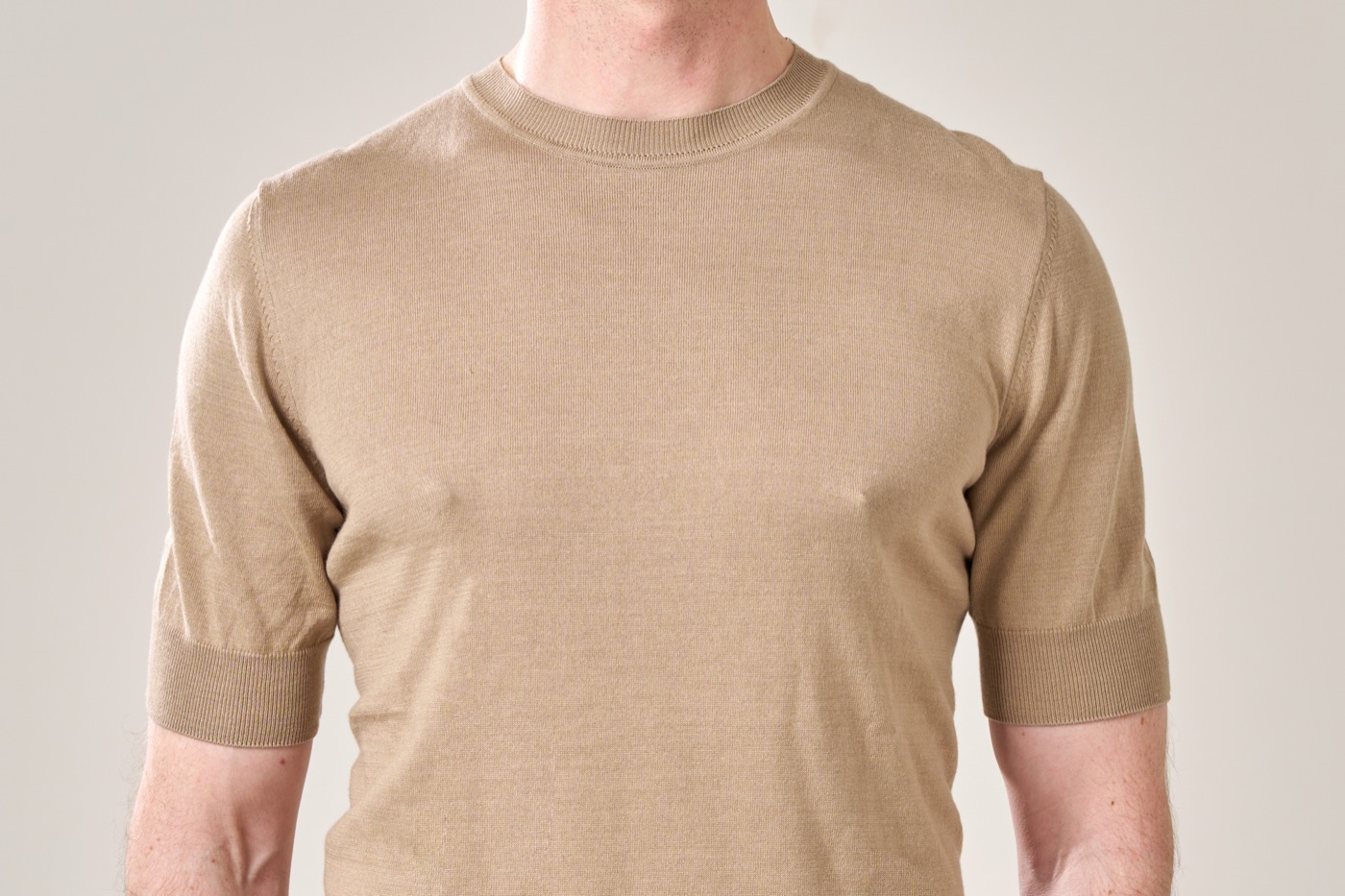
Sizing up. Drape instead of cling helps a little, hurts your fit a lot. Baggy linen reads as borrowed, not relaxed.
Tape or band-aids. They flatten things and they show as squares under thin cotton, which defeats the entire purpose, and yes — they hurt on removal.
Which is why the thing that actually solves it is a purpose-built nipple patch designed for men: thin enough to vanish under white cotton, skin-toned, made to hold through a full day and a sweaty commute, and formulated to release cleanly instead of taking skin with it. Removal pain isn't a fact of life; it's a symptom of using the wrong product.
Getting your wardrobe back
Here's the actual point. The white tee you bought and never wore. The cashmere crew that's a bit too soft. Cream linen in summer, a pale pink oxford, that pistachio polo you liked in the shop and have worn exactly once. Anything thin, light, or expensive tends to be the stuff you avoid — and avoiding it is a much bigger cost than most guys admit to themselves.
A nipple patch you can wear under anything removes the mental math. You stop scanning your reflection in shop windows, stop crossing your arms in meetings, and stop dressing around a problem. And at the end of the day it comes off in the shower without a wince, which is how it should have worked all along.
Small things that make removal easier
- Take them off in the shower. Best habit there is. Warm water does step one for free.
- Don't reapply to the same exact spot every single day if your skin runs sensitive. Shift a few millimetres.
- Clean skin on, clean skin off. Lotion or sunscreen under a patch weakens the bond, which ironically makes it peel at the edges during the day and grip unevenly at night.
- Never pick at a lifted edge all day. Fidgeting stresses the adhesive and the skin under it.
FAQ
Does removing a nipple patch hurt? It shouldn't. A well-made skin-safe patch peeled slowly at a low angle, ideally in a warm shower, comes off with no more sensation than a sticker off a jacket. Sharp pain usually means tape or a band-aid rather than a proper patch — or a fast, straight-up yank.
Can I use oil or a remover to take one off? Yes. Any body oil, baby oil, or hair conditioner rubbed along the edge will break the adhesive down in seconds — useful if you've got sensitive or irritated skin. Rinse and dry properly afterward so the next patch has clean skin to grip.
What if it hurts because of chest hair? Warm it, then peel in the direction the hair grows rather than against it, keeping the skin pressed flat. That handles most of it. Trimming the immediate area also makes both application and removal noticeably easier — you don't need to shave your chest.