

What to Look For in a Men's Nipple Patch
If you're shopping for a men's nipple patch, you've probably already had the moment: a white tee that looked great in the mirror until the light hit it, or a soft dress shirt you loved that you quietly retired to the back of the closet. A good nipple patch gives that whole side of your wardrobe back. A bad one is a thick beige circle you can see from across the room. They are not the same product, and the difference is entirely in the details.
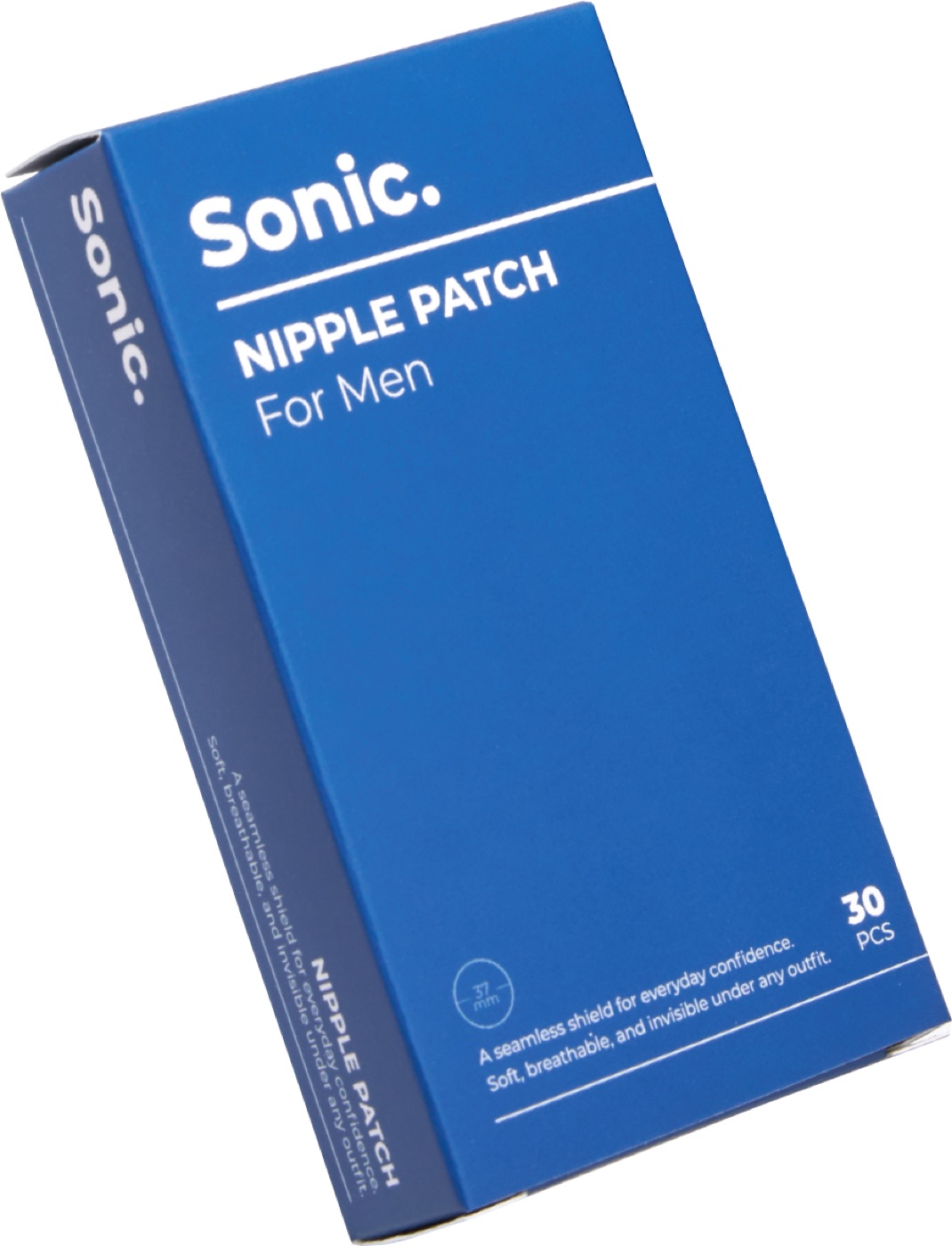
Here's exactly what to look for — and why each thing matters for how you actually dress.
1. Thinness (this is the whole game)
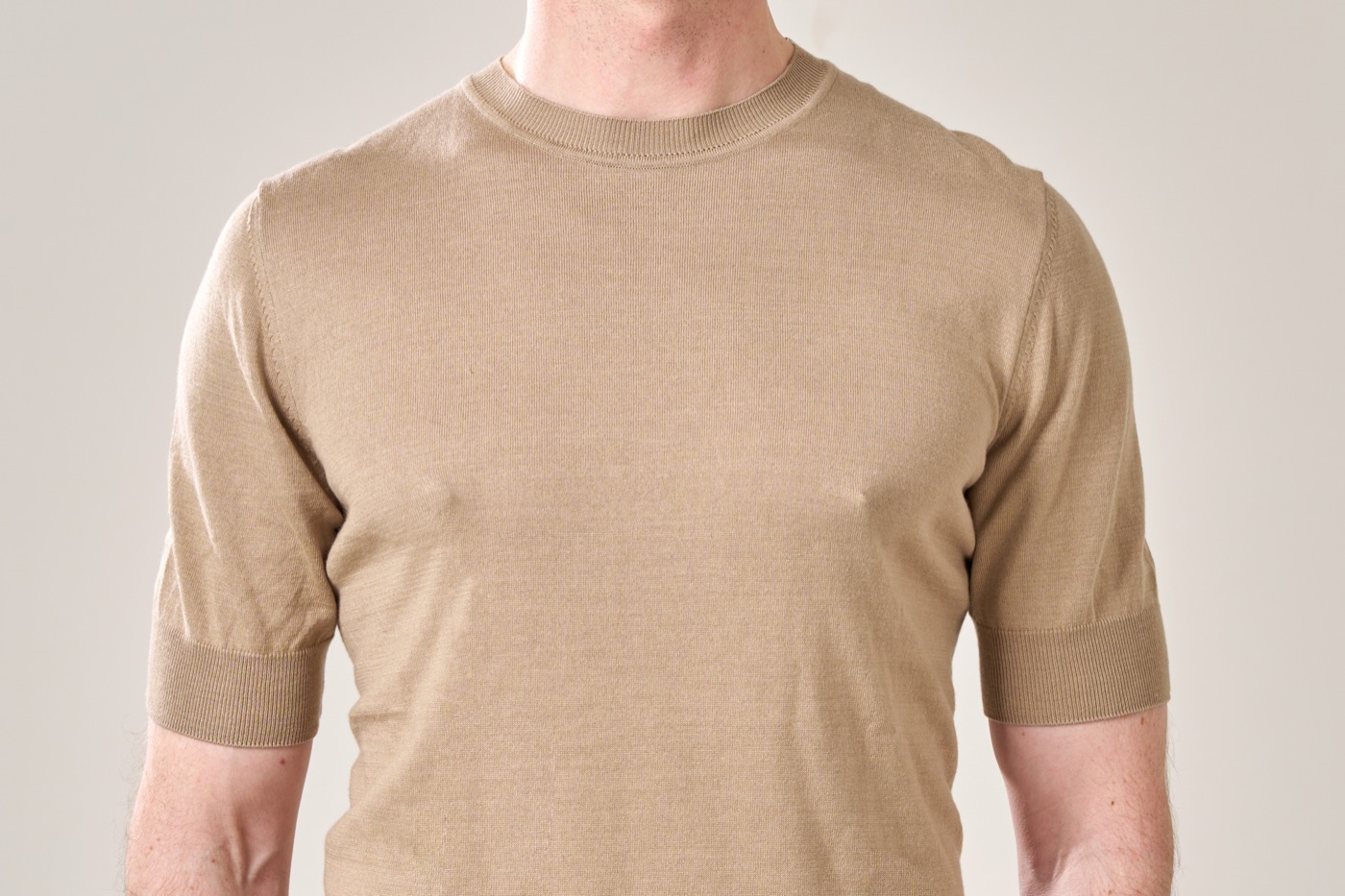
The entire point is that nothing shows. So the first question isn't "does it stick" — it's "can I see the patch itself?" A thick patch just trades one visible bump for another. Under a thin white tee or a lightweight cotton dress shirt, a bulky cover reads as a raised disc, and now you're self-conscious about a different thing.
What you want is a patch thin enough that the edges melt into your skin — no ridge, no shadow, no circle outline when a shirt pulls tight across your chest. The Sonic Nipple Patch is built to this standard specifically because the hero use case is premium, thin fabric: white tees, white dress shirts, fine-gauge knitwear, cashmere, polos, linen. If a patch only works under a thick oxford, it doesn't solve the actual problem.
Quick test when you get any patch: put it on, throw on your thinnest white shirt, and stand near a window. If you can find it, it's too thick.
2. Adhesive that holds all day — and comes off clean
There are two failure modes here, and cheap patches usually hit one of them.
The first is a weak adhesive that lifts at the edges by mid-afternoon, so you spend the day pressing it down through your shirt like you have a nervous tic. The second is an aggressive adhesive that holds fine but takes a layer of skin with it when you peel it off at night.
A good men's nipple patch threads the needle: a skin-safe adhesive that stays flat through a full day — sweat, movement, a warm room, a long dinner — and then peels off cleanly without the ouch. This matters more for men than most product pages admit, because chest hair is in the mix. Look for something designed with that in mind rather than a repurposed unisex sticker.
3. A skin tone that actually disappears
"Skin tone" on the package rarely means your skin tone. Many patches default to a single pinkish beige that shows up as a pale spot on some men and a dark one on others — which, under a thin light-colored shirt, defeats the purpose.
The trick is that a patch under fabric doesn't need to perfectly match your skin; it needs to be neutral enough that it reads as "nothing" rather than "a spot." Thinness helps here too — the thinner the patch, the more your own skin tone shows through and does the matching for you. When you're comparing options, weight this heavily if you wear a lot of white and light colors, because that's where a mismatched patch is most obvious.
4. It stays a patch, not a project
The best sign of a good nipple patch is that you stop thinking about it. You put it on in the morning the same way you put on deodorant, and you forget it exists until it comes off. No adjusting, no checking your reflection at every window, no planning your outfit around whether it'll show.
That "forget it exists" quality is the real product. You're not buying adhesive; you're buying the freedom to grab the white linen shirt without a two-second calculation first. When you look at the men's nipple patches from Sonic, that's the bar — thin enough to vanish, sticky enough to trust, and boring in the best possible way.
Why this matters more than it sounds
Here's the part nobody says out loud. Most guys who end up searching for a nipple patch have spent years quietly editing their wardrobe around this. Black shirts because they're safe. Thick fabrics because they hide things. Layers in summer. An undershirt under everything. You stop buying the white tee, the soft knit, the bright polo — not because you don't like them, but because you don't want to think about your chest all day.
A good patch doesn't just fix one shirt. It reopens the whole closet. Suddenly the light colors, the thin premium fabrics, the fitted cuts are all back on the table, and you dress like the version of yourself who was never worried about it in the first place. That's the actual return on a $12 sticker, and it's why the small stuff — thinness, adhesive, tone — is worth being picky about.
Cheap patches get you a compromise. The right one gets you your wardrobe back.
FAQ
What makes a men's nipple patch different from a women's nipple cover? Fit and design intent. Men's patches are sized and shaped for a flatter chest, and the better ones account for chest hair in the adhesive so they hold well and peel off cleanly. A patch built for men is also tuned to disappear under menswear fabrics like oxford cloth, piqué, and fine knits.
Will a nipple patch show under a thin white shirt? Not if it's thin enough. Thickness — not color — is what usually gives a patch away, because a bulky cover creates a visible ridge. A properly thin, skin-neutral patch flattens the area and vanishes even under lightweight white cotton. Test it near a window before you trust it for the day.
How long does a good one stay on? A quality men's nipple patch is made to hold through a full day — work, sweat, movement, and a night out — using a skin-safe adhesive that stays flat the whole time and then peels off without irritation. If it's lifting by lunch, it's not the right patch.