

Nipple Patches for a Business Shirt: What to Look For
A business shirt is one of the least forgiving garments in menswear. Thin poplin, a bit of stretch, tucked in tight, and worn under office lighting that seems engineered to find every outline. If you've been reaching for the navy shirt instead of the white one, or keeping your jacket on in a meeting room at 26°C, nipple patches for business shirt wear are the small fix that gets the rest of your wardrobe back.
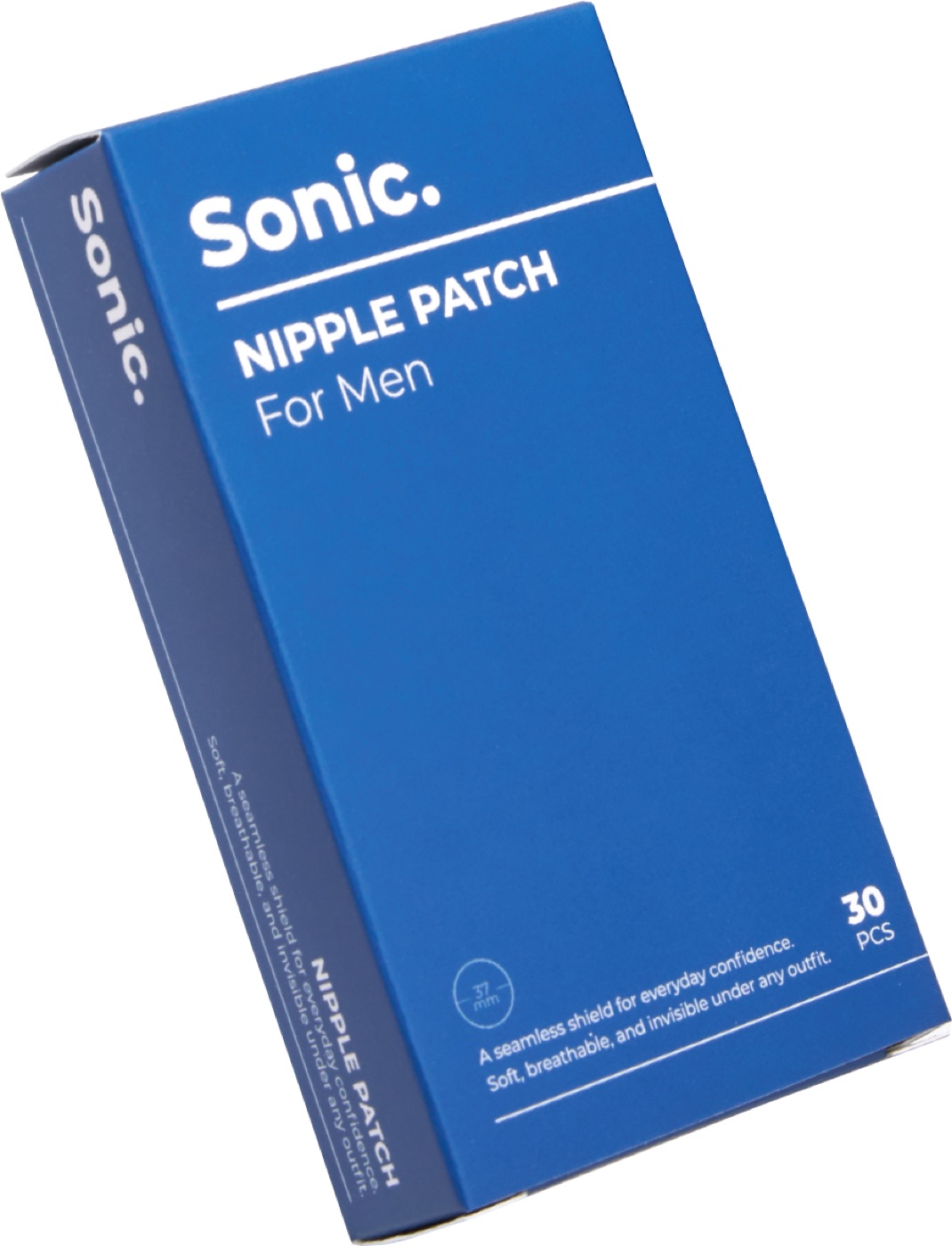
But not all patches are equal, and under a dress shirt the differences are visible. Here's what actually separates a good one from one you'll notice in the bathroom mirror at 11am.
1. Thickness: thin enough to vanish, firm enough to flatten
This is the whole game. A patch that's too thick trades one outline for another — you get a soft disc shape under poplin instead of a point, which is arguably worse because it's unexplainable. A patch that's too flimsy just conforms to whatever's underneath and does nothing.
What you want is a patch thin enough that it reads as skin under a single layer of thin cotton, with enough structure to flatten the area rather than drape over it. If you can feel a raised rim when you run a finger over your shirt, it's too thick for dress shirts. That's the standard the Sonic Nipple Patch is built to — invisible under white cotton, not just "less obvious."
2. Edges: tapered, not stamped
Pick up a patch and look at the rim. A cheap patch is die-cut with a blunt vertical edge, which under thin fabric catches light and casts a faint circular shadow. A good patch tapers — the material thins out toward the edge so there's no hard transition between patch and skin.
Tapered edges also stay down. A blunt edge is a lip, and a lip is something your shirt catches on when you reach across a desk. By hour six, it's lifted.
3. Adhesive: an office day, not a marathon
Office wear has a specific adhesive requirement, and it's not the one most product pages advertise. You don't need something that survives a half marathon. You need something that survives ten hours of mild ambient warmth, a shirt tucked and untucked twice, and a commute — then comes off without taking skin with it.
Medical-grade skin-safe adhesive is the standard to look for. Avoid anything that describes itself as "extra strong" or "waterproof grip" without mentioning removal — that's usually code for a tape that will hurt.
4. Skin tone match: better than close
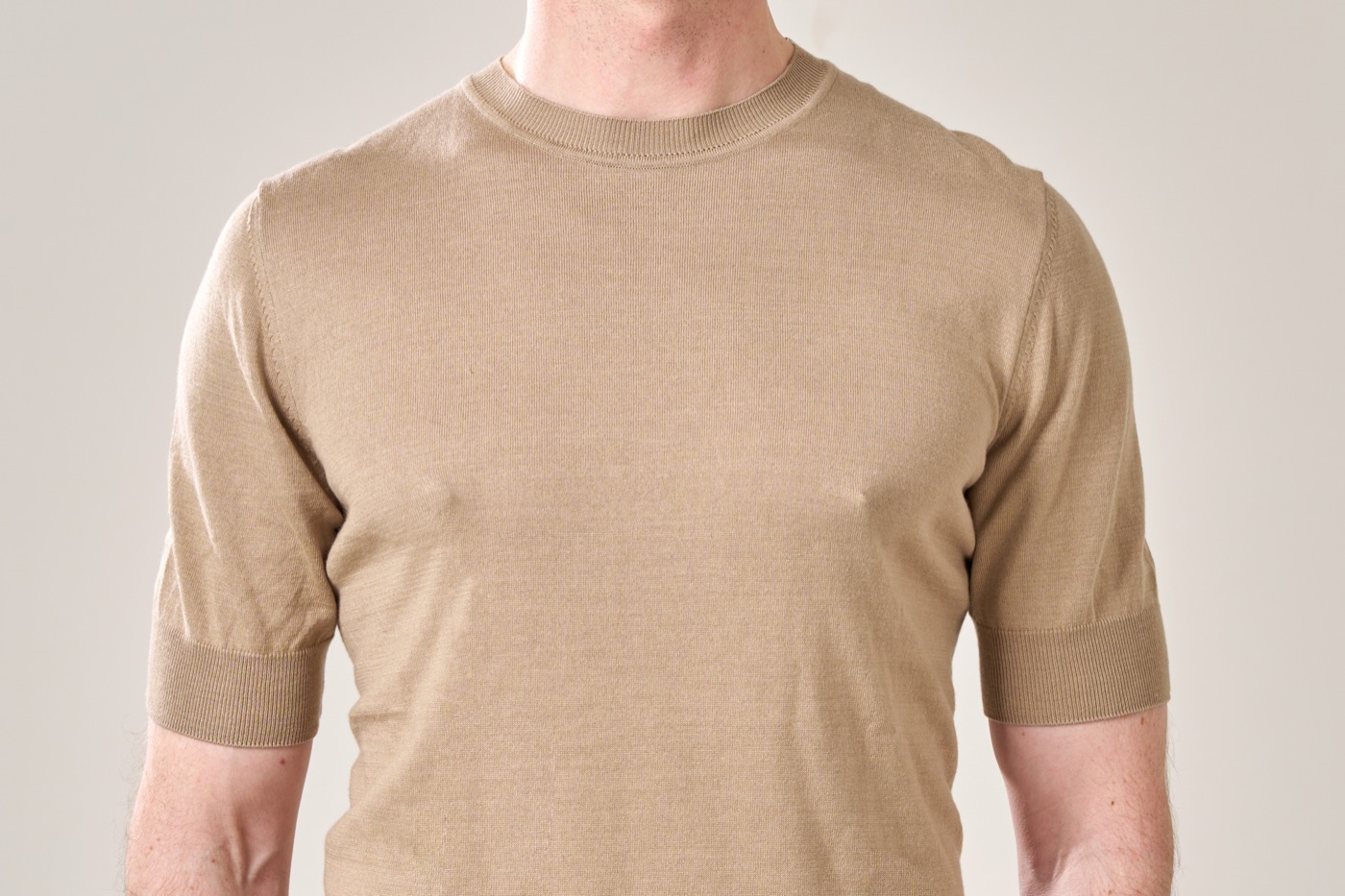
Under a white or pale blue shirt, a patch that's a few shades off your skin doesn't read as skin — it reads as a pale circle. This is the most common reason men try one patch, decide "they're visible," and give up on the category.
Hold a patch against your chest in daylight, not bathroom light. If you can see where it starts, so can the person across the table. Options that come in more than one tone are worth the extra thirty seconds of choosing.
5. Breathability under a tucked shirt
A tucked business shirt traps warmth against your chest all day. A non-breathable patch under that becomes a small warm spot you're aware of — and awareness is the opposite of the point. Look for breathable backing material rather than a solid plastic film.
Why this matters more than it sounds
Here's the part nobody puts on a product page: most men who deal with this have quietly rebuilt their wardrobe around it. Navy, charcoal, black. Thick oxford cloth instead of poplin. A jacket that never comes off. Nothing white, nothing linen, definitely nothing pale and thin in summer.
That's not a style choice — that's a workaround, and it's been running in the background for years. The reason to get the details right on a patch is that a good one gives you the whole shirt drawer back. White poplin. Pale pink. A fine-gauge merino polo on a Friday. A linen shirt in July with the jacket left at home.
A well-made nipple patch for men is a two-second step in the morning that removes an entire category of self-consciousness from your day. That's a good trade.
Quick buyer's checklist
- Thin and flat — no raised rim you can feel through the shirt
- Tapered edges — no shadow line, no lifting by lunch
- Skin-safe adhesive — holds a full workday, peels off cleanly
- Tone-matched — checked in daylight, not under a bathroom bulb
- Breathable — you shouldn't be able to feel it by 3pm
If a product doesn't tell you about thickness, edge, or removal, assume it's a repackaged fashion nipple cover made for something else entirely.
FAQ
Will nipple patches show through a thin white business shirt? A well-made one won't. The two things that cause show-through are excess thickness (creates a disc outline) and a poor tone match (creates a pale circle). Get both right and there's nothing to see — that's the entire design brief for a dress-shirt patch.
Do they stay on all day at the office? Yes. A skin-safe adhesive patch is built for a full workday including a commute and a tucked-and- untucked shirt. Apply to clean, dry skin — moisturiser or sunscreen on the chest is the usual culprit when one lifts early.
Are nipple patches noticeable if someone hugs me or I change at the gym? They're thin and skin-toned, so through a shirt there's nothing to feel. Off the shirt, they read as about as remarkable as a small plaster — and most men find that after a week they stop thinking about it entirely.