

Nipple Patches That Stay On All Day (What to Look For)
Everyone who buys their first pack has the same fear: you put on the white tee, you feel great for about three hours, then you sense one edge lifting under your shirt and spend the rest of the day doing that discreet forearm-press against your chest. Nipple patches that stay on are the entire point — a patch that quits at 2pm is worse than nothing, because now you're managing it instead of forgetting about it.
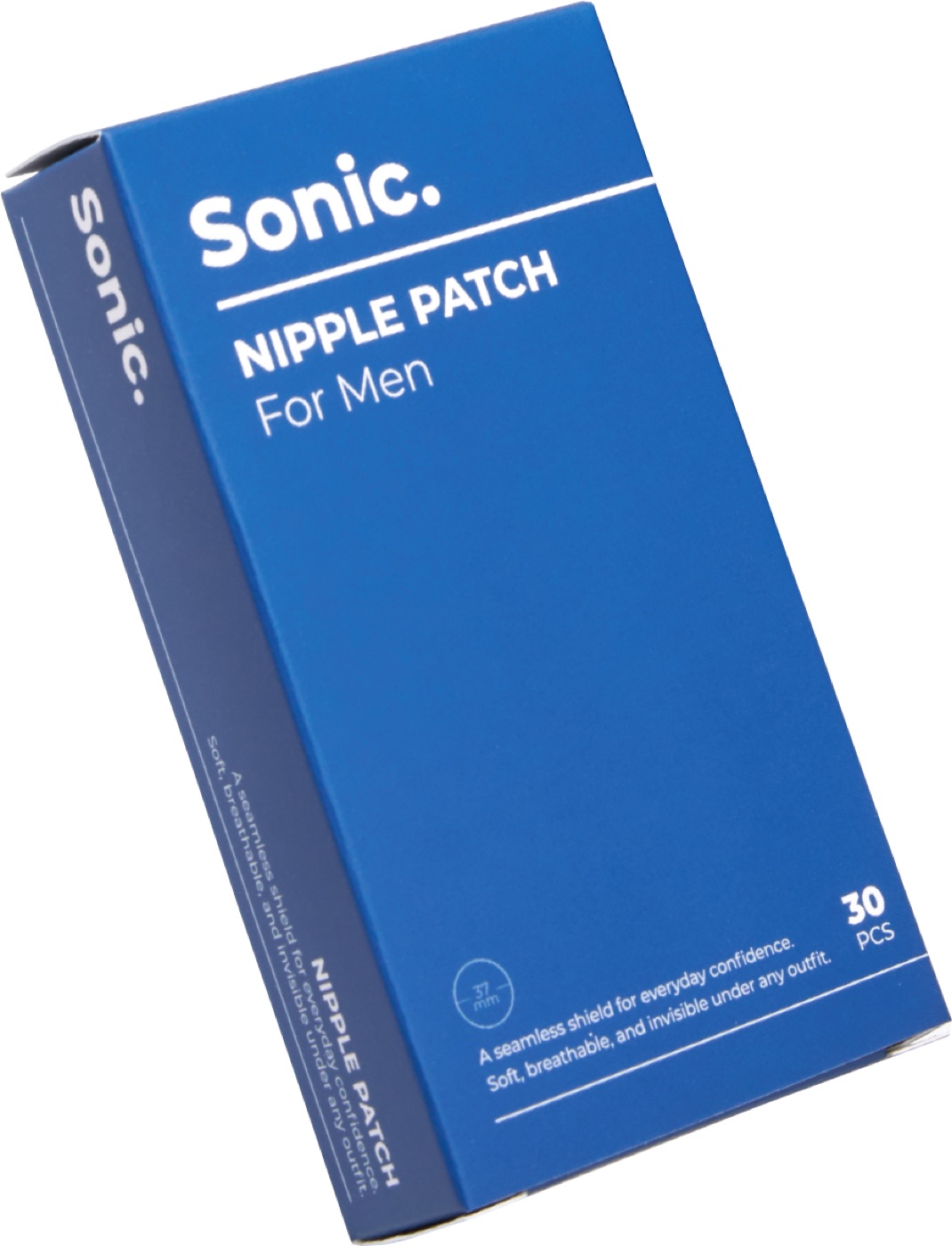
The good news is that "stays on" isn't luck. It comes down to four or five things you can actually check before you buy. Here's what separates the ones that hold for a full day from the ones that curl up in your shirt.
1. The adhesive matters more than the patch
Most cheap patches use a general-purpose acrylic glue borrowed from craft-supply tape. It grabs hard in the first minute — which feels reassuring — then gives up the moment your skin warms up or produces any moisture at all. That's why so many people report a patch that "felt amazing" and was gone by lunch.
What you want is a medical-grade skin adhesive: the kind used on wound dressings, designed to bond to living skin, which is warm, slightly oily and constantly moving. It builds grip over the first few minutes rather than losing it, and it releases cleanly when you actually want it off. Our men's nipple patches use that class of adhesive for exactly this reason — the failure mode we optimized against was the 2pm peel, not the first-impression stick.
2. Look at the edge, not the middle
Patches don't fail in the center. They fail at the rim, where fabric drags across the boundary a few thousand times a day.
Two things predict a good edge:
- Tapered, not cut flat. A patch with a feathered edge lets the shirt slide over it. A blunt die-cut edge is a tiny ledge for your shirt to catch on, and every catch peels it back a fraction of a millimeter.
- Round, no corners. Corners are peel-starters. This is the same reason band-aids lift at their square ends first — and the same reason band-aids are a bad improvised substitute, on top of showing up as an obvious rectangle under a light shirt.
Run a finger from your skin onto the patch. If you feel a step up, your shirt will feel it too.
3. Thin enough to disappear, not so thin it wrinkles
There's a trade-off nobody mentions. Ultra-thin patches vanish under fabric beautifully but crease when you move, and a creased patch is both visible and half-detached. Thick patches stay flat but print a visible disc through a white oxford — which defeats the whole purpose.
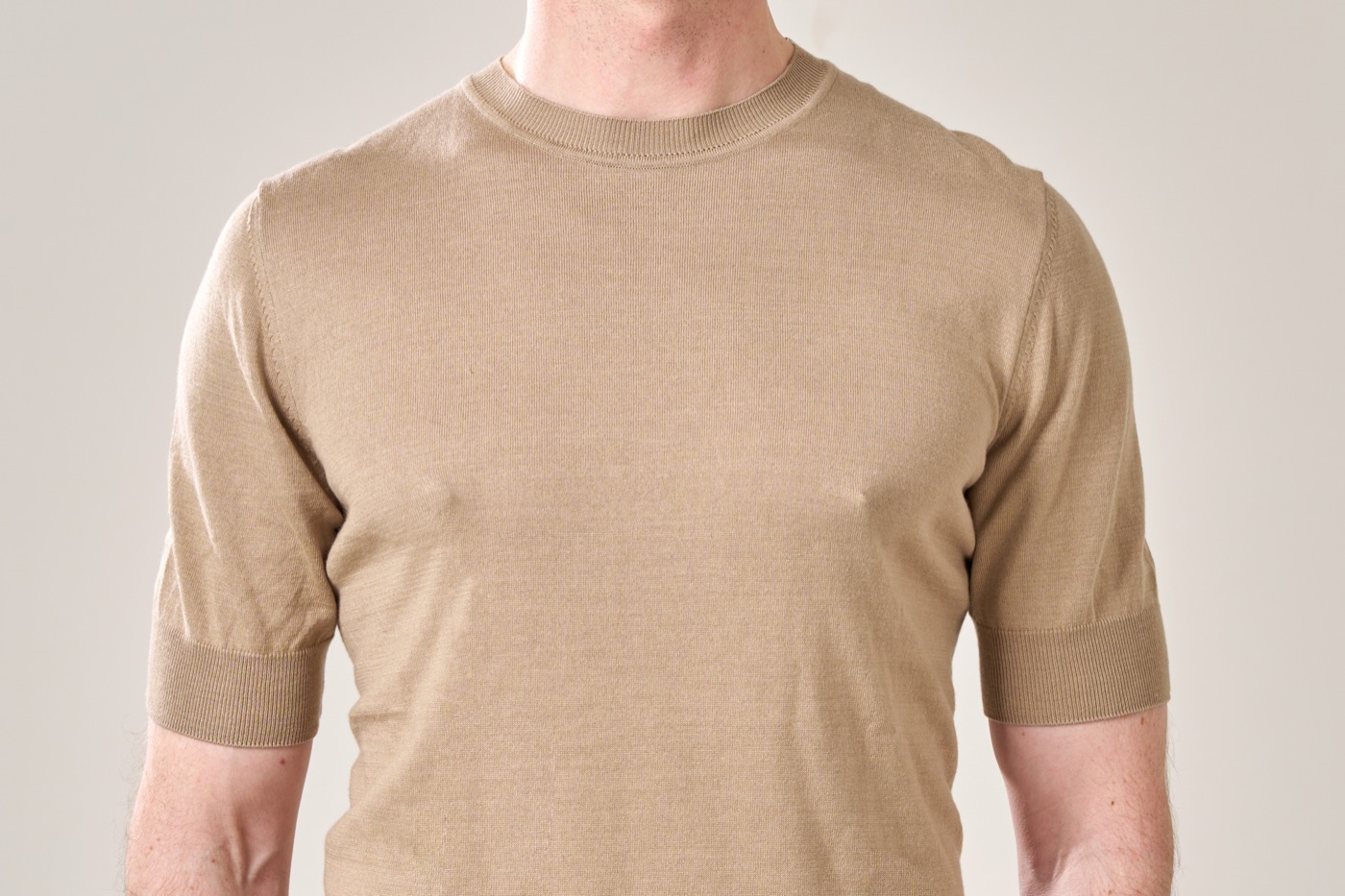
The sweet spot is a patch thin enough to flex with your chest but with enough body to lie flat when you raise your arms. A useful test at home: put one on, raise both arms overhead, and look in the mirror in a white tee. If you can see a ring or a fold, that patch is going to announce itself in a meeting room.
4. Skin tone, honestly assessed
A patch that stays on but reads as a pale circle under a white shirt has only solved half your problem. Under thin white cotton, light passes through fabric and patch, so an off-tone patch shows as a bright spot. Match the tone to your skin rather than to the shirt, and check it in daylight, not bathroom lighting.
5. It should survive your actual day
Not a marathon — your day. A patch worth buying holds through a commute in August, a warm office, a few hours of a shirt tucked and untucked, and a dinner. If a brand only talks about workouts, that tells you what they tested. The harder test is eight hours of ordinary body heat under a fitted knit.
Why any of this matters (the wardrobe part)
Here's the part that actually changes things. Most guys reading this have quietly edited their own closet down over years: black and navy only, thicker cotton only, no linen, definitely no white tee, a jacket kept on in a hot room. It happens gradually enough that you stop noticing you did it.
A patch that genuinely stays on gives that range back. White tee in July. The pale grey knit that shows everything. Cashmere with nothing under it. A linen shirt on holiday. A pastel polo, a light oxford untucked, a cream sweater — the soft, thin, expensive fabrics that look best on everyone and that you've been avoiding for reasons you'd rather not explain.
That's why "stays on" is the whole spec. Not because peeling is uncomfortable, but because a patch you have to check is a patch you're still thinking about — and the entire promise is putting on a white shirt at 7am and not thinking about your chest again until you take it off. The Sonic Nipple Patch was built around that one sentence.
Quick checklist before you buy
- Medical-grade skin adhesive, not craft-tape glue
- Tapered edge, round shape, no corners
- Thin enough to be invisible under white, stiff enough not to crease
- Skin-tone matched to you, checked in daylight
- Tested for a full workday, not a 5K
FAQ
How long should a good nipple patch stay on? A full day — roughly 8 to 12 hours, including a commute, a warm office and dinner. If yours is lifting after three or four hours, it's the adhesive, not you.
Why does my patch peel at the edges but stay stuck in the middle? Almost always a blunt or square edge catching on your shirt, or skin that wasn't fully dry when you applied it. Clean skin, no moisturizer or body oil in that spot, press for 20 seconds, and choose a round tapered patch.
Will a patch that stays on all day hurt to remove? No. Good skin adhesive is engineered to hold laterally (against shirt drag) but release cleanly when you peel it back slowly. Strong hold and painful removal aren't the same thing — tape and band-aids just conflated them for everybody.