

Nipple Tape for Men: What Actually Matters Before You Buy
If you're shopping for nipple tape for men, you already know the problem: a white tee, a thin dress shirt, a soft polo — and there they are, two dots announcing themselves through the fabric. What you might not know is that most of the products marketed to solve this are borrowed from other categories (athletic tape, women's fashion tape, first-aid supplies) and quietly fail at the one job you actually care about — disappearing under the shirt so you can get on with your day.
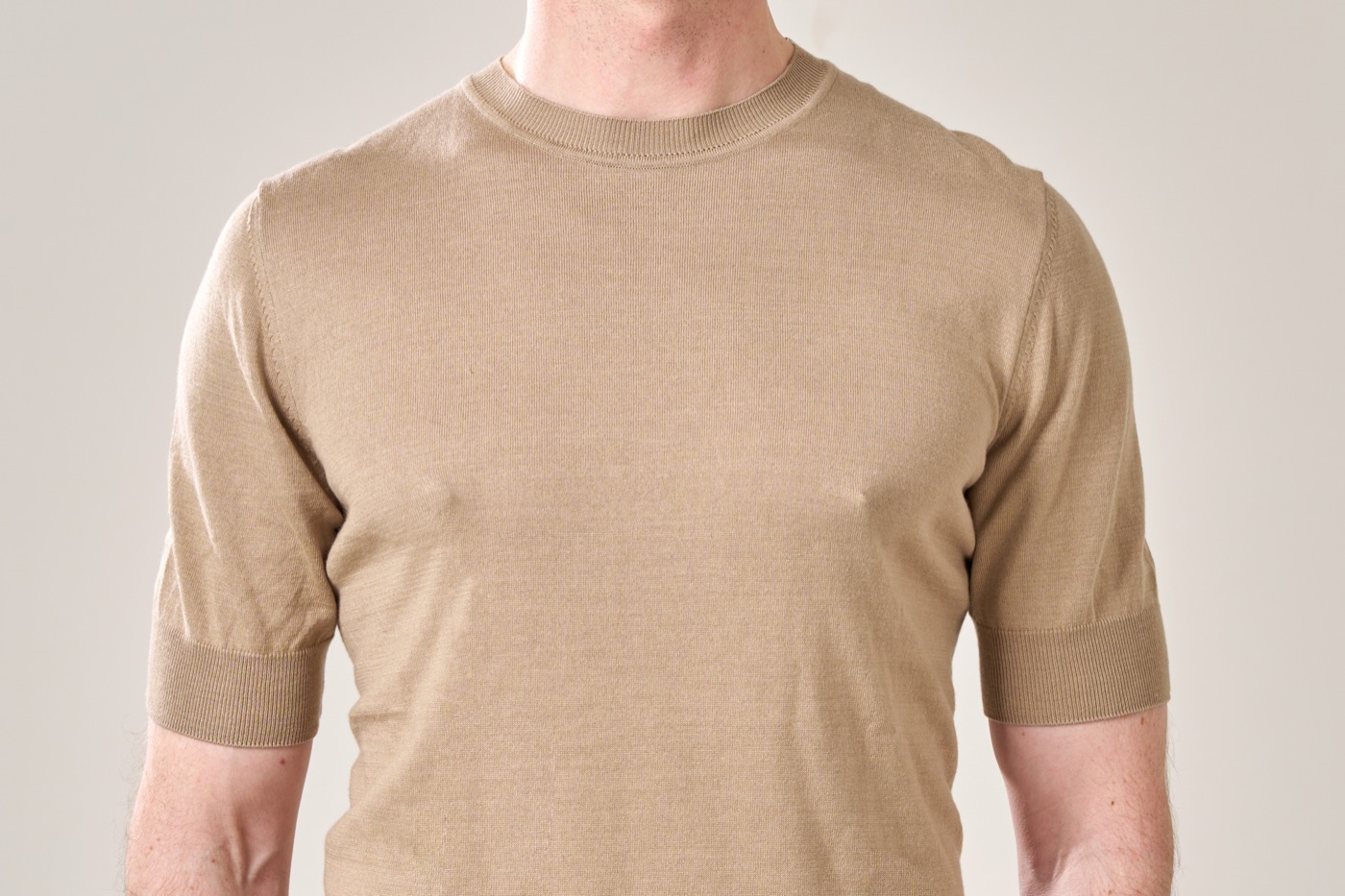
This is a buyer's guide. Not a "here's the problem" post — you've lived the problem. This is what separates a good nipple patch from a bad one, and why each thing on the list changes how you can dress.
First, a word on "tape" vs. a patch
Most people search for "tape" because that's the mental model — a strip of something sticky. But the better version of the idea is a men's nipple patch: a small, contoured, skin-tone adhesive cover shaped for the job, not a length of tape you cut and hope. The word doesn't matter much; the design does. So as you compare options, judge them on the five things below — whatever they call themselves.
1. Thinness — the whole thing lives or dies here
This is the number one factor and the one cheap products get wrong. If the tape has any real thickness, you've traded a nipple outline for a patch outline — a visible square or disc under your shirt, which is arguably worse because it looks deliberate. Under white cotton, a thin knit, or fine cashmere, the fabric telegraphs everything.
What good looks like: a patch thin enough that it reads as skin, with a feathered or tapered edge that melts into the surrounding area. If you can feel a hard rim through the shirt, so can everyone looking.
2. Edge quality — the tell nobody talks about
A flat-cut edge creates a little cliff. Under thin fabric, light catches that cliff and draws a line. The fix is a beveled or tapered edge that steps down gradually to nothing. This is the difference between "is he wearing something?" and a shirt that just looks clean. When you're evaluating options, run a fingertip over the edge — abrupt is bad, gradual is good.
3. Adhesive — hold without hurt
You want two things that usually fight each other: enough grip to survive a full day, heat, and sweat, and gentle enough removal that you're not wincing or losing skin (or hair). Medical tape and duct-tape adjacent products over-index on grip and punish you at removal. Fashion tape often under-indexes and peels by lunch.
The sweet spot is a skin-safe adhesive tuned for all-day wear on a man's chest — holds through a sweaty commute, comes off clean. If a product doesn't say how it removes, assume it hurts.
4. Skin-tone match and finish
Bright white or beige-for-someone-else's-skin defeats the purpose the moment your shirt shifts or a button gaps. A matte, skin-adjacent finish matters more than an exact color match — matte doesn't catch light and doesn't shine through thin cotton the way a plasticky finish does. Reject anything glossy.
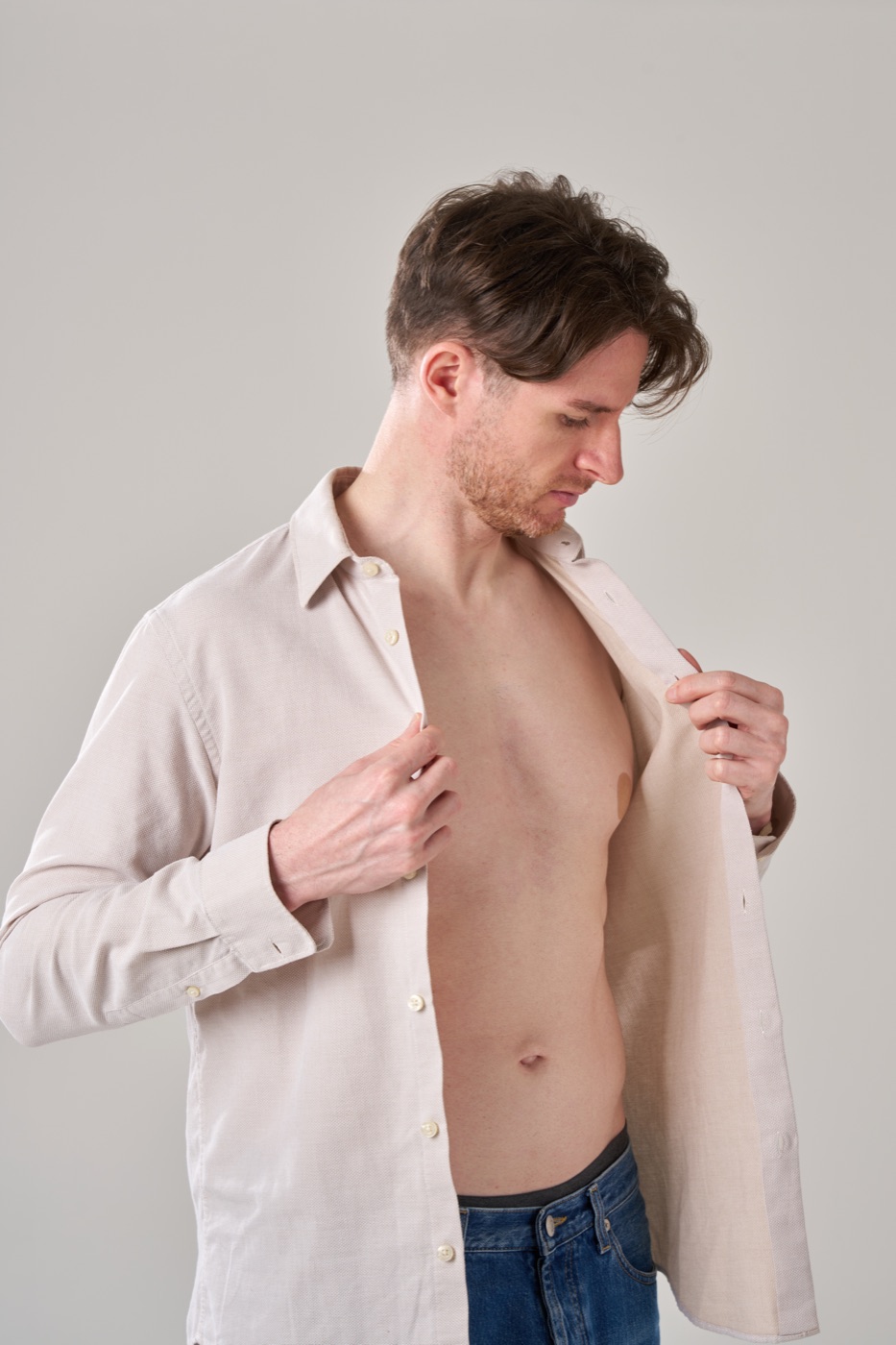
5. Staying power vs. reusable gimmicks
Some products chase "reusable" as a selling point, which usually means a tackier gel that grabs lint, loses stick after a wash or two, and slides once you warm up. For something you wear against your skin under nice clothes, a fresh, reliable single-day hold beats a reusable that fails at 2pm. Prioritize consistency over a marketing bullet.
Why any of this matters: you get your wardrobe back
Here's the part the spec sheet won't tell you. Most guys who end up searching for this have spent years quietly editing their closet — sticking to black, navy, and thick fabrics, skipping the white tee, the linen shirt, the pale blue oxford, the good cashmere, because thin and soft and bright all give you away. You don't think of it as a limitation. It just becomes "not my color" or "not my style."
A patch that actually disappears hands that whole half of the wardrobe back. Suddenly the white tee is just a white tee. The unlined summer shirt is on the table. Bright colors, soft knits, premium fabrics that used to feel like a risk are just clothes again. That's the real product — not the adhesive, the range. The Sonic nipple patch for men is built around exactly that outcome: thin, tapered, matte, skin-safe, and engineered to vanish under whatever you actually want to wear.
Quick buyer's checklist
- Thin enough to read as skin, not a disc under your shirt
- Tapered edge that steps down to nothing (no hard rim)
- Skin-safe adhesive that holds through sweat but removes clean
- Matte, skin-adjacent finish — never glossy or bright white
- Reliable all-day hold over reusable gimmicks
Get those five right and "nipple tape" stops being a compromise and starts being the thing that quietly expanded your closet.
FAQ
Is nipple tape or a nipple patch better for men? Same idea, better execution. A purpose-shaped patch beats cut lengths of tape because it's contoured, tapered at the edge, and sized for a man's chest — so it disappears instead of leaving a square outline.
Will it hold through sweat and a full day of wear? A quality men's patch uses a skin-safe adhesive tuned for all-day hold — through a hot commute, the office, and a workout — then peels off clean at the end of the day without pulling skin.
Can I really wear it under a thin white shirt? Yes — that's the whole point. A thin, matte, skin-tone patch with a tapered edge reads as skin under white cotton, fine knits, and linen, which is exactly where cheaper, thicker options give themselves away.