

What Are Nipple Patches Made Of?
Most nipple patches are made of two things: a thin skin-tone top layer — usually a soft non-woven fabric or medical silicone — and a hypoallergenic pressure-sensitive adhesive on the back, the same family of glue used on bandages and surgical dressings. That's it. No batteries, no magic, no weird chemistry: a flat material that sits flush with your skin and a glue engineered to stick to skin for a day and let go without a fight.
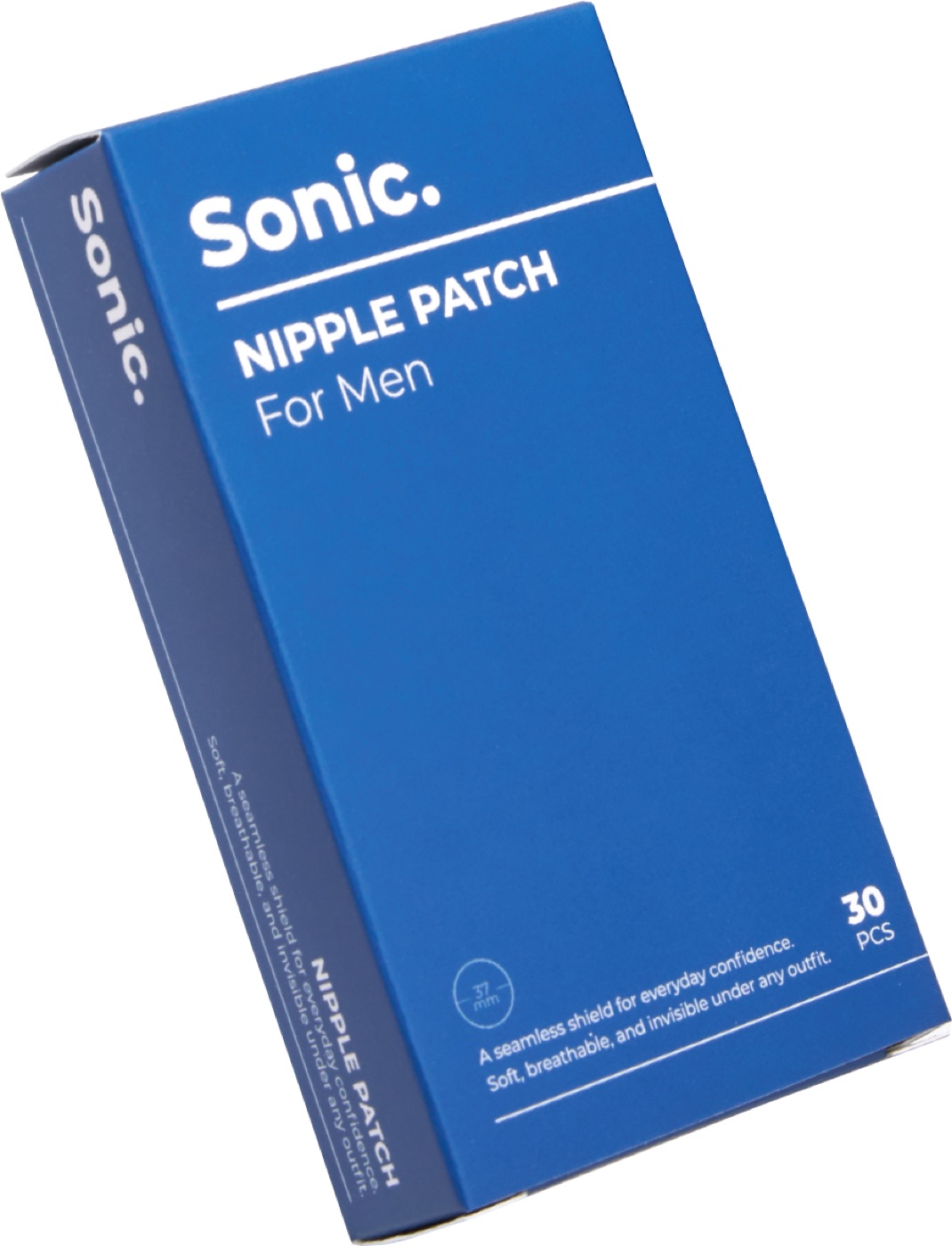
The reason people ask what nipple patches are made of usually isn't curiosity about polymers. It's two quieter questions underneath: will this show through my shirt, and will it wreck my skin. Both answers come down to material. So let's go through them properly.
The top layer: what you actually see (or don't)
This is the part that decides whether the patch disappears or announces itself.
Non-woven fabric. Think of the material on a good bandage — spun fibres pressed into a soft sheet rather than woven like cloth. It's matte, it's breathable, and crucially it has no shine. Under a white tee, shine is what gives a patch away, not thickness. Good non-woven patches have a feathered or bevelled edge so the material tapers to nothing instead of stopping at a hard line you can trace through cotton.
Medical-grade silicone. Smooth, slightly rubbery, a bit more durable and often reusable. Silicone holds up well to water, which is why it shows up in swim-focused products. The trade-off: it's less breathable, it can catch light under thin fabric, and thicker silicone rounds can read as a raised disc under something like a fine merino knit.
Foam or padded rounds. These exist and they're generally the wrong tool. Anything with loft creates a bump. You came here to make a shape disappear, not to add a new one.
Cotton or woven cloth. Rare, and usually a budget product. Woven fabric frays at the edge and the weave can print through thin shirts.
For everyday wear under clothes, thin matte non-woven with a tapered edge wins. That's the construction behind the Sonic Nipple Patch for men — a fabric layer thin enough that the shirt is the thickest thing involved.
The adhesive: the part that decides whether you'd wear it twice
The glue on a decent patch is a hypoallergenic acrylic or silicone-based pressure-sensitive adhesive. "Pressure-sensitive" means it activates from the warmth and pressure of your hand, not water or heat — press it on for a few seconds and body temperature does the rest.
Two properties matter more than the chemistry name:
- Latex-free. Latex is a common contact allergen and there's no reason for it to be near your skin all day. Any patch worth buying says latex-free on the box.
- Tuned peel strength. This is the real engineering. Adhesive strong enough to survive eight hours, a commute and a warm room, but calibrated to release from skin rather than take a layer of it with them. It's why a purpose-built patch behaves completely differently from duct tape, medical tape or the two band-aids you improvised with once and regretted.
Why the material question comes up at all
Because the alternatives all fail on material.
You already know the workarounds. Thicker fabric — so your wardrobe becomes navy, charcoal, black and oxford cloth forever. Layering an undershirt — which works in November and is unbearable in July, and does nothing when the shirt is a t-shirt. Sizing up so the shirt drapes instead of clinging — which trades one problem for looking like you borrowed the shirt. Band-aids — bulky, square, visible under anything thin, and they take arm hair with them.
Every one of those changes what you wear or how you feel wearing it. A patch is the only option that changes nothing except the thing you wanted changed. Which is exactly why the material spec matters: a 0.2mm matte fabric layer is invisible under a white poplin shirt in a way that a 2mm silicone disc simply isn't.
What good material feels like in practice
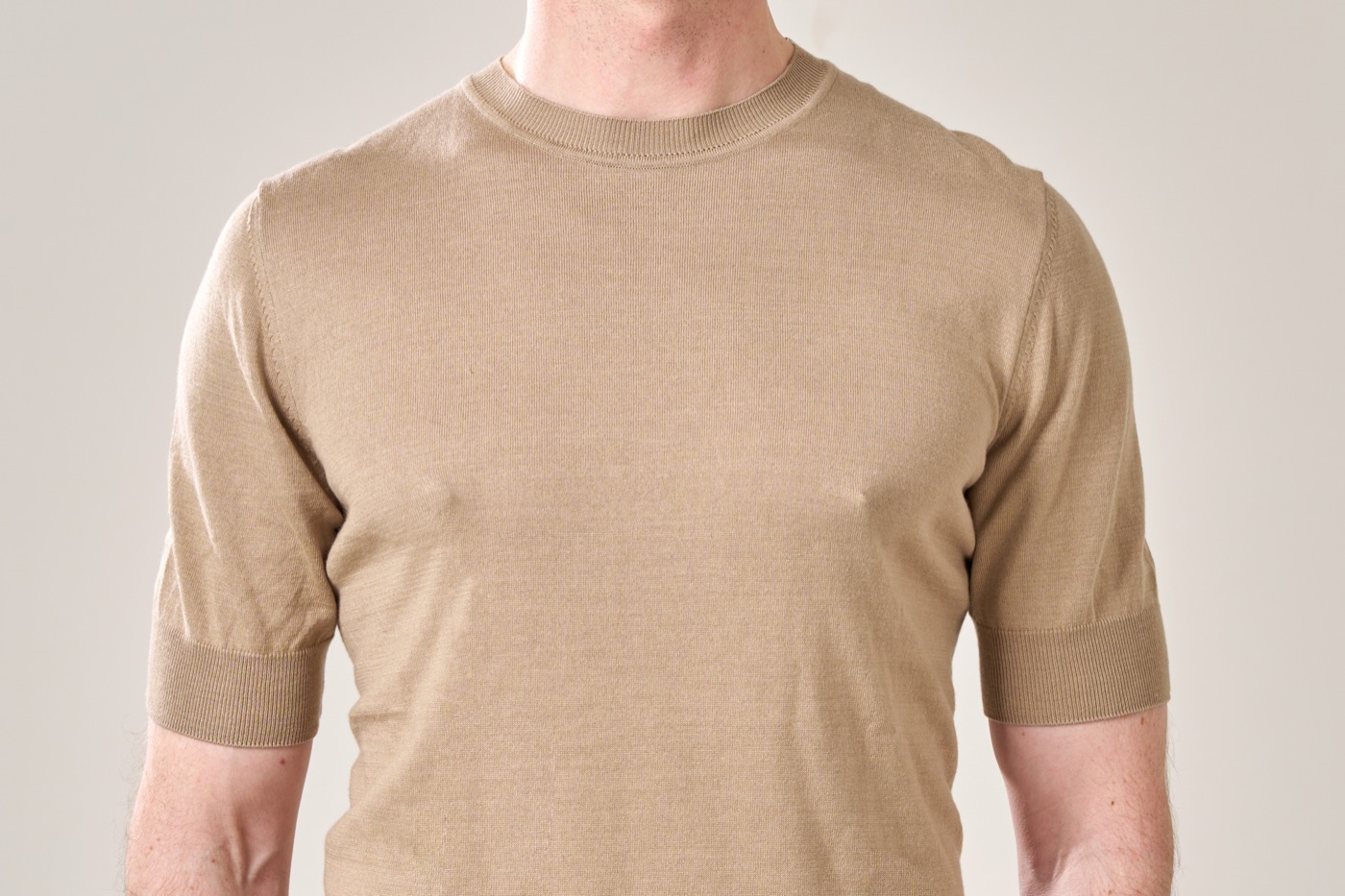
Here's the honest test. Put a patch on, then put on the thinnest, palest, most unforgiving thing you own — the white tee that's been sitting unworn in the drawer, the pale blue linen, the cashmere crew that clings a bit. Then look in a real mirror in real daylight, not bathroom light.
If the material is right, you see a shirt. Not a shape, not a ring, not a shiny spot when you turn. That's the whole product goal, and it's achieved entirely through material choice: matte, thin, tapered edges, skin-tone.
And then the actual point of all this: the white tee goes back into rotation. So does the linen, the polo, the pale knitwear, the shirt you bought on holiday and wore once. Most guys who've been self-conscious about this have quietly built a wardrobe of thick, dark, safe clothes without ever deciding to. Getting the range back is a bigger deal than it sounds — you can browse the men's nipple patches and test it against your own worst-case shirt.
Quick material checklist before you buy
- Matte finish, not glossy
- Feathered or tapered edge, not a stamped-out hard circle
- Latex-free, hypoallergenic adhesive
- Skin-tone options that actually match a range of skin tones
- Thin enough to fold without creasing into a ridge
- Sold for men's anatomy — sizing and shape are not the same as a women's nipple cover
FAQ
Are nipple patches safe for sensitive skin? Generally yes, if they're latex-free and use a hypoallergenic medical-grade adhesive — the same class used in wound dressings. If you react to bandages, do a small patch test on your forearm for a few hours first.
Are silicone or fabric patches better? Fabric for invisibility under clothes, silicone for water and reuse. For daily wear under shirts, thin matte fabric wins because it doesn't reflect light or create a raised edge.
Do the materials break down with sweat? A quality adhesive is formulated to hold through normal sweat and a full day of wear. Heavy, sustained sweat will eventually loosen any skin adhesive — that's physics, not a defect — but you'll get through a workday, a wedding or a hot commute without thinking about it.