

How to Make a Shirt Not See Through: 6 Fixes That Actually Work
You found the perfect white shirt. Great collar, clean fit, exactly the look you wanted. Then you stepped into daylight and realized it's basically a window. If you're googling how to make a shirt not see through, you've hit the classic menswear trap: the shirts that look the sharpest — crisp whites, light blues, summer-weight cotton — are also the ones most likely to broadcast everything underneath.
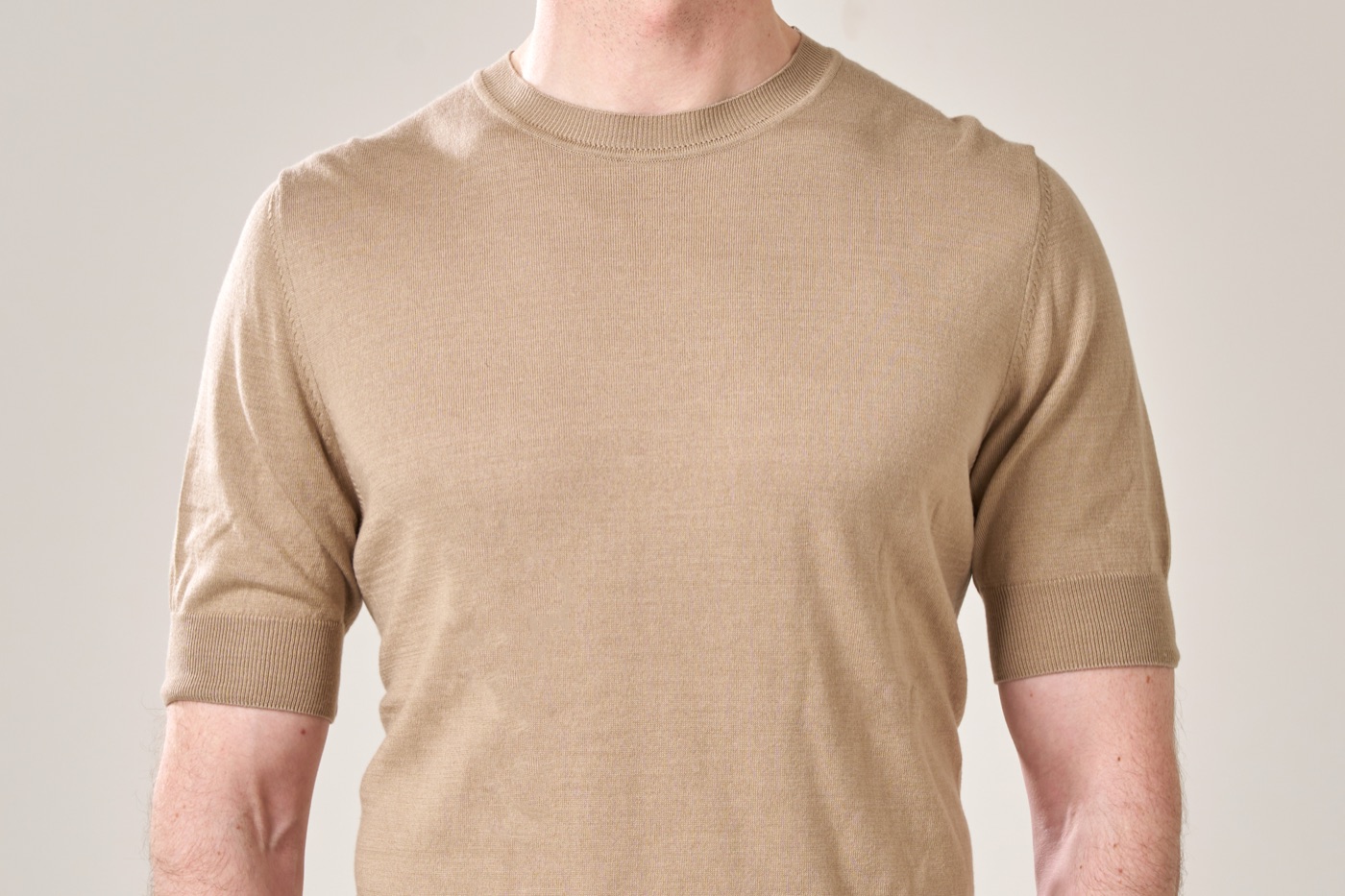
Our founder lived this for years. He'd buy a nice white shirt, wear it once, catch his reflection, and quietly demote it to "under a sweater only." The fix turned out to be a combination of smarter fabric choices and one small thing worn underneath — and suddenly the whole white-shirt category of his closet came back to life.
Here's the full playbook, from what to buy to what to wear under it.
1. Cover what shows the most: a nipple patch
Let's start with the part most guides skip. On most men, the first thing visible through a thin shirt isn't your torso — it's the chest area, in two very specific spots. Fabric can be nearly opaque and still show a shadow or outline there, because it's darker than the surrounding skin and it sits right where the shirt pulls flat.
A thin, skin-tone nipple patch made for men solves this directly. It sits flush against the skin, matches your tone, and erases the outline and shadow under even a white dress shirt. No extra layer, no added heat, no undershirt line at the collar. It's the difference between a shirt that's "a little sheer but fine" and one you genuinely stop thinking about.
2. Pick the right undershirt color (hint: not white)
If you do wear an undershirt, white is the worst choice under a white shirt. It creates high contrast at the edges — you can see exactly where the undershirt ends at the sleeves and neckline. The right move is a heather gray or a tone close to your skin, in a V-neck deep enough to hide under an open collar. Those disappear; white undershirts announce themselves.
The tradeoff: undershirts add warmth and bulk, and in summer they defeat the purpose of a lightweight shirt. That's why many guys pair a skin-tone undershirt in winter with just a nipple patch under thin shirts the rest of the year.
3. Check the fabric weight before you buy
Shirt fabric is measured in GSM (grams per square meter), and most brands won't list it — but your hands can tell. In the store, put your hand inside the shirt. If you can clearly see your fingers, you'll clearly see everything else. A tight poplin or twill weave at a medium weight will read crisp and opaque; a lightweight jersey or voile will read sheer.
Two shirts can be the same color and wildly different in transparency. Buy the weave, not just the color.
4. Use texture and pattern to your advantage
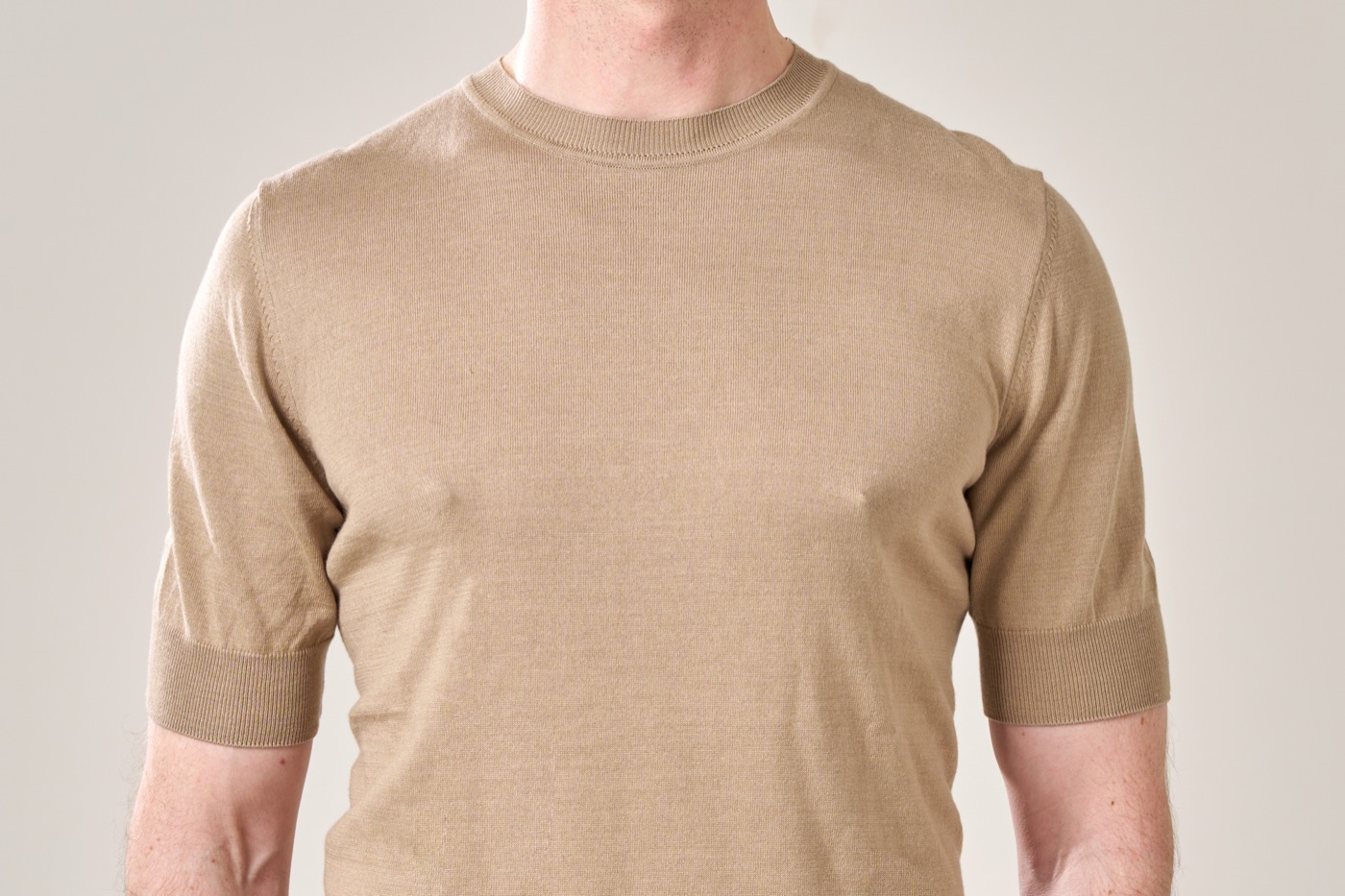
Oxford cloth, herringbone, twill, seersucker, and any subtle pattern scatter light instead of letting it pass through. A white oxford button-down is dramatically less see-through than a white poplin dress shirt, and it still reads sharp. If a shirt in your closet is hopelessly sheer, its patterned or textured cousin does the same job without the anxiety.
5. Get the fit right — drape hides, cling reveals
A shirt stretched tight across your chest becomes more transparent because the fibers pull apart. You don't need to size up into a tent; you need a fit with just enough room that the fabric drapes over you instead of suctioning on. If your buttons pull or the fabric goes taut when you sit, the shirt is working against you in more ways than one.
6. Don't over-bleach your whites
Repeated hot washes and bleach thin cotton over time. That white shirt that used to be fine and now isn't? It didn't change color — it lost density. Wash whites cold or warm, skip the bleach in favor of oxygen-based brighteners, and your shirts stay opaque for years longer.
The bottom line
Fabric choice fixes see-through shirts at the store. For the shirts you already own — and the thin, sharp ones you actually want to wear — the fix is what's underneath. A skin-tone nipple patch handles the most visible problem invisibly, with no extra layer, so a white shirt is just a white shirt again. That's the whole point of dressing well: wearing what you want and thinking about it zero times after you leave the house.
FAQ
What do you wear under a white shirt so it's not see-through? Either a gray or skin-tone undershirt (never white), or — for less bulk and no heat — a thin skin-tone nipple patch that erases the most visible outline while letting the shirt breathe.
Why is my shirt see-through even though it's not that thin? Contrast. Even moderately opaque fabric shows darker areas underneath, especially at the chest where the shirt sits flat against skin. Covering those spots matters more than total fabric opacity.
Does a nipple patch show under a slim-fit shirt? No — quality patches for men are paper-thin with tapered edges, so there's no ridge or line even under fitted, lightweight fabric.