

Male Nipple Shields: What Actually Separates a Good One From a Bad One
If you're shopping for male nipple shields, you've already done the hard part — you noticed the problem, and you decided you're not going to keep dressing around it. Good. The next part is easier than it looks, but there's a real difference between a patch that vanishes under a thin white shirt and one that leaves a faint disc outline that's somehow worse than what you started with.
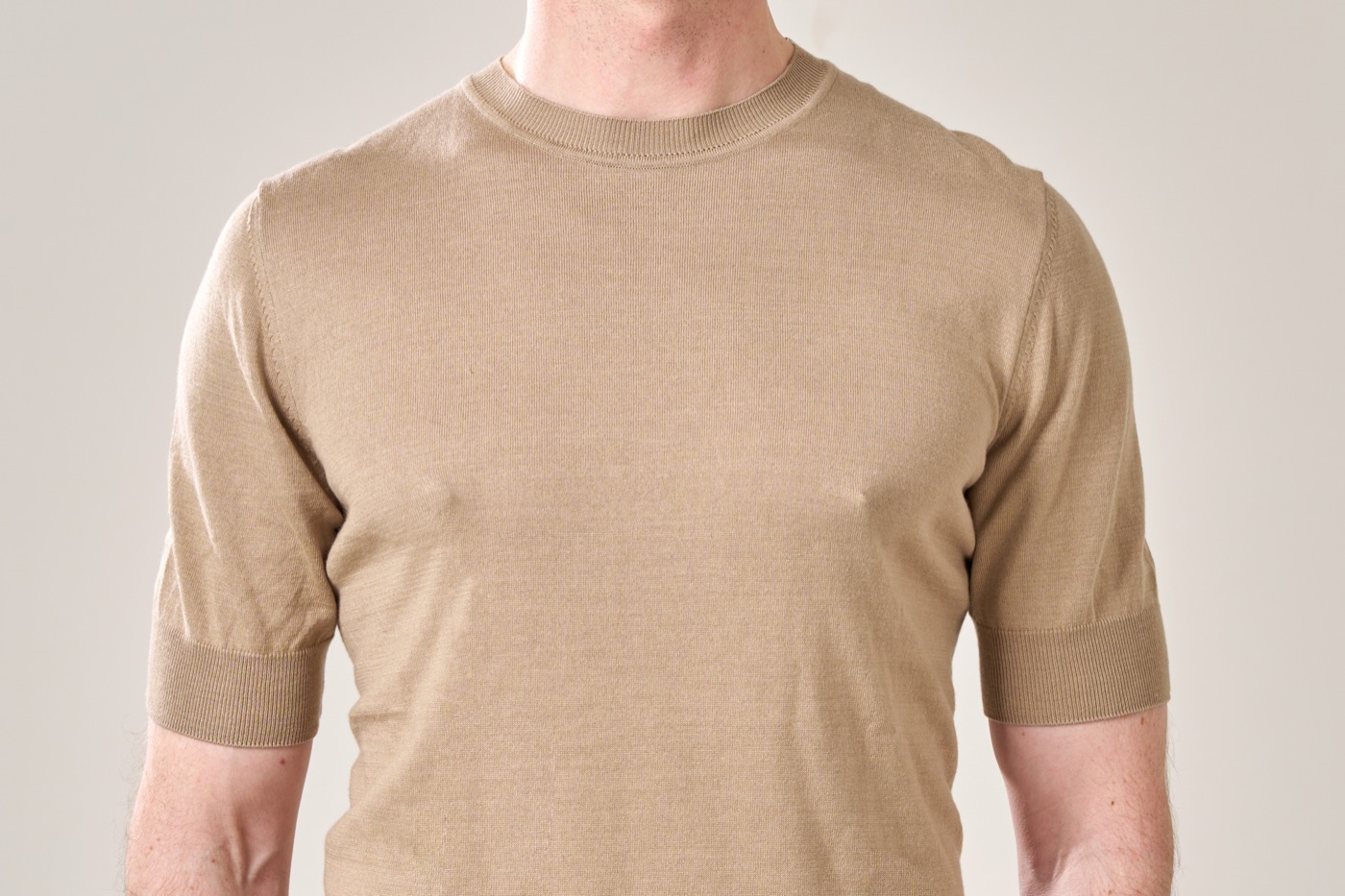
Here's what to look at before you buy, and why each thing matters for how your clothes actually sit.
1. Thickness is the whole ballgame
Most bad shields fail here. If a patch has any real body to it — even a millimetre — thin fabric will find it. Cotton jersey drapes over anything with an edge, and a white tee under office lighting is a spotlight.
What you want is a patch thin enough that when it's on, you can't feel a step where skin ends and patch begins. Run a finger across it. If you can trace the perimeter with your eyes closed, so can a white oxford. The Sonic Nipple Patch is built to sit essentially flush — the whole design brief was "invisible under the shirts men were avoiding."
2. Feathered edges, not cut edges
Related but distinct. A patch can be thin in the middle and still have a hard stamped edge that catches light and fabric. Feathered or tapered edges ramp down to nothing, so there's no line for a shirt to break over.
This is the single most common giveaway with cheap multipacks. They photograph fine. They look like a coaster under linen.
3. Skin tone, not "nude"
"Nude" in product photos usually means one shade of beige that matches almost nobody. Under a white or pale shirt, a mismatched patch reads as a pale circle — you've traded one outline for another.
Look for tones described in terms of actual skin ranges rather than a single default, and check what the patch looks like through fabric, not just on skin. If a brand only ever shows the patch off-body on a white background, that's a tell.
4. Matte finish
Skip anything glossy. Silicone with a shine will catch light through thin cotton and create a subtle bright spot exactly where you don't want attention. Matte surfaces diffuse. It's a small detail that does a disproportionate amount of work under camera flash, restaurant downlights, and stage lighting.
5. Adhesive that holds a full day — and lets go politely
Two failure modes here, and they're opposites.
Too weak: it lifts at hour four, usually mid-meeting, and you spend the rest of the day doing that casual arms-crossed press. Too aggressive: it holds fine but takes skin and hair with it, and you stop wearing it after the second time.
What you actually want is a skin-safe adhesive rated for all-day wear that peels off cleanly. If a listing is vague about removal, assume it's the second kind. This is where medical tape and band-aids lose — they were designed to grip a wound, not to be taken off every evening for years.
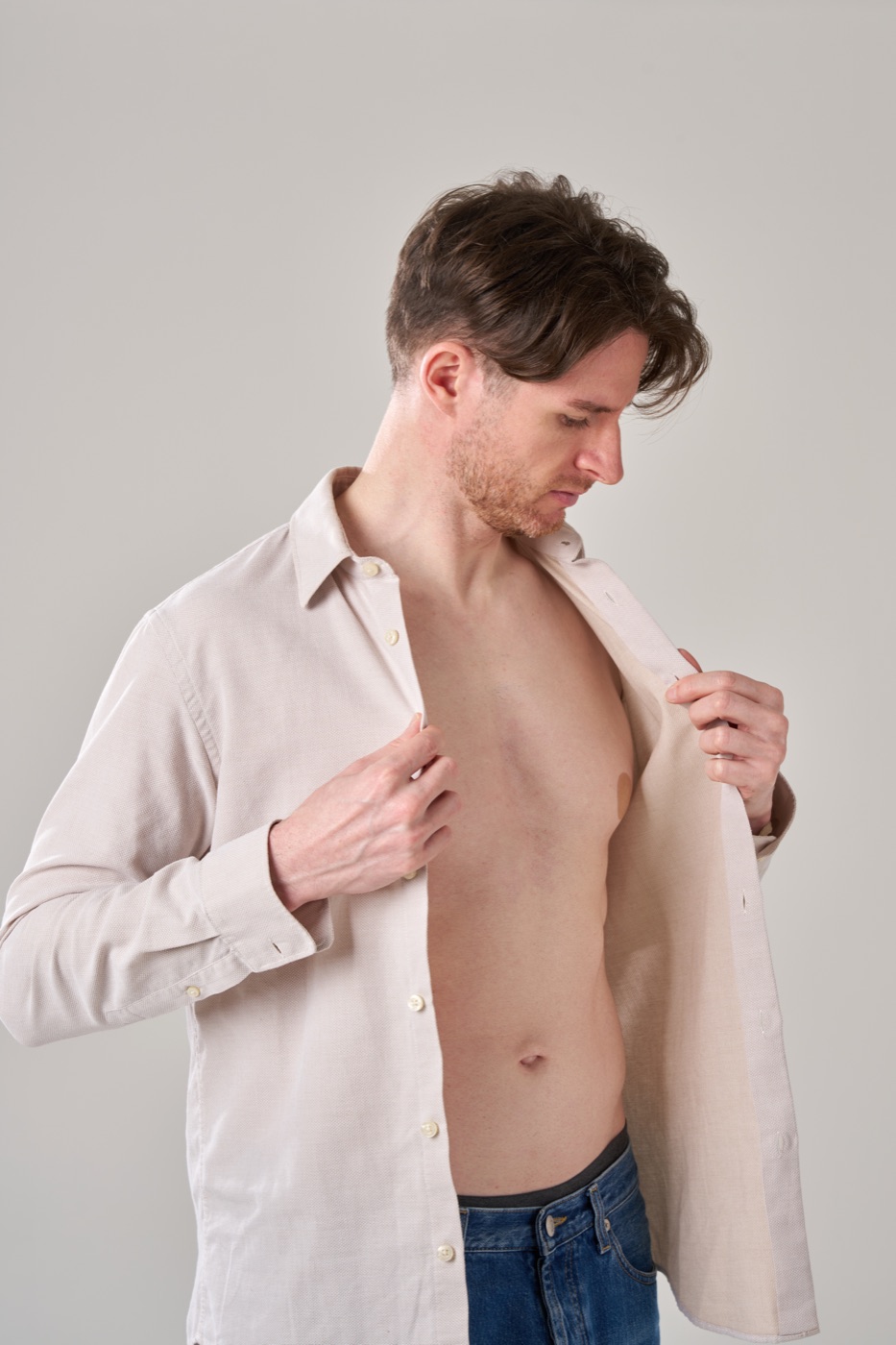
6. Shape and size that suits a man's chest
A lot of what's sold as nipple shields is repackaged women's product — larger discs, petal or flower shapes, sometimes with decorative edges. Under a fitted men's shirt, an oversized disc creates a visible circle where there was previously nothing at all.
Smaller, round, and proportionate is what you want. Coverage should be about the nipple and areola, not the pec.
7. Wear count per patch, not price per pack
Compare on cost per wear, not sticker price. A pack of 100 disposable patches at a low price is irrelevant if half of them curl at the edge by lunchtime. One patch that reliably lasts a full day — and reusables that survive real wash cycles — is cheaper in practice and, more importantly, you never have that "will it hold" thought at 3pm.
Why this matters more than it sounds
Here's the part nobody says out loud: most men who buy these have quietly edited their wardrobe for years. Black, navy, charcoal. Thick fabrics. A second layer even in July. Nothing white, nothing thin, nothing soft. Not because that's their taste — because it was the safe choice.
The actual return on a good nipple shield isn't "nobody sees anything." It's the white tee with jeans. It's the pale blue oxford, the cashmere crewneck, the linen shirt on holiday, the polo that fits properly, the light-grey knit that used to be an instant no. It's buying a shirt because you like it rather than doing the fabric-thickness test in the changing room.
That's a wardrobe you already own, or could own, sitting one small thing away.
The short version
Thin, feathered edges, matte, tone-matched, skin-safe adhesive, sized for a man's chest. That's the checklist. If a product ticks all six, it'll disappear under anything you own — which is the point. If it misses two or more, you'll notice, and worse, you'll go back to the black t-shirt.
The Sonic Nipple Patch for men was designed against exactly this list, for exactly this use case: wearing the good shirts without thinking about it.
FAQ
Are male nipple shields visible under a white dress shirt? A good one isn't. Visibility comes from thickness, hard edges, or a shine — not from the patch existing. A thin, matte, tone-matched patch with feathered edges reads as skin through white cotton. A thick glossy disc will show as a ring, which is why the spec matters more than the category.
How long does one stay on? Look for all-day wear — roughly 8–12 hours through a normal day including sweat, layers, and taking a shirt on and off. If a product doesn't state a wear time, that's usually because it isn't good.
Do they hurt coming off? They shouldn't. A skin-safe adhesive releases with a slow peel and doesn't take hair or leave the area red. Pull from one edge slowly rather than ripping — and if a product genuinely hurts every time, that's a product problem, not a you problem.