

The Nipple Patch for Men, and How to Pick One That Actually Disappears
Here's the thing nobody tells you: half the reason your closet is all black tees and thick oxford cloth isn't taste. It's that a thin white shirt shows everything, so at some point you quietly stopped buying thin white shirts. A good nipple patch for men is the fix — a thin, skin-tone adhesive patch you wear so nothing prints through the fabric, which means you get the rest of your wardrobe back. But patches are not all the same, and a bad one is almost worse than nothing. Here's what to actually look for.
Thinness is the whole game
The single biggest thing that separates a good patch from a bad one is how thick it is. A cheap patch solves the outline you were worried about and creates a new one — a raised disc you can see from across the room under a light shirt. That's a lateral move.
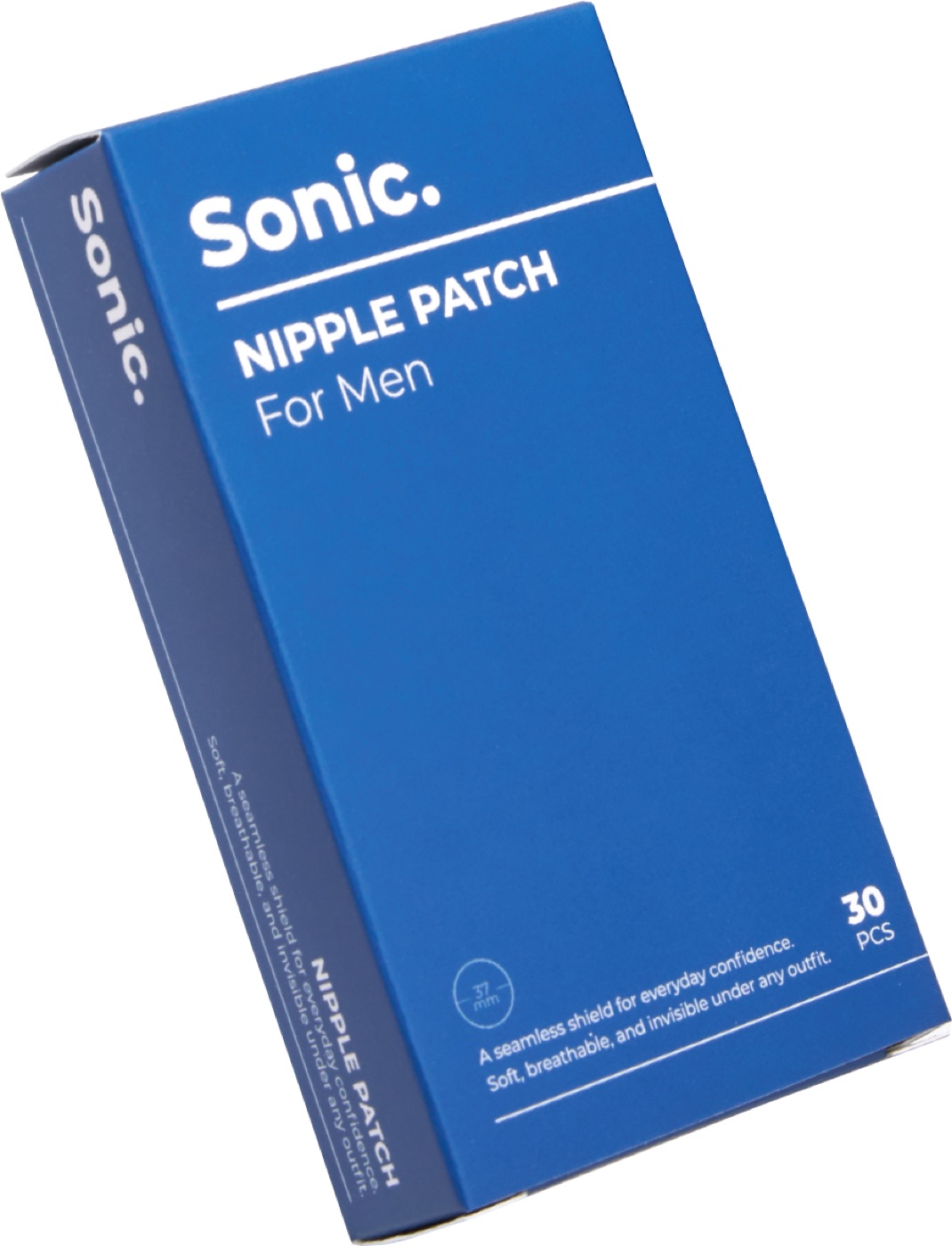
What you want is a patch thin enough that it reads as skin, not as a thing stuck to your skin. Under a white tee, the edge should feather out instead of stopping in a hard circle. If you run a fingertip over your shirt and feel a ridge, the fabric will show that ridge too. The Sonic Nipple Patch is built around this — thin enough that the whole point is you forget it's there, and so does everyone looking at you.
The edge, not the middle, gives it away
People obsess over the center of the patch. The center is easy. It's the edge that betrays a bad one.
A hard, thick perimeter catches light and casts a faint shadow line under thin cotton, linen, or fine knit — exactly the premium fabrics you bought the patch to wear. A good patch has a tapered, feathered edge that blends into skin so there's no rim to print through. This matters most under the stuff you care about: a white dress shirt in office light, a soft cashmere crewneck, a linen shirt in summer sun. Those fabrics are unforgiving, and they're the entire reason you're here.
Skin-tone that reads as "nothing," not "beige sticker"
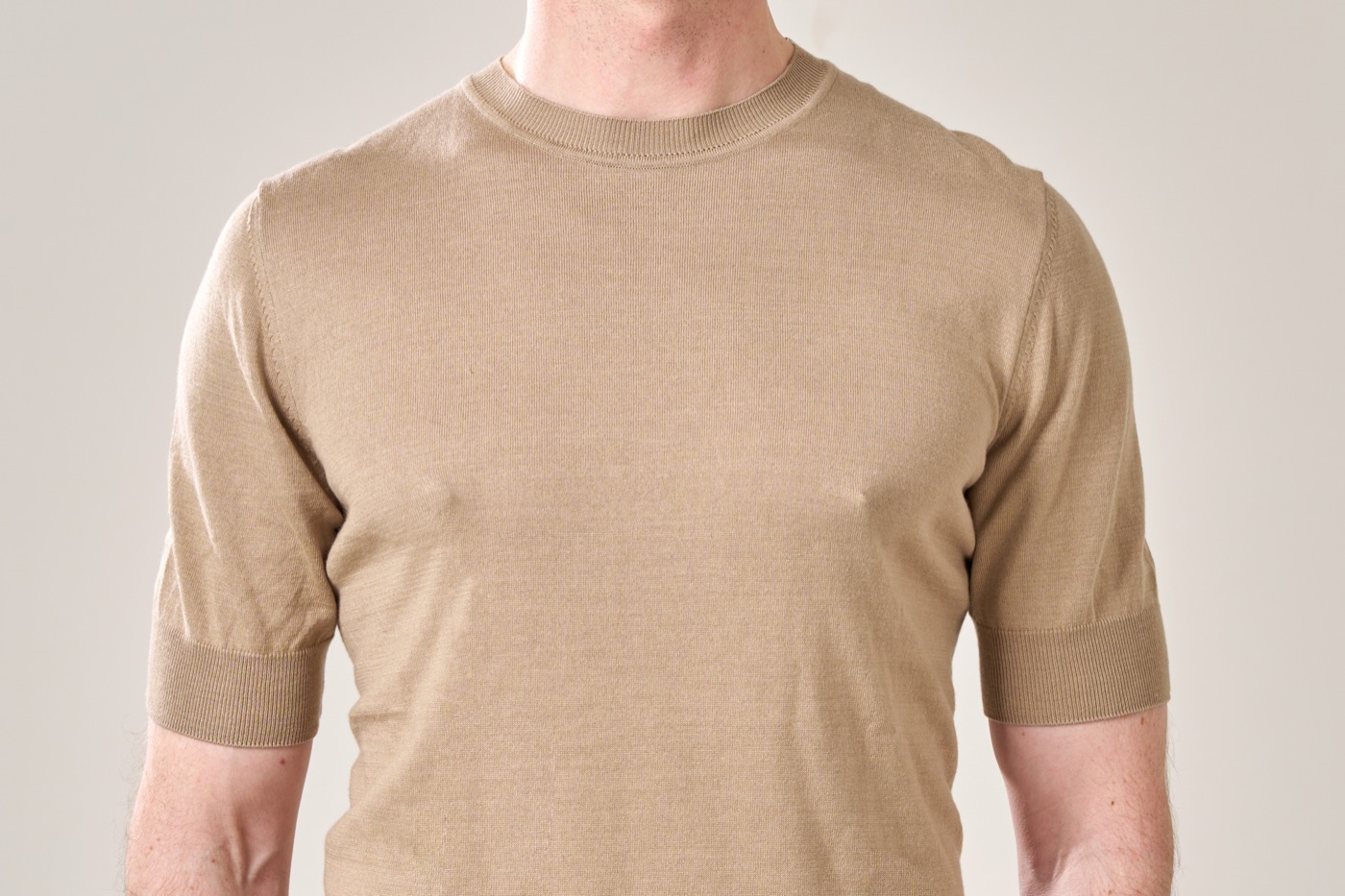
Color is the second tell. Under a genuinely thin white shirt, a patch that's too pink or too orange shows up as a pale coin. The goal isn't to match a paint chip to your skin — it's for the patch to disappear into the low-contrast blur that fabric already creates. A neutral, muted skin-tone does that far better than something that tries too hard to be "flesh colored." When it's right, you look in the mirror in a white tee and see a white tee. That's the moment the patch was made for.
Adhesive that lasts the day and leaves cleanly
Two failure modes here, and a good patch avoids both.
First, it has to stay put. Not just standing in your bathroom — through a warm room, a commute, a long dinner, the small amount you sweat in a merino sweater. A patch that curls up at the edge after three hours is a patch you'll stop trusting, which means you'll stop reaching for the shirt again.
Second, it has to come off cleanly. This is where band-aids and hardware-store tape fail people — they grip skin and hurt on removal, so you dread them. A patch built for skin uses a skin-safe adhesive that holds all day and peels off without the wince. You want something you'll actually use on a Tuesday, not just for a wedding.
Why this matters for how you dress
Step back from the mechanics for a second, because the mechanics aren't really the point. The point is range.
Before, the internal logic went: thin fabric shows through, so wear thick fabric; light colors show through, so wear dark colors; premium knits cling, so avoid them. That's three-quarters of good menswear crossed off a list you didn't even realize you were keeping. White tees, white dress shirts, fine-gauge knitwear, polos, linen, actual colors — all quietly filed under "not for me."
The right patch deletes that list. You put it on in ten seconds, you stop thinking about it, and the constraint that was shaping your entire wardrobe just isn't there anymore. That's the real product: not a patch, but the closet you'd have if you'd never been self-conscious in the first place. If you want the version built specifically for this — thin, skin-tone, all-day hold — start with the Sonic Nipple Patch for men.
Quick checklist before you buy
- Thin enough to feather — no raised disc under a white tee.
- Tapered edge — the rim is what prints through, so it has to blend, not stop.
- Neutral skin-tone — reads as nothing, not as a beige sticker.
- All-day adhesive — stays through warmth and light sweat.
- Clean removal — skin-safe, no wince, so you'll actually keep using it.
Get those five right and the patch does its job the only way that counts: invisibly.
FAQ
Will a nipple patch really show nothing under a white shirt? A thin, skin-tone patch with a feathered edge disappears under white cotton — the trick is thinness and a tapered rim, since a thick patch just trades one outline for another.
How long does a men's nipple patch stay on? A patch built for skin, like the Sonic Nipple Patch, uses a skin-safe adhesive designed to hold through a full day — a warm room, a commute, and light sweat included — then peel off cleanly.
What's the difference between a nipple patch and just using tape or a band-aid? Tape and band-aids are thick, have hard visible edges under thin fabric, and hurt coming off. A purpose-made nipple patch (sometimes called a nipple cover) is thin, edge-tapered, and skin-safe — made to disappear and to be reused without the wince.