

Nipple Patches for Cycling: What Actually Holds Up on a Long Ride
If you ride, you already know the two-part problem. Part one: a race-cut jersey in a light colour is about as opaque as a window screen, and every group photo at the café stop proves it. Part two: you finish the ride, shower, and reach for a shirt — and end up in the same black tee you always wear, because thin cotton does exactly what the jersey did. Good nipple patches for cycling solve both, but only if you buy the right ones. Most of the products sold for this were designed for a different body and a different day, and they fail in predictable ways.
Here's what to actually look for.
Adhesive that survives sweat, not just skin
This is the whole ballgame. A patch that holds fine in an office will lift at the edges once you're 90 minutes in and your chest is soaked. The failure mode is specific: the centre stays down, the perimeter curls, and now you've got a visible ring under your jersey — worse than wearing nothing.
What you want is a medical-grade skin-safe adhesive that bonds to damp skin and keeps bonding. Ask a simple question of any product page: does it say anything about sweat, or does it only talk about "all-day wear"? Those are different claims. All-day wear means a desk. You need the other one.
Practical tip that matters more than people admit: apply to clean, dry, un-moisturised skin about five minutes before you kit up. Chest lotion, sunscreen, and embrocation are all adhesive killers. Sunscreen goes on around the patch, not under it.
Genuinely thin, with a feathered edge
A cycling jersey is compressive and thin, which means it reveals everything underneath it — including your fix. A thick patch reads as two suspicious discs. A patch with a hard cut edge reads as a circle outline. Neither is better than the original problem.
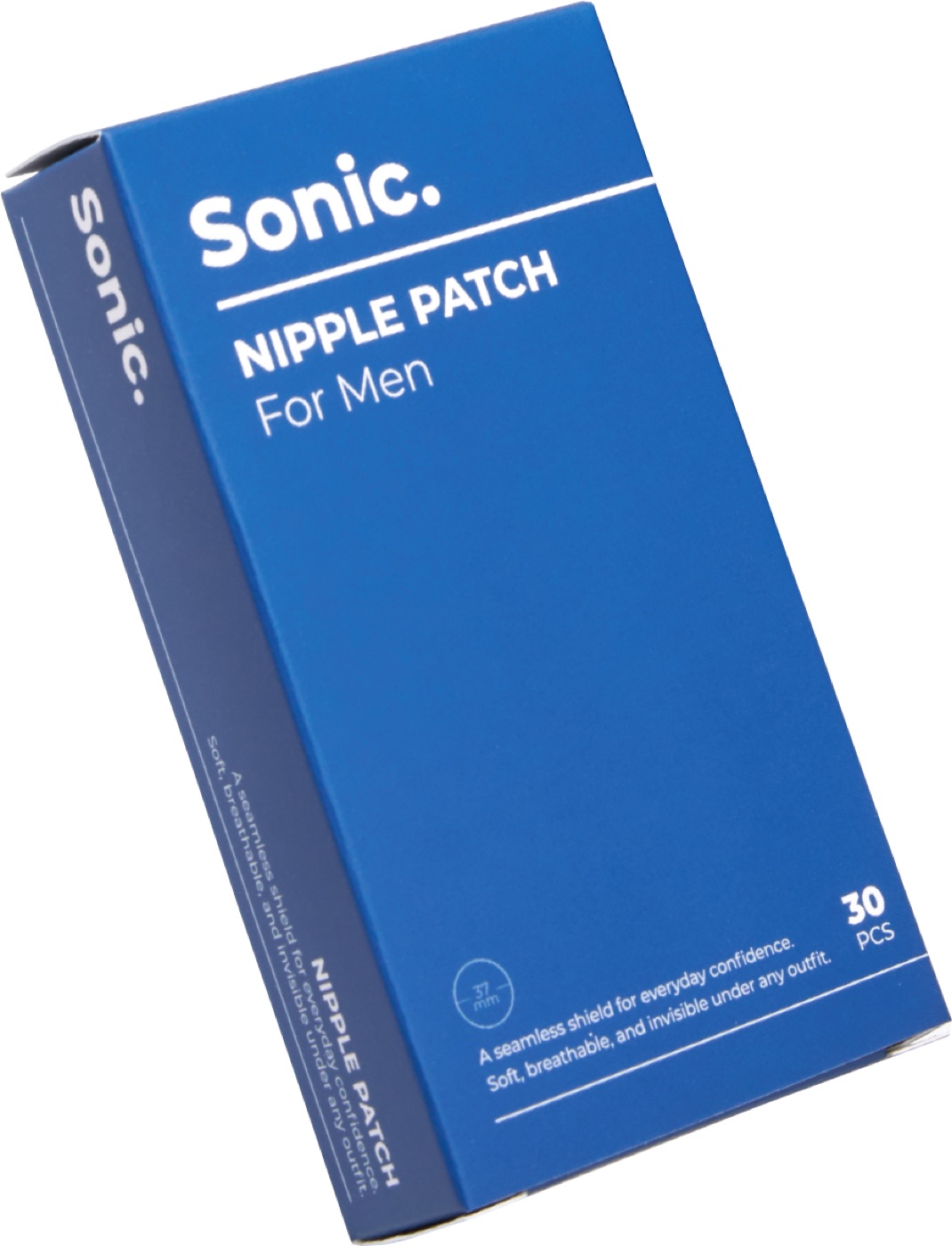
Look for two things: low profile (you should barely register it on your finger) and an edge that tapers rather than stopping abruptly. That taper is what makes it disappear under compressive technical fabric — and it's the same property that makes it disappear under a white linen shirt later. Our nipple patches for men are built around exactly this: thin enough to vanish, with an edge designed to melt into skin instead of sitting on top of it.
Skin-tone matching, because jerseys are see-through
White club kit, light blue, that unfortunate high-vis yellow — all of it is essentially translucent when wet. A stark white or beige patch under a wet white jersey shows up as a bright spot. A patch in a tone close to your own skin doesn't. Check whether the brand offers more than one shade, and pick the one that matches your torso, not your face. Your chest is usually lighter than your arms.
Breathability and clean removal
You'll wear these for three, four, five hours. A patch made of plastic film traps heat and moisture under it, which is both uncomfortable and the reason cheap ones slide. Breathable backing holds better precisely because it lets moisture pass instead of pooling.
Removal is the underrated spec. Anything that pulls skin or leaves residue is a product you'll stop using after two rides. Warm water in the shower and a slow peel from the edge should be the whole procedure. If you need to research a removal technique, the patch is wrong.
What separates good from bad — the quick version
- Good: sweat-rated adhesive, feathered edge, breathable backing, skin-tone options, painless removal.
- Bad: rigid film, hard-cut edge, one beige shade for everyone, "fashion tape" repurposed, anything that requires an adhesive remover.
- Not a solution: a base layer (adds heat, still shows), a band-aid (square outline, hurts), or just wearing black forever.
The part nobody puts in the cycling guides
Here's the thing about buying patches for riding: the ride is three hours of your week. The reason most guys keep buying them is what happens the other 165.
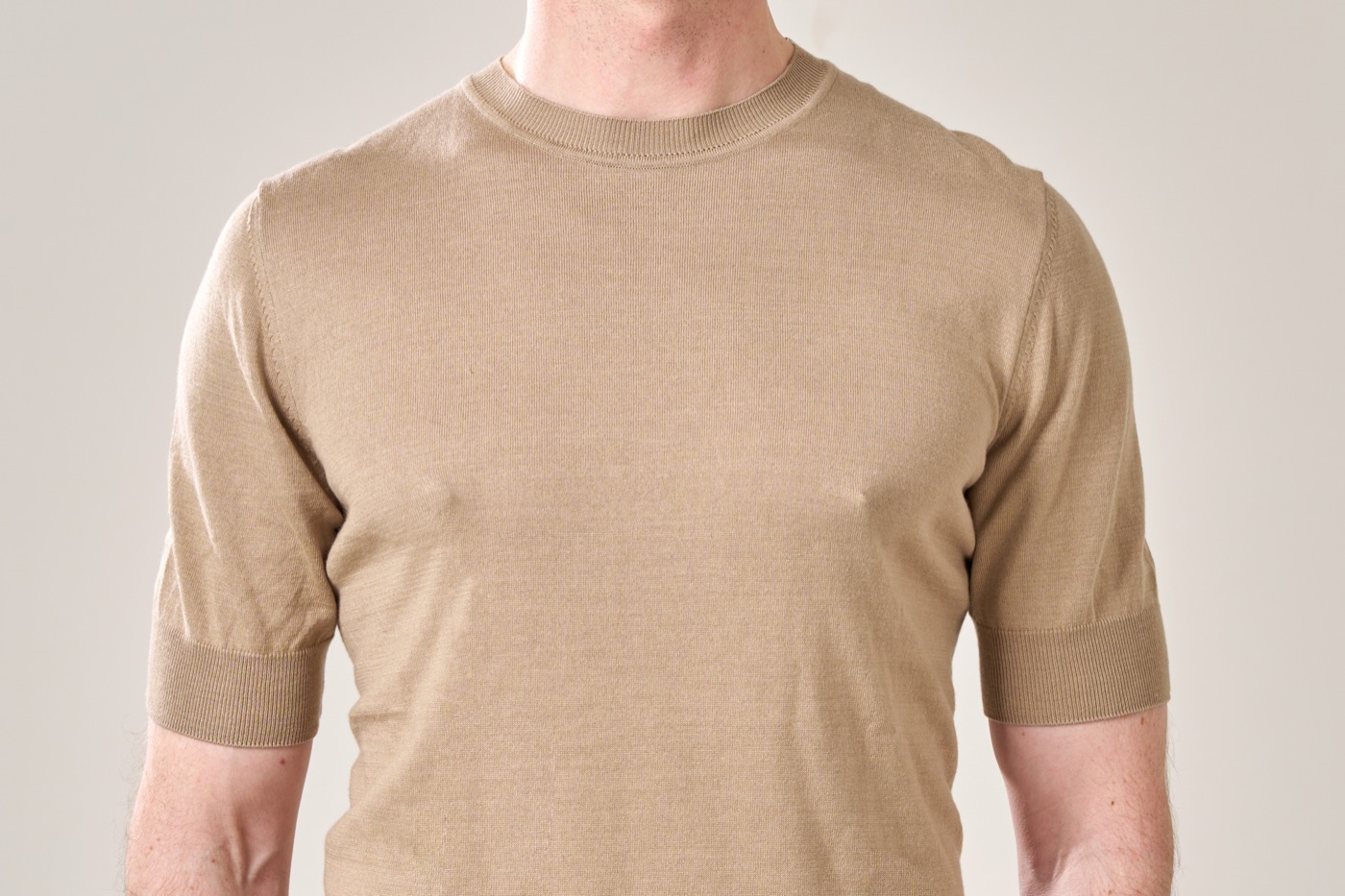
Cyclists are, structurally, people with lean chests and thin technical fabrics — which is the same combination that makes a white tee, a cashmere crewneck, or a good oxford feel off-limits. If you've quietly built a wardrobe of dark, thick, forgiving fabric, that wasn't a style choice. It was a workaround. The same patch that gets you through a century gets you into the white linen shirt at the café afterward, the pale knitwear in autumn, the polo that isn't navy.
That's the actual purchase. You're not buying ride insurance. You're buying back about 40% of the clothes you'd otherwise wear. Worth keeping in mind when you compare a pack of Sonic Nipple Patches against a tube of anti-chafe balm — the balm does one job, on one day.
Bottom line
Buy for the adhesive and the edge. Sweat-rated bond, tapered profile, breathable backing, a shade that matches your chest, and a peel that doesn't make you wince. Get those five right and the patch disappears under a wet jersey at hour four — and under everything you'd rather be wearing when you get off the bike.
FAQ
Will nipple patches stay on through a long, sweaty ride? A patch with a proper sweat-rated medical adhesive will. The ones that fail are usually office-grade products applied to skin that had sunscreen or lotion on it. Clean, dry skin plus the right adhesive holds for a full day in the saddle.
Do they show through a race-cut jersey? Not if they're thin with a feathered edge and matched to your skin tone. Thick patches with hard-cut edges show as discs under compressive fabric — that's the spec to check before you buy.
Are these different from a nipple cover you'd wear under a dress shirt? They shouldn't be. A well-made patch does both jobs: invisible under a wet jersey, invisible under a thin white shirt. If a product only works for one context, it's under-engineered for either.