

Puffy Nipples Shirt Solutions: What Actually Works Under a Shirt
If you have puffy nipples, you already know the drill. You own exactly four shirts that are "safe," they're all black or charcoal, and the nice white tee your partner bought you has been folded in a drawer since 2022. The good news: puffy nipples shirt solutions are not complicated — but most of the advice online is useless, and the difference between a fix that works and one that doesn't comes down to a handful of very specific details. Here's what to look for, what to avoid, and why it changes how you get dressed.
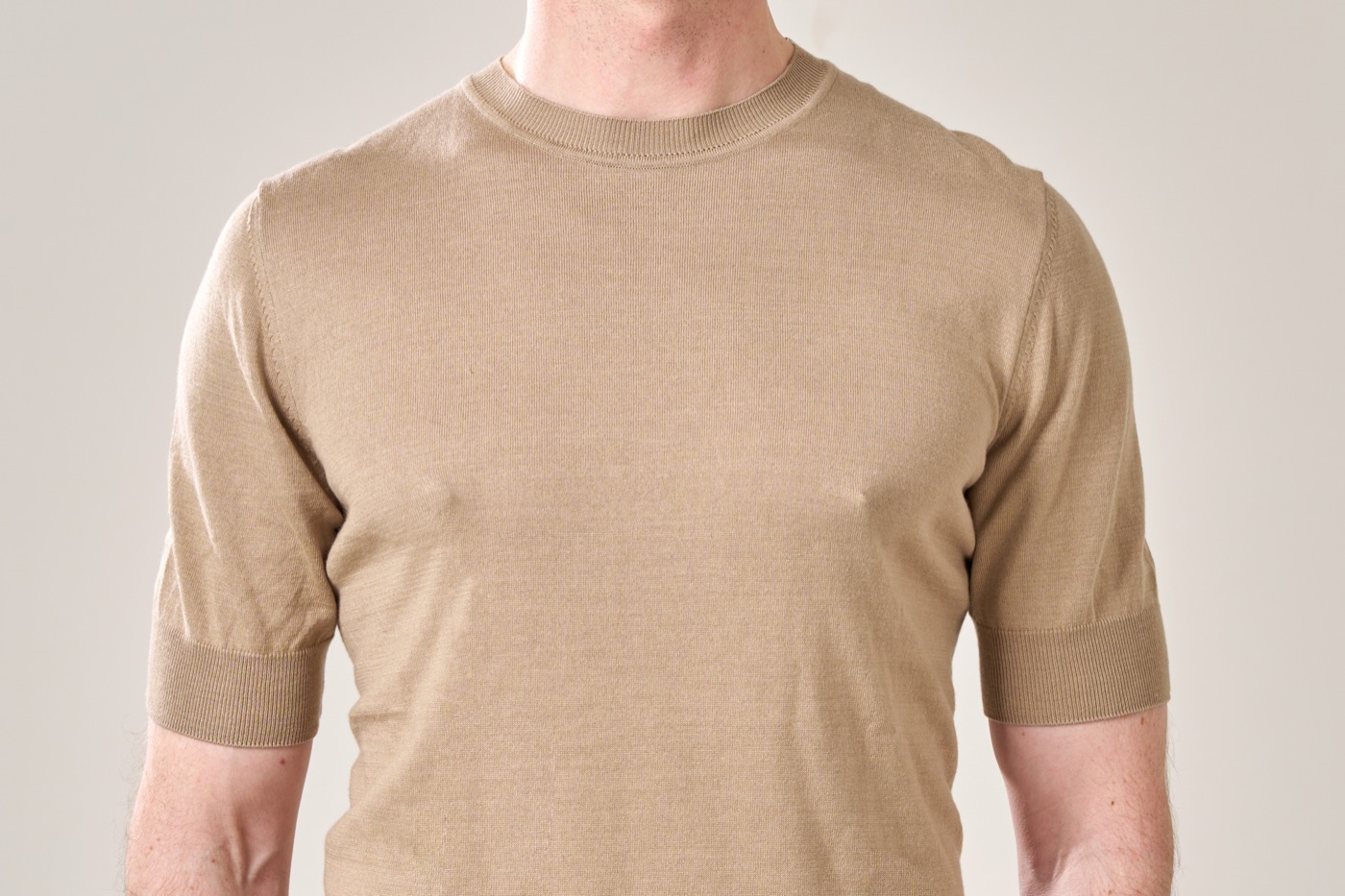
First: why puffy nipples are a different problem
Standard "nipples showing" advice is about cold. A cold nipple is a small, temporary bump — thicker fabric or a warmer room makes it go away.
Puffy nipples are structural. The areola sits slightly raised all the time, so the outline is there at 9am in a heated office and it's still there at 6pm. That means every workaround built around temperature — undershirts, layering, "just wait it out" — misses the point. What you need is something that physically flattens and diffuses a permanent contour, all day, without adding visible bulk of its own.
That's a much narrower spec. Which is why most things fail it.
What separates a good nipple patch from a bad one
A men's nipple patch is the fix that actually meets the spec — but patches vary wildly. Here's what to check before you buy anything.
Edge taper. This is the single biggest tell. A cheap patch is die-cut with a blunt edge, so under a white tee you trade a nipple outline for a perfect circle outline — arguably worse, definitely stranger. A good patch feathers to almost nothing at the rim so there's no line where it ends. If a product photo shows a thick disc sitting on skin like a coin, keep scrolling.
Actual thinness, not "thin" in the copy. Puffy nipples need coverage that flattens without becoming its own bump. Anything with padding, foam, or a silicone dome is solving the opposite problem — those are designed to smooth, not compress, and under thin cotton they read as a raised puck.
Diameter that clears the areola. Men with puffy nipples usually need more coverage than a standard women's cover provides, because the raised area extends past the nipple itself. A patch that only covers the tip leaves a soft ring visible around it. Measure once; you want the patch comfortably wider than the raised area, not equal to it.
Skin-tone matte finish. Under a white or light shirt, anything glossy catches light and shows as a faint sheen. Matte disappears. This matters far more under a $180 poplin shirt than under a hoodie.
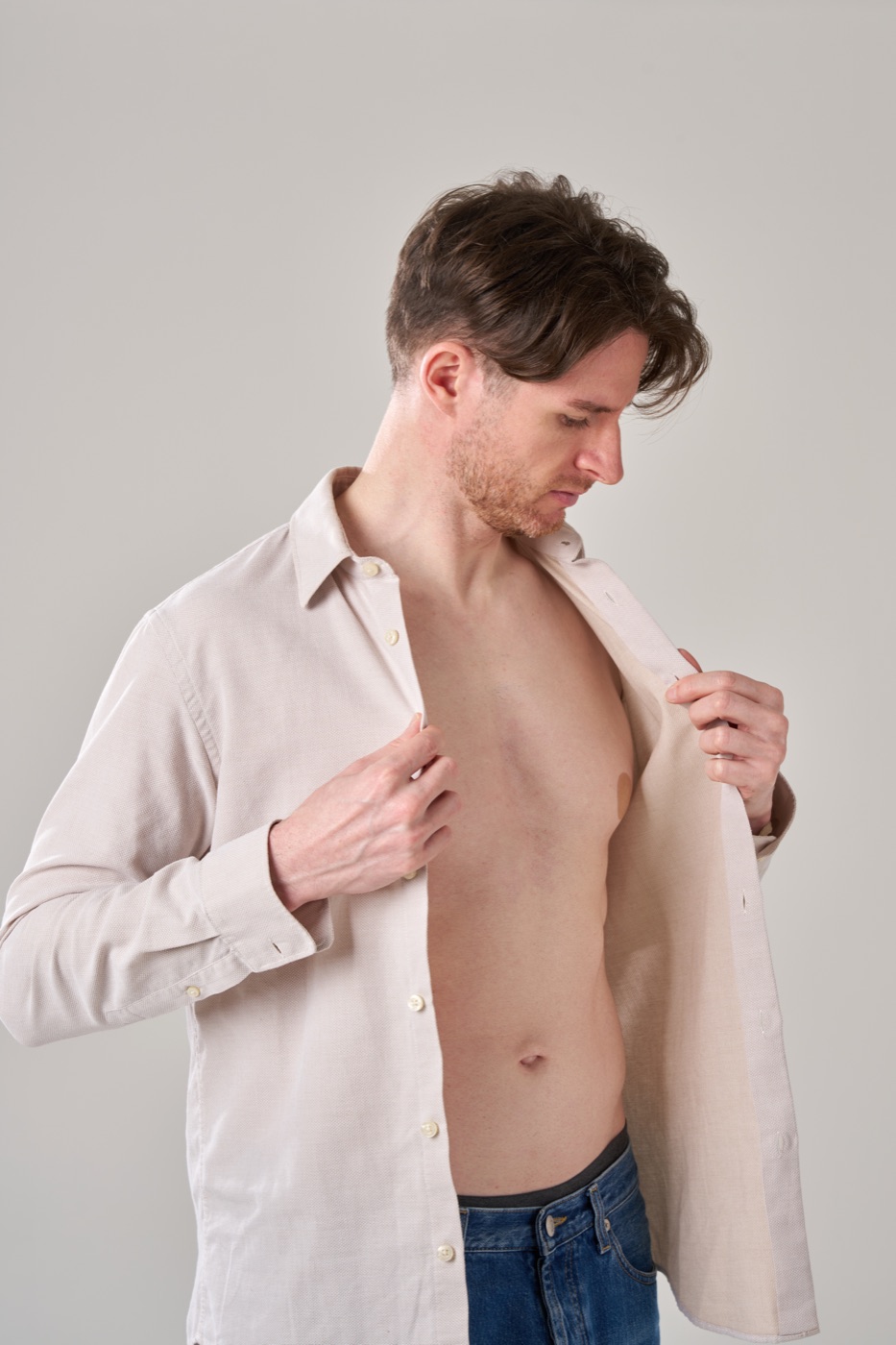
Adhesive that survives a real day. Not a marathon — a day. Commute, warm restaurant, a shirt that gets tucked and untucked. And it has to come off without taking skin with it. Band-aids and medical tape fail this badly; they hold fine and then punish you at 11pm.
The fabrics that betray you (and what changes when you're covered)
Once you know what to look for, you can predict which shirts are risky. Roughly in order of how mercilessly they show a contour:
- White jersey tees — the classic. Thin, slightly translucent, clings when warm.
- Fine-gauge cashmere and merino — soft, drapes over every contour, and light-colored knits are the worst of all.
- Poplin dress shirts, especially white — crisp but thin, and the fabric sits close across the chest when you're tucked in.
- Linen — light, and it moves against you all day.
- Polos in pale colors — piqué texture helps a little, but a pale piqué still shows a raised outline.
- Anything bright or pastel — light colors show shadow; dark colors hide it. This is why your closet drifted toward navy and black without you deciding to.
Now flip that list over. Those are exactly the shirts most men with puffy nipples have quietly stopped buying. Handling the outline doesn't just solve a small anxiety — it hands back the entire light, soft, expensive half of a wardrobe. The white oxford for a wedding. A cream crewneck sweater in October. A pale linen shirt on holiday instead of the black tee you sweat through.
Solutions that partially work (be honest about the tradeoff)
- A thicker undershirt. Genuinely helps under a dress shirt. Useless under a tee, hot in summer, and adds a visible collar line under an open button-down.
- Textured or patterned fabric. Oxford cloth, slub, seersucker, small prints — real camouflage. But it's a permanent narrowing of what you're allowed to wear.
- Sizing up. Drape instead of cling. Also reads as sloppy past a certain point, and does nothing against thin fabric that still catches light across a contour.
- Nipple tape. Flattens well, breathes badly, and removal is a real event.
Each of these is a way to work around your wardrobe. A thin skin-tone nipple patch is the only one that lets you stop thinking about it and just get dressed — which, unglamorously, is the whole point.
How to actually use them well
Apply to clean, dry skin — no moisturizer or sunscreen underneath, which is the number one cause of a patch lifting mid-afternoon. Press the center first, then smooth outward so the tapered edge lands flat with no air pocket. If you're wearing something genuinely sheer, do the mirror check in daylight near a window, not under bathroom lighting — daylight is what everyone else will see you in.
FAQ
Do nipple patches work on puffy nipples, or just cold ones? They work on both, but the spec matters more for puffy nipples: you want a wide, very thin, taper-edged patch that flattens a permanently raised area rather than a padded cover that just smooths a bump.
Will a patch show through a white dress shirt? Not if it's matte, skin-tone, and tapered at the edges. A thick, glossy, or blunt-cut patch will — that's the failure mode to watch for, and it's why edge quality is worth paying attention to.
How long does one last, and does removal hurt? A quality patch is built for a full day of wear — commute, office, dinner — and peels off cleanly at night without pulling skin. That's the line between a purpose-made patch and improvising with tape.