

Nipple Patches vs Band-Aids: Which One Actually Disappears Under a Shirt?
Almost every guy who's ever worried about show-through has tried the band-aid trick. It's free, it's in the bathroom drawer, and it sort of works. So the real question in nipple patches vs band aids isn't "does it flatten things" — both do. It's whether it disappears. Because a band-aid solves the nipple and then introduces a beige rectangle with two little pads and a fabric weave, which under a white tee is arguably a stranger thing to have on your chest.
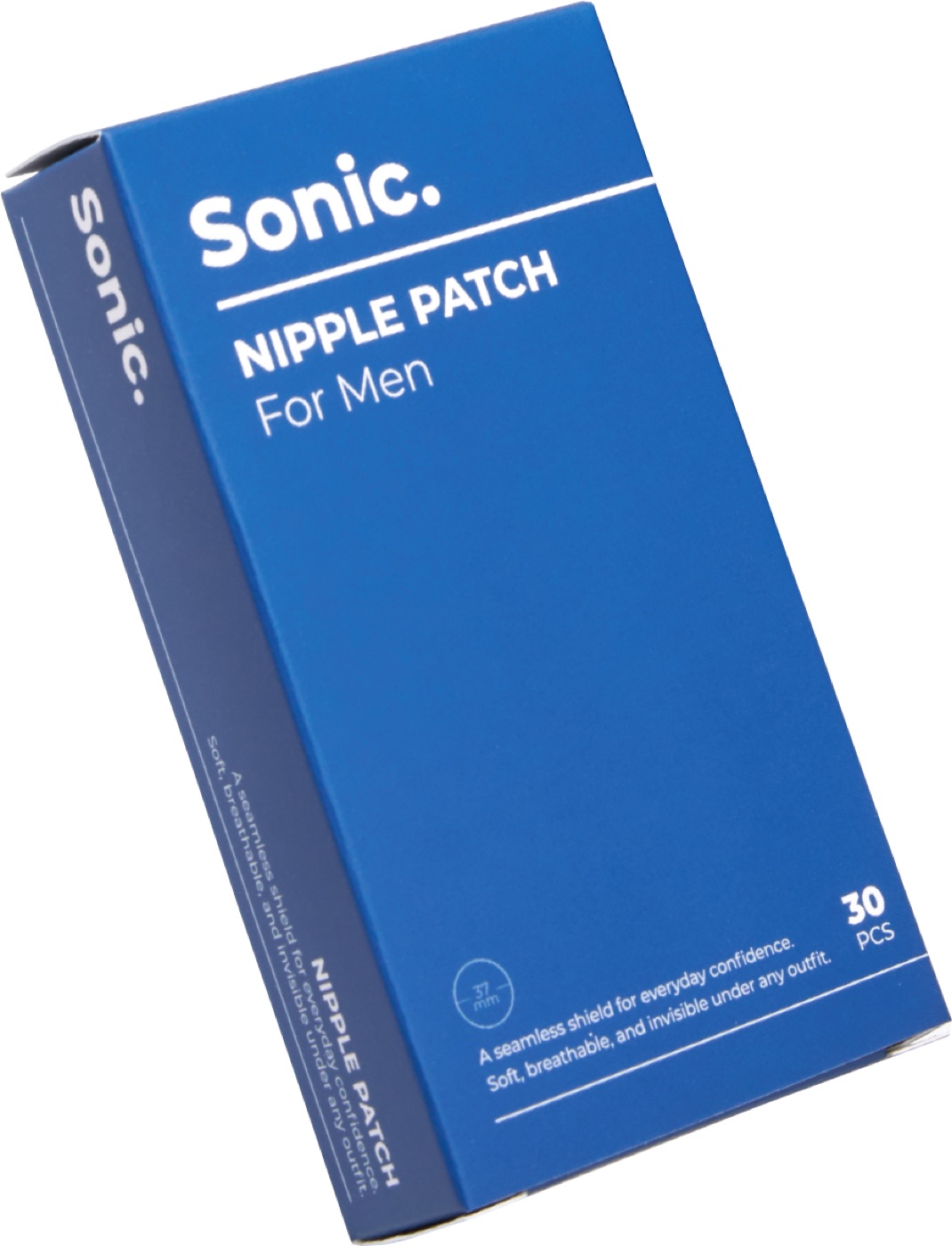
Here's what actually separates the two, and what to look for if you want your shirt to look like there's nothing under it.
The problem with band-aids is the edges
A band-aid is engineered to protect a wound, not to vanish. That means:
- Square or rectangular geometry. Straight edges catch light and cast a shadow line under thin fabric. Your eye is extremely good at spotting a hard edge where there shouldn't be one.
- A thick absorbent pad. It's a raised island in the middle. Under a fitted white tee you've traded a small bump for a bigger, weirder one.
- A stiff plastic or woven film. It doesn't move with skin. Raise your arms, and the corners lift.
- Adhesive designed to grip a wound margin. Which is to say: it grips hair. Removal is memorable.
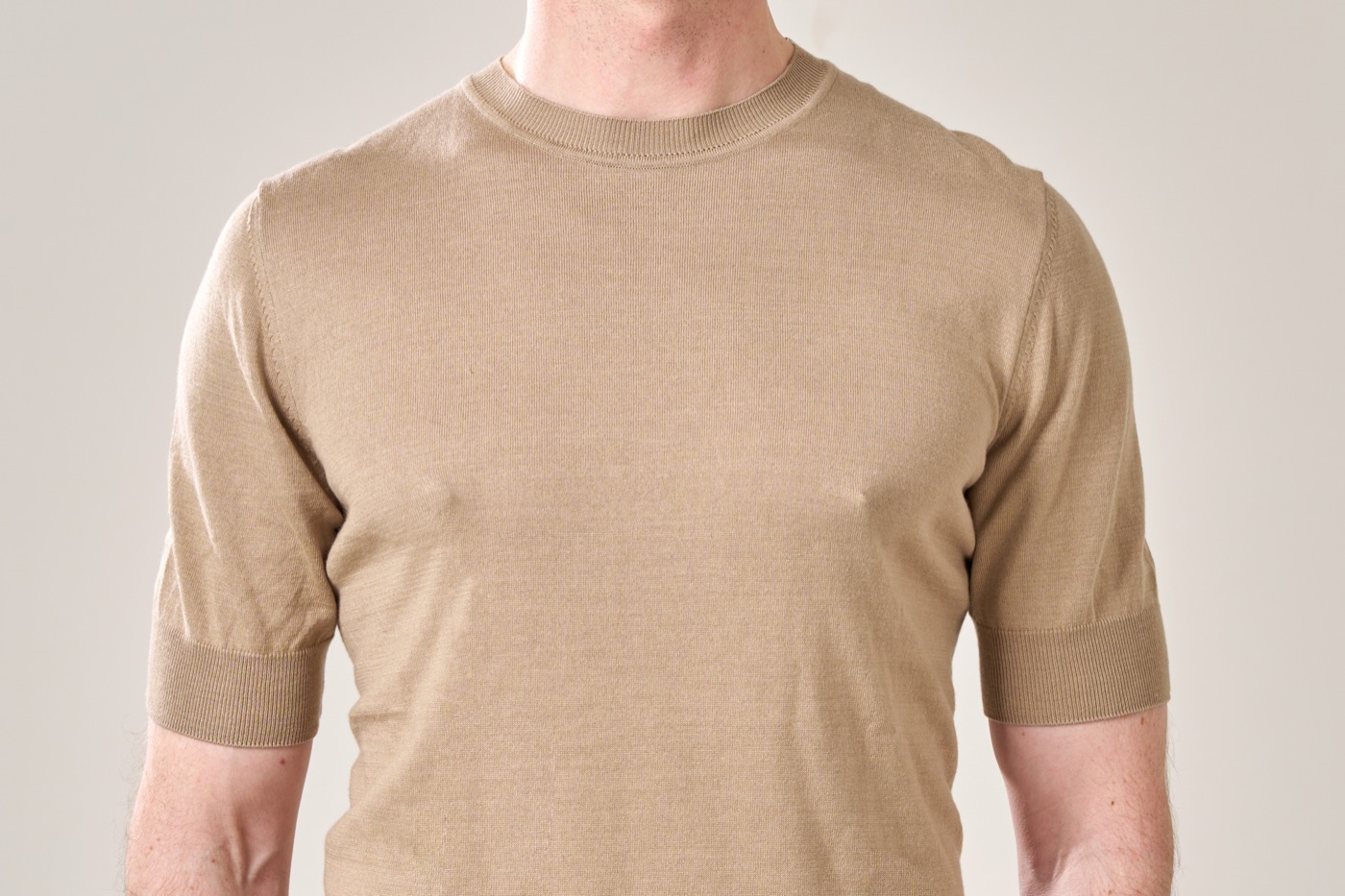
Under a black hoodie? Nobody will ever know. Under a white oxford, a lightweight merino crewneck, or a pale linen shirt in July? The band-aid is the thing people notice.
What a good nipple patch does differently
A purpose-built nipple patch for men is solving a cosmetic problem, not a medical one, so every design decision points at invisibility instead of protection. The good ones share four traits — and these are the four things to check before you buy anything:
1. Feathered edges, not cut edges. The perimeter should taper to almost nothing so there's no line where the patch stops and skin starts. If you can feel a distinct edge with your fingernail, your shirt will find it too.
2. Round, and sized for a man's chest. Roughly 2.5–3 inches. Too small and the patch outlines the areola instead of blending past it. Much of what's sold online is repackaged women's product — smaller, and shaped for a different purpose entirely.
3. Matte, skin-tone finish — not white, not glossy. Under a thin white shirt, a white patch reads as a bright disc. A satin or plastic sheen catches light through fabric. Matte and skin-toned is the whole game.
4. Uniform thinness. No pad, no gauze, no raised center. A patch should be one consistent, flat layer. Hold it to the light: if you can see structure in it, you'll see structure through a shirt.
Why this matters for how you dress
Here's the part nobody says out loud: most guys don't fix this problem, they route around it. They buy the charcoal tee instead of the white one. They keep the sweater over the shirt in a warm room. They own one nice linen shirt they've worn twice. Over a few years that quietly becomes an entire wardrobe made of thick, dark, safe fabrics — chosen by a worry, not by taste.
Getting that back is the actual point. Thin fabrics are the good fabrics. Cashmere, fine-gauge merino, poplin, linen, a proper heavyweight-but-soft white tee, a pale blue polo, anything in a bright color — these are the clothes that make you look put together, and every single one of them is thin enough to show what's underneath. Solve the show-through and the whole rack opens back up.
That's why band-aids don't really count as a solution. They're an emergency measure that lets you get through one evening. A patch you can wear every day, without thinking about it, is what changes what you buy.
Quick comparison
| Band-aid | Purpose-built nipple patch | |
|---|---|---|
| Shape | Square/rectangular, visible edges | Round, feathered edges |
| Thickness | Raised absorbent pad | Uniform, flat layer |
| Color | Beige "bandage" tone, often glossy | Matte skin tone |
| Under a white tee | Visible as a shape | Nothing to see |
| Removal | Pulls hair | Peels off cleanly |
| Reusable | No | Single-use, but cheap per wear |
What to look for when you buy
Skip anything sold as a unisex "nipple cover" without a stated diameter — that usually means small. Check that the adhesive is medical-grade silicone or acrylic rather than a generic craft adhesive; it's the difference between an eight-hour hold and a patch that curls after lunch. And buy enough to actually form the habit. Guys who buy a 10-pack ration them for special occasions; guys who buy a proper supply of men's nipple patches put one on with their socks and stop thinking about it, which is the entire objective.
The bottom line
Band-aids flatten. Patches disappear. If you only need to survive one wedding, raid the medicine cabinet. If you want to wear white, wear linen, wear the thin cashmere your partner bought you three Christmases ago and stop preemptively reaching for the jacket — get something built for the job.
FAQ
Can I just use band-aids on my nipples under a shirt? You can, and it'll flatten the outline — but the square edges and raised center pad usually show through thin or light-colored fabric. It works under thick, dark shirts; it defeats the purpose under a white tee, which is exactly when you need it.
Do band-aids hurt to take off? Often, yes. Wound-care adhesive is designed to grip firmly and doesn't distinguish between skin and chest hair. Patches made for this use a gentler skin-safe adhesive that peels off cleanly.
How long does a nipple patch stay on? A well-made one holds for a full day — through a commute, a warm office, and a couple of drinks after. Look for medical-grade adhesive and feathered edges; cheap patches tend to lift at the perimeter first, usually within a few hours.