

Sensitive Skin Nipple Patches for Men: What Actually to Look For
If your skin reacts to everything — the tag in a new tee, cheap tape, the sunscreen your friend swears by — then shopping for sensitive skin nipple patches for men is less about "does it work" and more about "will I regret this by 3pm." Fair. A patch that flattens beautifully and leaves you red and itchy for two days isn't a solution, it's a trade.
The good news: the qualities that make a patch gentle are the same ones that make it invisible. Thin, flexible, well-edged, sanely adhesive. You're not choosing between comfort and a clean line under a white shirt. You just have to know what you're looking at.
Why this matters more than it sounds
Here's the thing nobody says out loud: most guys with this problem have quietly edited their wardrobe around it. Black tees. Thicker oxfords. Layering in July. That grey marl tee you love and wear once a year because it's a little too soft.
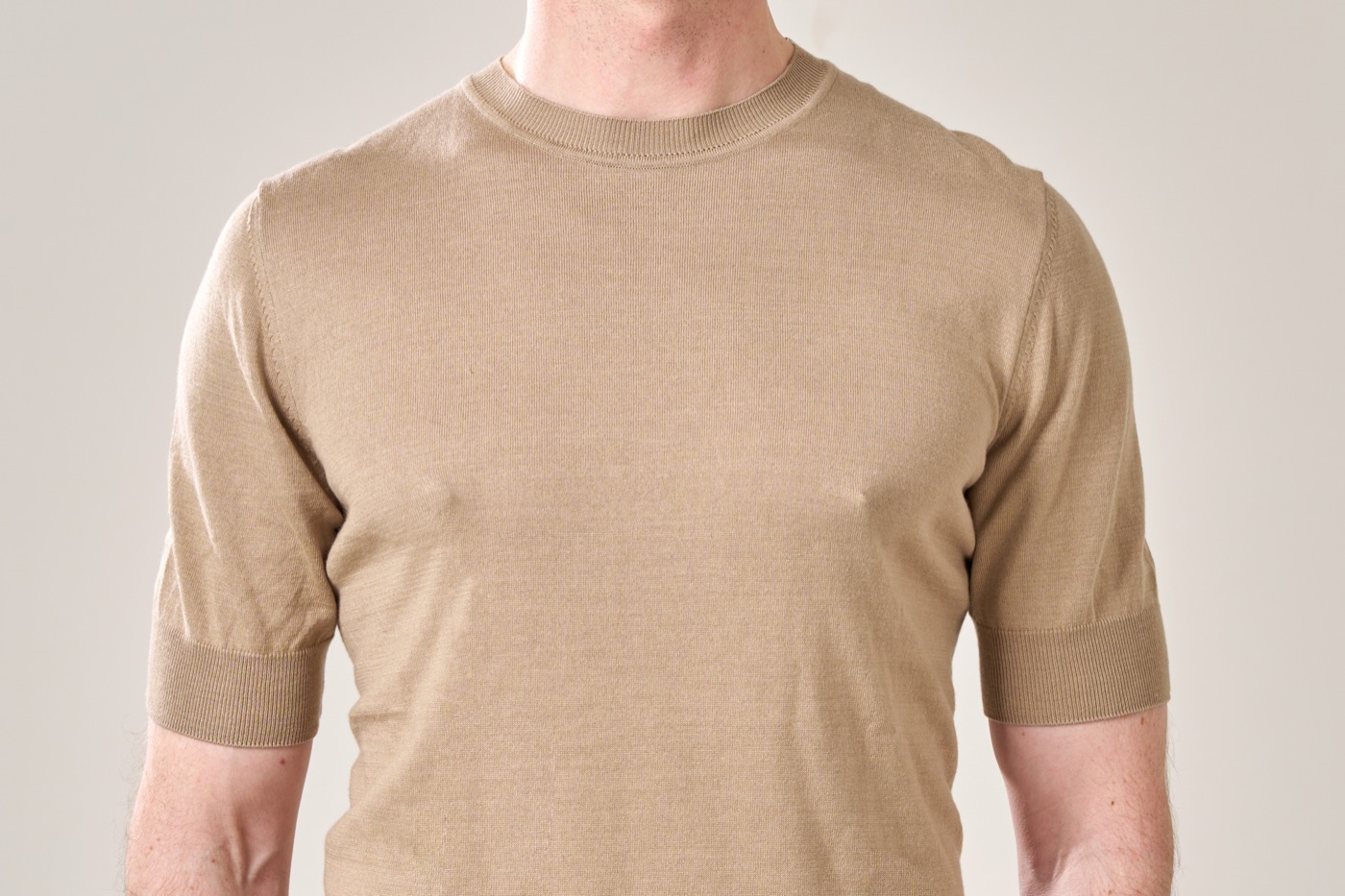
That's the actual stake here. Not "chafing." Not "gym." It's whether you get to own a white t-shirt, a fine-gauge merino crewneck, a linen shirt in August, a pale blue poplin that isn't lined like a tent. A patch that irritates you gets used twice and abandoned, and you go right back to the black tees. So the gentleness question is the wardrobe question.
1. The adhesive is the whole ballgame
Adhesives are not interchangeable. What you want is a medical-grade, skin-safe acrylic or silicone-based adhesive — the family used in wound dressings, designed to hold on skin for hours and release without a fight.
What to avoid: rubber-based "fashion tape" adhesives and anything unlabeled from a bulk pack. They grip hard, and they release harder. If a product page won't tell you what the adhesive is, that's the answer.
A practical test on your first patch: apply one, wear it a few hours, and look at the skin when you remove it. Slight pinkness that fades in ten minutes is normal adhesive-lift. Raised, itchy, or still angry an hour later is a reaction — stop using it.
2. Thin enough that the edge disappears
Thickness does double duty. A thick patch shows its own outline under thin fabric — you've traded a nipple shape for a circle shape, which is arguably worse and definitely stranger.
But thickness also causes irritation, because a stiff patch doesn't move with your skin. It shears against it every time you reach for something. That micro-friction, over eight hours, is what leaves a ring.
Look for a patch measured in fractions of a millimetre with a feathered or tapered edge rather than a blunt die-cut one. Tapered edges lie flat, so the fabric drapes across them instead of catching. This is the single biggest visual difference between a good patch and a cheap one under a white tee.
3. Breathability, because eight hours is a long time
Occlusion — sealing skin under a non-breathable film — is its own irritant, separate from adhesive. Trapped moisture softens the skin and makes it far more reactive to everything else. A breathable backing lets the skin underneath behave normally, which is why the same person can react to a plasticky patch and be completely fine with a well-made one.
If you run warm, wear a lot of merino, or your day involves a commute in summer, this is the spec that decides whether hour six is comfortable.
4. Fragrance, dyes, and "extras" you don't need
Skip anything scented. Skip aggressively pigmented patches. Fragrance compounds and dyes are two of the most common contact irritants, and they exist on a nipple patch for exactly no reason — nobody is smelling it.
Skin tone matching should come from a neutral, matte finish rather than heavy pigment. Matte matters for a second reason too: a slightly glossy patch can catch light through thin white cotton and read as a faint sheen. Matte just vanishes.
5. Fit for how you actually dress
Match the patch to your thinnest shirt, not your average one. If it's clean under white jersey, it's clean under everything.
Two habits that make a real difference on reactive skin: apply to clean, completely dry skin with no lotion or oil underneath (residue makes adhesive grip unevenly, which means it pulls harder in patches), and remove slowly by rolling rather than snapping it off. Warm skin from a shower releases adhesive more easily than cold skin.
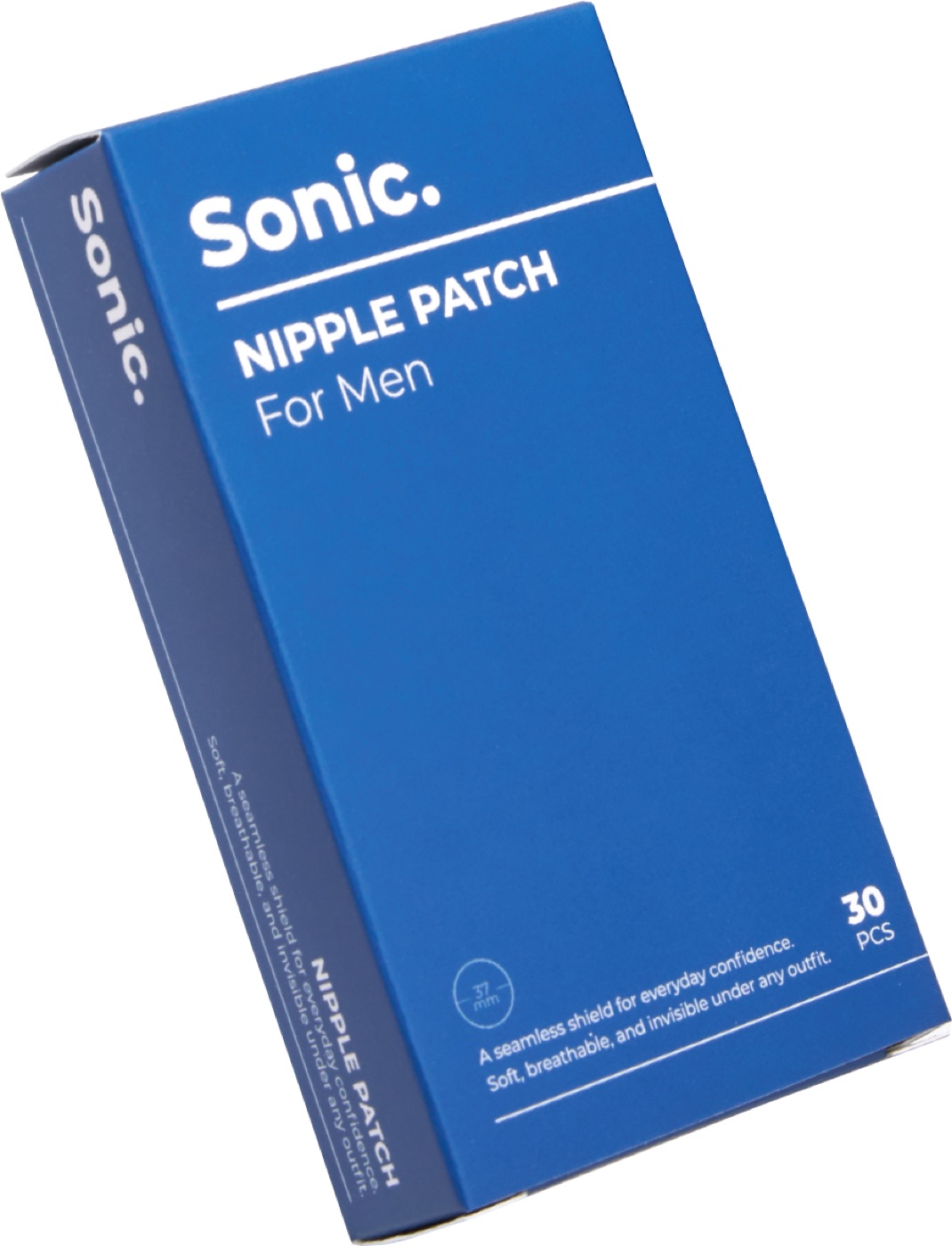
The Sonic Nipple Patch was built against this exact list — thin profile, tapered edge, skin-safe adhesive, matte neutral finish, no fragrance — because the point was never the patch. The point was being able to say yes to a white linen shirt at a summer wedding without doing math about it.
The short version
Buy for: medical-grade adhesive, sub-millimetre thickness, tapered edges, breathable backing, matte and unscented. Buy against: rubber tape adhesives, thick foam rounds, glossy finishes, anything fragranced.
Get those right and the whole thing stops being a decision you make every morning. You put on the shirt you wanted. That's it — that's the outcome. If you're ready to stop dressing around it, start with the men's patches here.
FAQ
Are nipple patches safe for sensitive or eczema-prone skin? Generally yes, if the adhesive is medical-grade and skin-safe and the backing breathes — that's the same category used for wound dressings worn for days. Test one for a few hours first, and don't apply over broken or actively flaring skin.
Why did a previous patch leave a red ring? Usually one of three things: a rubber-based adhesive, a patch stiff enough to shear against your skin as you move, or a non-breathable backing trapping moisture. A thin, flexible, breathable patch removed slowly typically doesn't do it.
Will a gentler patch still hide anything under a white t-shirt? Yes — thinness and a tapered edge are what make a patch invisible, and they're also what make it comfortable. A gentle patch isn't a weaker one; the same specs drive both.