

What to Wear Under a White Dress Shirt (The Honest Answer)
Deciding what to wear under a white dress shirt sounds like it should be simple, and somehow it never is. Wear nothing, and the shirt shows everything — nipples, chest hair, the works. Wear a white undershirt, and now you've got a glowing collar line and sleeve hems on display, plus an extra layer of heat. Every option seems to trade one problem for another.
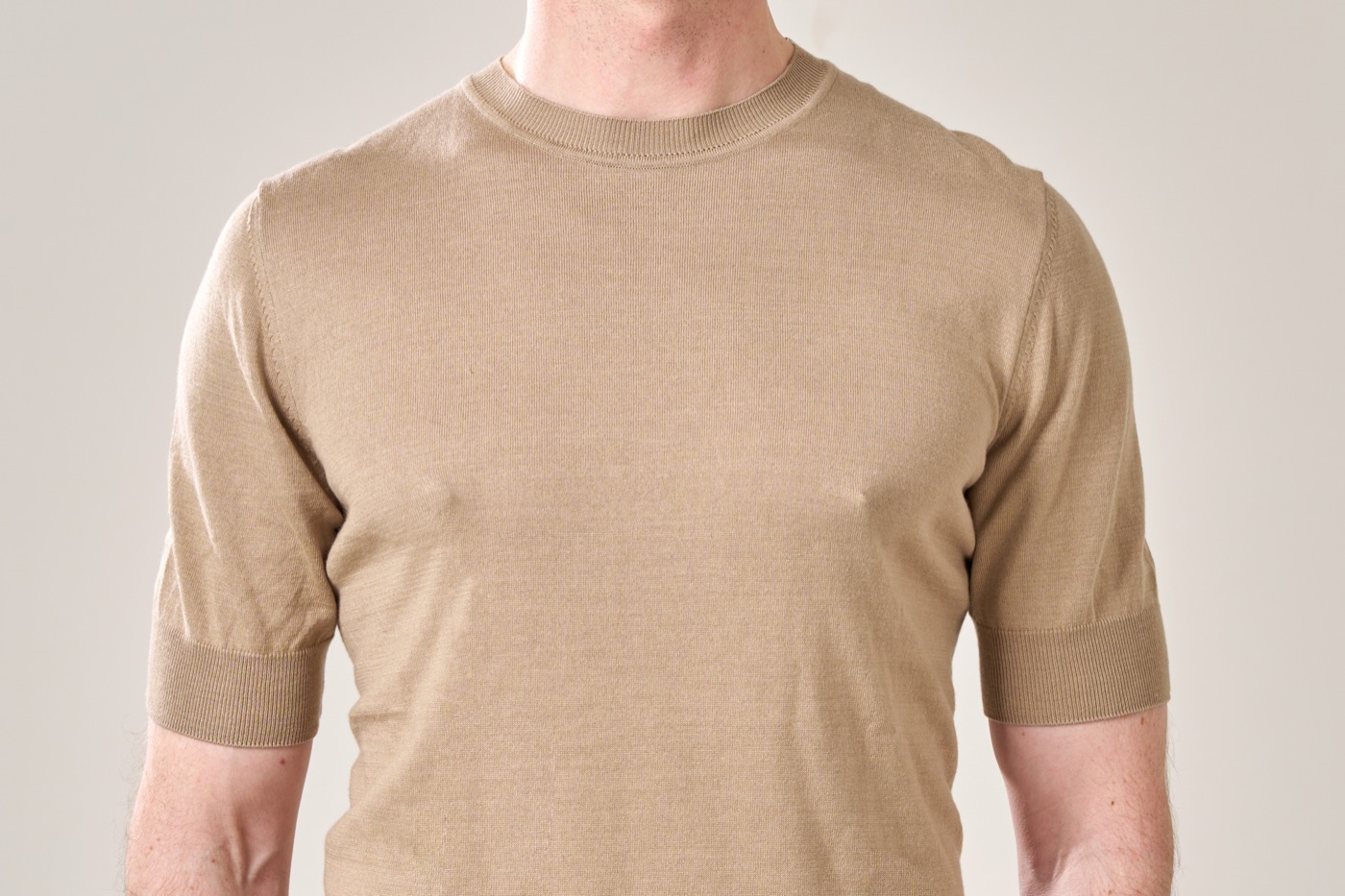
So let's actually compare them. There are really only three plays: an undershirt, nothing at all, or a nipple patch. Here's how each one performs on the things that matter — show-through, heat, and how sharp the shirt looks.
Option 1: The undershirt (the classic, with caveats)
The undershirt is the traditional answer, and it does real work: it absorbs sweat before it reaches the dress shirt, protects the fabric from deodorant marks, and blurs whatever's underneath.
But most men wear the wrong one, and the wrong undershirt is worse than none:
- Never white. White under white creates maximum contrast — the collar, hems, and sleeves show up as bright lines. Go heather grey or a tone close to your skin; both vanish under white fabric.
- Deep V-neck or invisible-cut only. A crew neck peeks out the moment you unbutton your collar. A deep V stays hidden even with two buttons open.
- Tight and long. It should fit like a second skin and tuck into your underwear so it doesn't ride up and bunch. Loose undershirts create lumps that telegraph through the dress shirt.
The real costs: an undershirt is warm (rough in summer, brutal at a wedding), adds visible bulk under slim-cut shirts, and even the best skin-tone V-neck still shows faint edge lines under truly thin poplin. It's a solid winter play. It's a compromise the rest of the year.
Option 2: Nothing (bold, but the shirt tells on you)
Skipping the undershirt gives you the best drape and the coolest wear — one light layer, the way a good shirt is designed to sit. The problem is what thin white fabric does with bare skin behind it: nipples show first (color and texture), chest hair second. In bright office light or sunlight, a quality white poplin is closer to a suggestion than a barrier.
If your shirt is a heavier oxford or twill, going bare can genuinely work. Under fine, lightweight cotton — the dressy stuff — it's a gamble you lose in daylight.
Option 3: The nipple patch (the best of both)
Here's the option most guides skip because it's newer to the men's side of the closet: a thin, skin-tone nipple patch applied directly to the skin. It targets the single most visible thing under a white shirt — the nipple outline — without adding a layer of fabric.
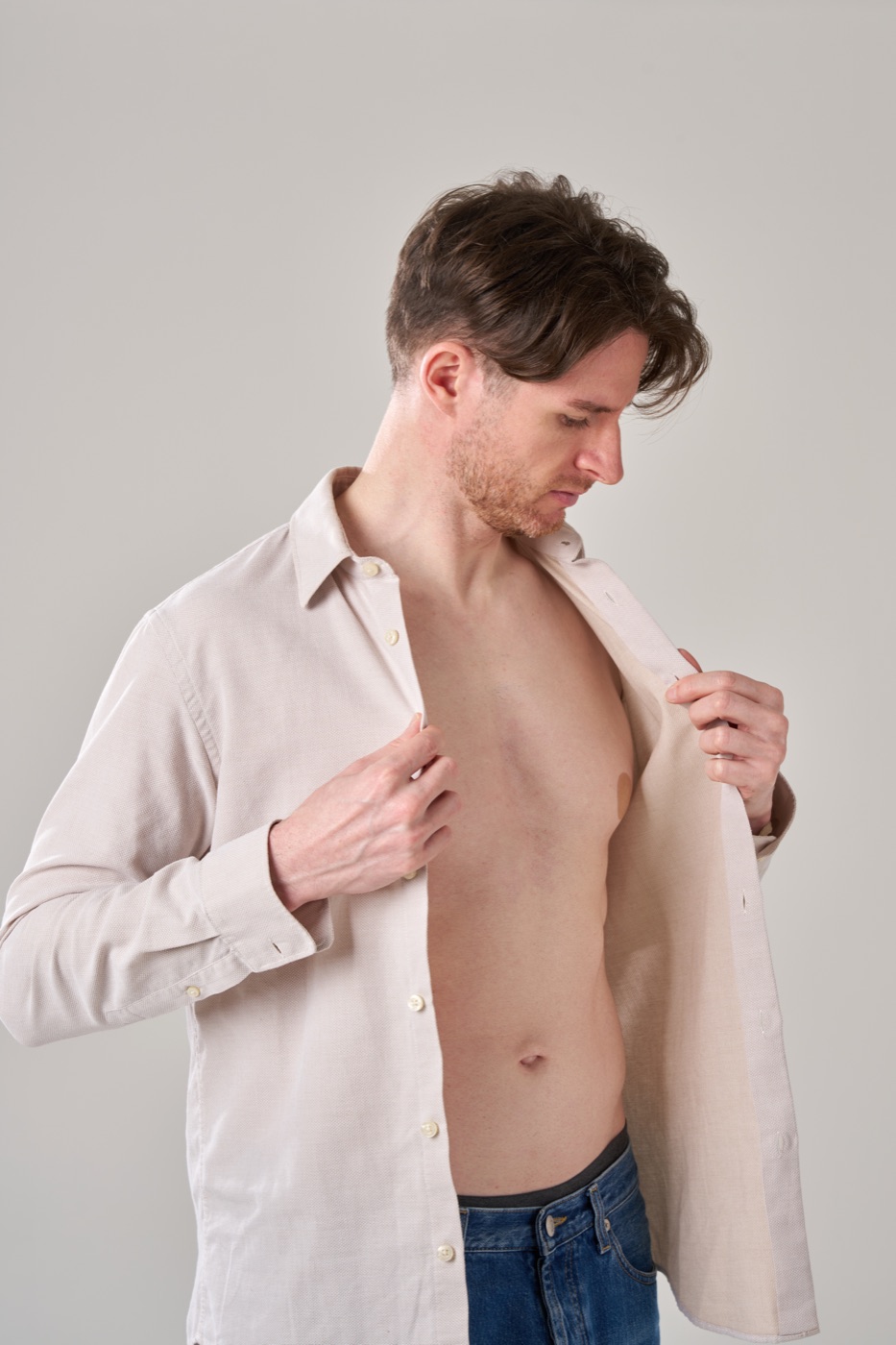
What you get:
- The clean look of wearing nothing. No collar line, no hems, no mid-torso shadow where an undershirt ends. The shirt drapes straight over smooth skin.
- The coverage of wearing something. The patch is matte and skin-toned, so the contrast that thin white fabric loves to reveal simply isn't there.
- All-day hold. A purpose-made patch like the Sonic Nipple Patch is designed to stay put through sweat, a commute, and a full day of wear, then peel off cleanly at night. (You'll sometimes see the same idea called a nipple cover — a men's patch is the thin, matte, stays-on version.)
What it doesn't do: absorb sweat or block deodorant marks. If you sweat heavily and that's your primary concern, an undershirt still earns its keep. For everyone whose actual worry is "does my chest show through this shirt," the patch solves it with zero added heat.
The decision, by situation
- Summer, weddings, warm offices: Patch, no undershirt. One light layer, nothing showing, no sweat circles from overheating in an extra shirt.
- Winter or heavy-sweat days: Grey or skin-tone deep-V undershirt — and honestly, a patch underneath it too if the undershirt is thin, because thin white over thin grey can still hint at an outline.
- Thin, premium dress shirts (the ones that show everything): Patch, always. It's the only option that keeps the drape the shirt was cut for.
- Heavy oxford cloth: You can get away with nothing. Enjoy it.
The bottom line
"What to wear under a white dress shirt" used to be a choice between showing through and bulking up. It isn't anymore. An undershirt is for sweat and warmth; a nipple patch is for looking sharp in the shirt itself. Pick based on the day — and if the shirt is thin enough that you're even asking, the patch is the answer.
FAQ
Should an undershirt under a white dress shirt be white? No — white shows the most under white fabric. Heather grey or a tone close to your skin disappears best. Deep V-neck, snug fit, long enough to stay tucked.
Can I skip the undershirt entirely with a white dress shirt? Yes, if you handle show-through. A skin-tone nipple patch smooths the most visible detail, letting you wear one light layer with a clean drape — the way the shirt was designed.
Do nipple patches stay on all day under a dress shirt? Yes — a purpose-made men's patch uses skin-safe adhesive built to hold through sweat and a full workday, then peel off cleanly without pulling.