

Gynecomastia Shirt Patch: What to Look For Before You Buy
If you've been searching for a gynecomastia shirt patch, you already know the specific problem. It's not the chest itself — it's the two spots that announce themselves the second you put on anything thin, light, or soft. So you've built a wardrobe around avoidance: black, charcoal, navy, heavy cotton, always a layer. A patch fixes that. But patches vary wildly, and the wrong one is arguably worse than nothing, because a visible square under a white shirt draws more attention than what you were hiding.
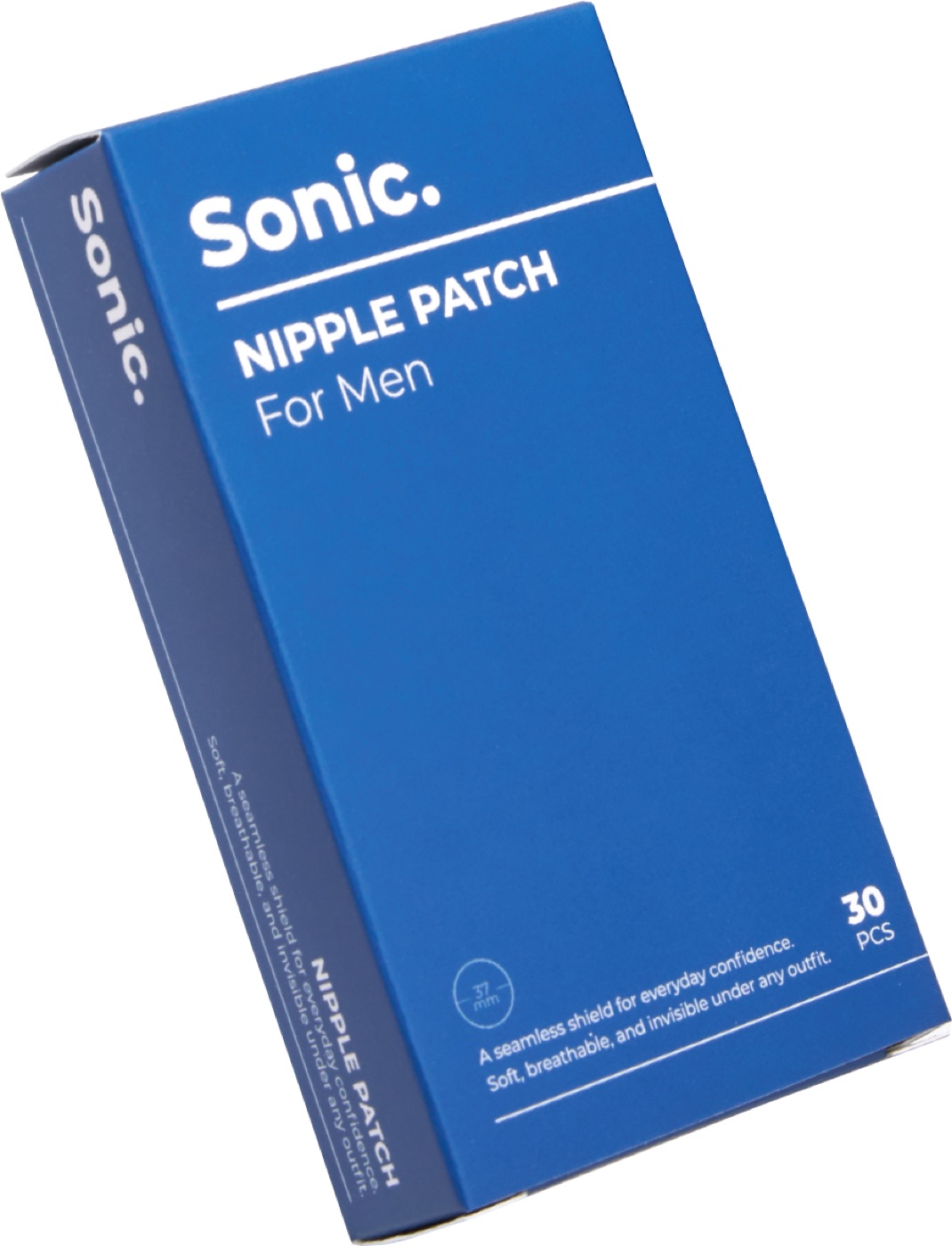
Here's what actually separates a good one from a bad one.
Thickness is the whole game
The single biggest failure is a patch you can see the edge of. Under a heavy hoodie, anything works. Under a white tee in daylight, a thick patch reads as a distinct disc — a shadow, a ridge, a little step where the material stops.
What you want is something measured in fractions of a millimeter, with a feathered or tapered edge rather than a blunt cut one. Run your thumb off the edge of a patch before you commit to it. If you feel a clear lip, your shirt will find it too. The nipple patches we make for men are built specifically around this — the edge is the product.
Skin tone, not "nude"
"Nude" in most product listings means one beige shade that matches roughly nobody. Under a white or pale shirt, a mismatched patch is a pale smudge. This is worse on light fabrics than dark ones, which is exactly backwards from what you need.
Look for a shade that disappears against your chest, not against a stock photo. Test it in real light — daylight near a window, not bathroom lighting. And check it under the actual shirt you're worried about, because a white oxford transmits color differently than a grey marl tee.
The adhesive has to survive a full day, not an hour
A patch that peels at the corner by 2pm is a patch you'll stop wearing. The failure mode isn't dramatic — it's a corner lifting under your shirt, then you're doing the discreet-press-through-the- fabric move in a meeting.
Signs of a good adhesive: it's medical-grade or skin-safe silicone rather than a generic acrylic sticker glue; it holds through sweat and body heat; and — critically — it comes off cleanly. Cheap patches solve staying-power by being aggressive, and then you pay for it in the shower. Sticky enough for a workday, gentle enough to remove without wincing. Both, or it's not the right product.
Matte finish, always
Some patches have a slight sheen. Under a camera flash, overhead office lighting, or a bright day, that sheen telegraphs through thin fabric as a faint bright spot. A matte surface with a soft texture disappears; a glossy one doesn't. This is a small detail that almost no listing mentions and that you notice immediately in photos.
Shape and size: bigger isn't better
Oversized patches feel like more coverage, but a wide disc under a fitted shirt creates a visible plateau. What you want is enough to flatten and cover with a bit of margin — not a coaster. Round with a soft edge beats large every time.
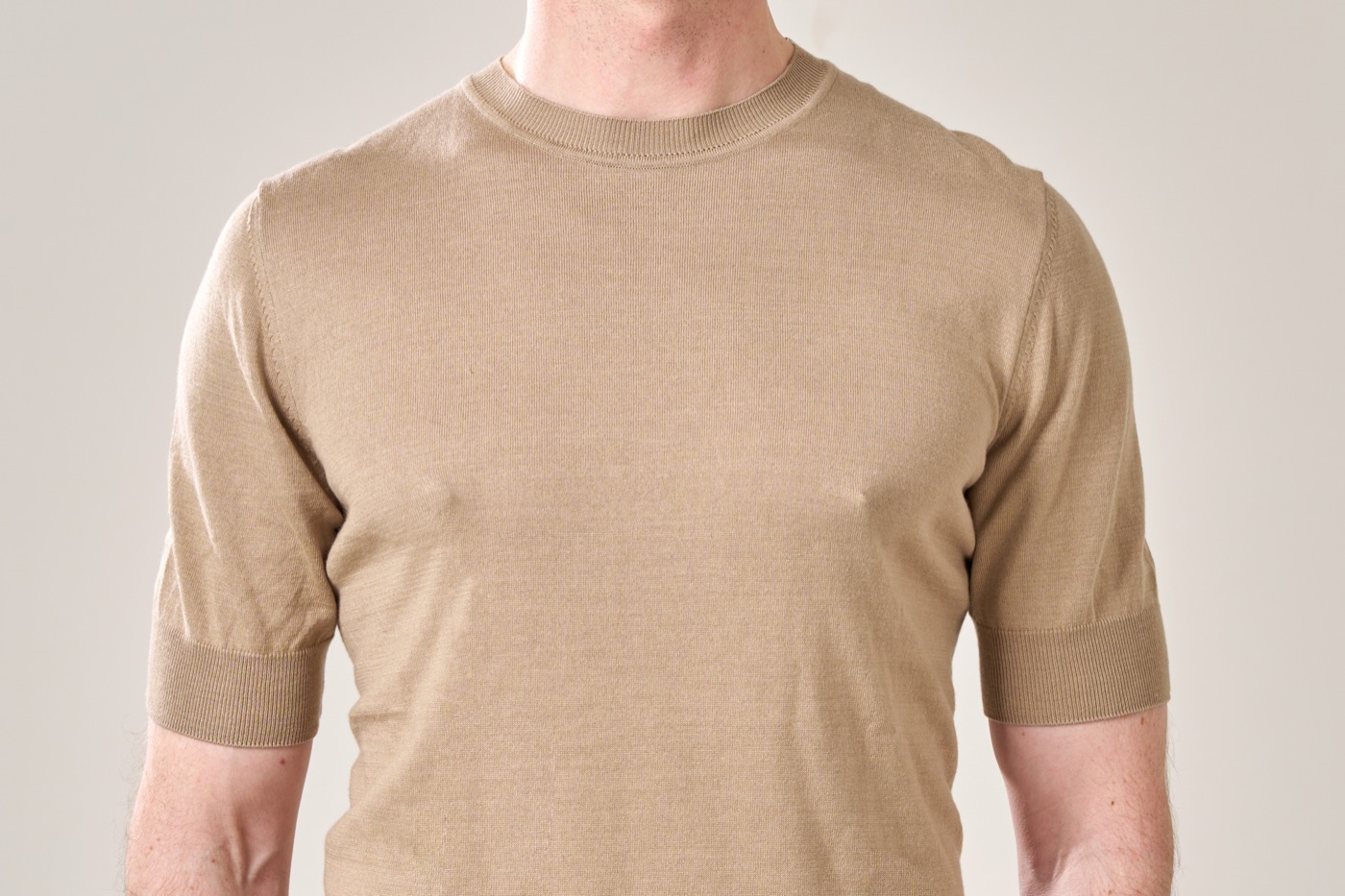
The wardrobe test
Here's the real spec sheet. A gynecomastia shirt patch is only good if it survives these:
- A plain white cotton tee. The hardest test there is. Thin, light, clingy.
- A white or light-blue dress shirt, no undershirt. Summer, weddings, anywhere a jacket is optional.
- Fine-gauge knitwear or cashmere. Soft fabric drapes and clings to whatever's underneath.
- A polo. Especially pale colors, especially in a piqué that isn't as forgiving as it looks.
- Linen. Light, translucent, and worn precisely when you don't want a second layer.
If a patch passes all five, you've stopped shopping by fabric weight and color, which is the actual point. That's the thing worth paying for — not the patch, the fact that your closet opens back up.
Buy in a quantity that matches how you'll use it
People underbuy. They order a small pack, treat each patch like it's precious, ration them for "important" days, and never build the habit. The point is that it becomes unremarkable — you put them on with your socks and forget about it.
If you're going to wear them a few times a week, buy for a few times a week. Our men's nipple patches are priced with that in mind, because a patch you're too precious about is a patch that stays in the drawer while you reach for the black shirt again.
What a patch does and doesn't do
Worth being straight about this: a patch is a clothing solution, not a medical one. It doesn't treat gynecomastia, shrink anything, or change your chest. If gynecomastia is bothering you physically or you want to address it directly, that's a conversation with a doctor.
What a patch does is remove one specific daily friction — the outline through fabric — so you can wear what you want today, while whatever else you decide to do is on its own timeline. Those are separate problems, and only one of them can be solved in eight seconds in front of the mirror.
FAQ
Will a patch flatten gynecomastia or just cover the nipple? It covers and smooths the nipple area so there's no outline or show-through. It's not compression wear — it won't reshape your chest, but it does solve the part that's visible under a thin shirt.
Can I see it under a white t-shirt? Not if it's thin enough and the shade is right. Those two things — a tapered edge and a matched skin tone — are what determine whether it disappears. A thick, badly matched patch will absolutely show, which is why it's worth being picky.
Does it come off in the shower or at the gym? A quality skin-safe adhesive holds through sweat and a full day of wear. You take it off when you're done, and it peels away cleanly rather than pulling at skin.