

What to Look for in a Moobs Patch (Before You Buy One)
If you've searched "moobs patch," you already know exactly what you're trying to fix: the outline that shows up the second you put on anything thin. Chest shape is one thing — the two little points that announce themselves through a white tee are another, and they're the part you can actually solve today. A good patch is a thin, skin-tone adhesive that sits flat under the shirt and makes the whole area read as smooth. A bad one is a wad of silicone that shows up as a circle. The difference is entirely in the details below.
First, be clear on what a patch does
A patch doesn't change your chest. It removes the outline. That distinction matters, because most guys searching this term describe the same experience: you're not self-conscious in a hoodie, you're self-conscious in a white oxford. Fabric is the variable. The patch takes the fabric variable off the table so you can wear the shirt that's been sitting in your closet for two years.
That's the actual win here — not a body change, a wardrobe change.
The five things that separate a good patch from a bad one
1. Thickness — this is the whole game
Anything over about a millimetre of silicone will telegraph its own shape under thin cotton. You've traded a nipple outline for a coaster outline, which is worse because it's unexplainable. Look for patches described as thin or ultra-thin, not "gel" or "cushioned." If a product photo shows the patch standing up on its own like a poker chip, keep scrolling. A well-made nipple patch for men should flop when you hold it.
2. Tapered edges, not cut edges
This is the tell that separates purpose-built products from repackaged generics. A patch die-cut with a flat, straight edge creates a hard step where it meets skin — under a knit polo, you see a faint ring in raking light. A tapered or feathered edge fades into the skin so there's no line to catch. Run your thumb over the rim: if you can feel a lip, your shirt will see it.
3. Matte finish, matched shade
Cheap patches are shiny. Under a white linen shirt in daylight, a glossy patch reflects differently than skin and you get a subtle bright spot. Matte finish, in a shade near your own tone, disappears. You don't need a perfect match — you need "not shiny" and "not two shades off."
4. Adhesive that survives a real day
The two failure modes are opposite and both bad: adhesive so weak it lifts at the edge by lunch (that lifted edge is now a visible crease under your shirt), or so aggressive it takes skin and chest hair off at 6pm. What you want is a skin-safe medical-grade adhesive rated for all-day wear that peels cleanly. Reusable patches sound economical but almost always mean weaker tack — the adhesive has to survive washing, so it grips less.
5. Size that fits under the shirt, not under a costume
Bigger isn't safer. An oversized patch has more surface area to wrinkle, more edge to show, and more chance of peeking out of a low-scoop tee. You want just enough coverage to flatten the area and nothing more.
Why this matters for how you dress
Here's the part nobody puts in the product description. Most guys who buy their first patch have quietly built a whole wardrobe around avoidance: black, navy, charcoal. Thick cotton. Nothing tucked. A jacket in July. It's not a style choice, it's camouflage — and after a few years you forget it was ever a choice at all.
The fabrics that give you away are exactly the good ones: white tees, poplin dress shirts, fine merino and cashmere, polos, linen, anything in a bright colour or a soft drape. Which means the show-through problem has been quietly deleting the top half of menswear from your options.
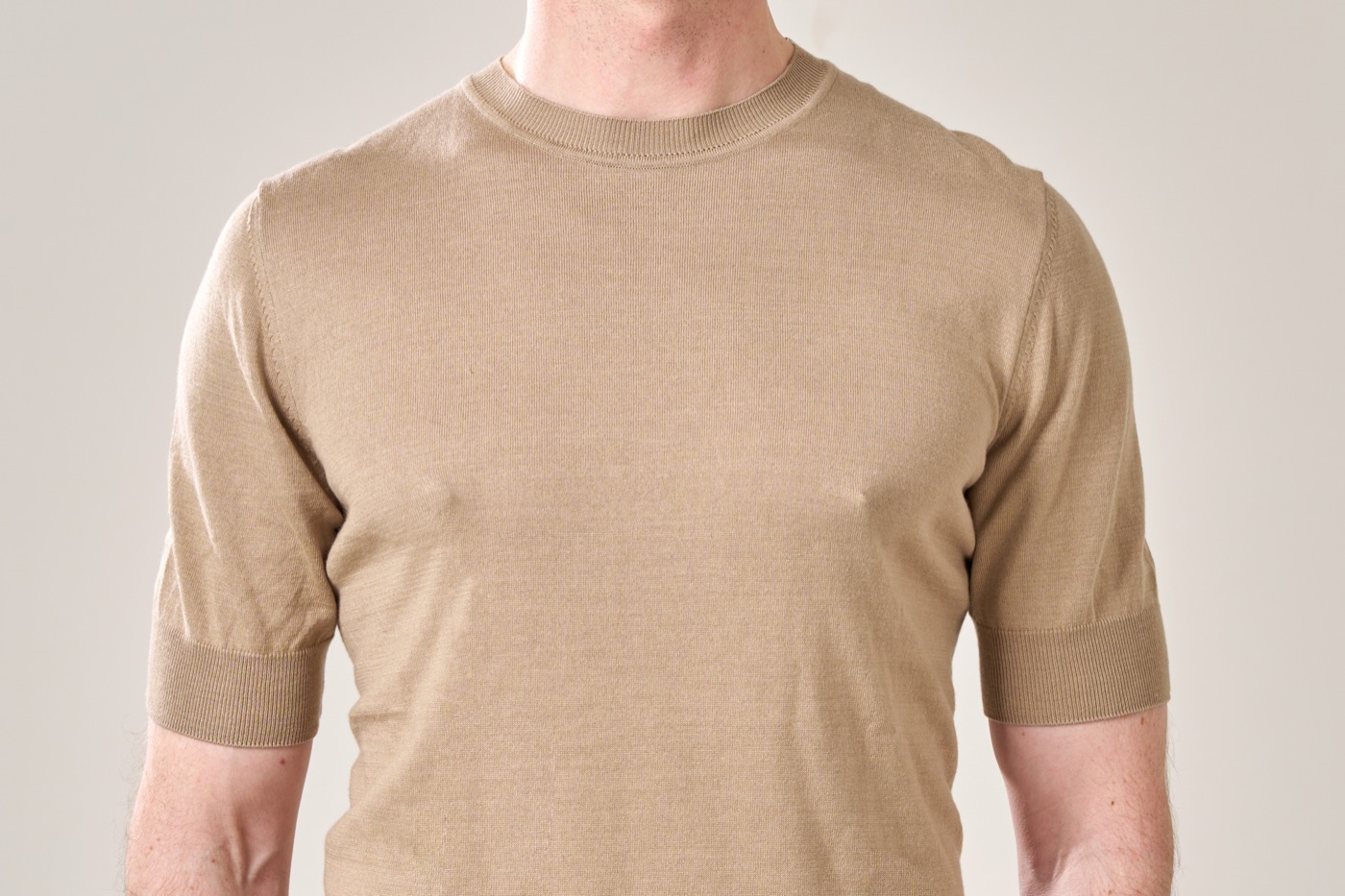
Sorting that out is a fifteen-second morning step. Patch on, shirt on, done — and suddenly the white linen shirt is just a shirt. Guys tend to describe the change less as "problem solved" and more as "I stopped thinking about my chest by 9am." That's the thing you're actually buying.
Quick shopping checklist
- Thin enough to drape, not hold its shape
- Tapered edge, no hard rim
- Matte, roughly skin-tone
- Medical-grade adhesive, single-use for grip
- Modest size, not maximum coverage
- Made for men's chests — the coverage geometry is different from a women's nipple cover
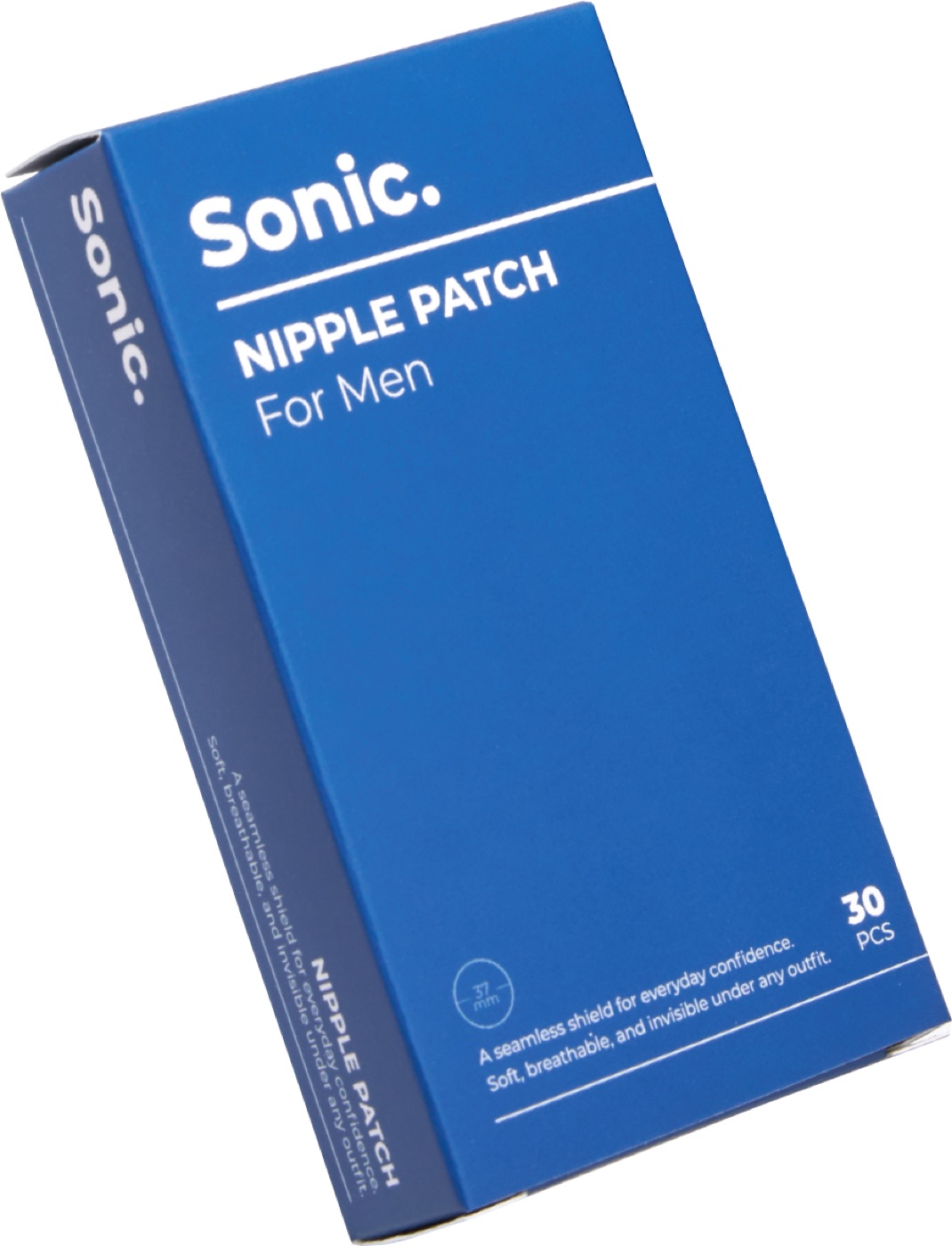
Sonic's skin-tone nipple patches for men were built against exactly this list, because every one of these points came from a way the alternatives fail.
What not to bother with
Band-aids. They flatten, and they also show as rectangles. Under a white tee, a rectangle is louder than what you were hiding.
Layering an undershirt. Works in November, useless in July, and does nothing under a t-shirt itself — which is the exact garment that started this.
Sizing up your shirts. Draping helps a little, but a shirt that's too big reads sloppy and you've now made a fit compromise to solve an adhesive problem.
FAQ
Will a moobs patch make my chest look flatter? It won't change your chest size, but it removes the outline — which is the part that actually shows through a shirt. Most guys find that's 90% of what was bothering them.
Does it stay on if I sweat or wear it all day? A patch with a medical-grade adhesive is made for a full day, including a hot commute. The ones that lift early are usually reusable types, where the adhesive is compromised to survive washing.
Can I wear one under a white t-shirt without it showing? That's the hardest test, and it's the one to judge by. A thin, matte, tapered-edge patch passes it. A thick or glossy one won't — under white cotton you'll see the patch instead of the nipple.