

Mighty Patch for Nipples: What to Look For Before You Stick One On
Somewhere around 11pm the night before an important day, a lot of guys have typed "mighty patch for nipples" into Google. The logic makes sense — it's a small round patch, it sticks to skin, it's in the bathroom drawer already. But a hydrocolloid acne patch is engineered to pull gunk out of a pore, not to disappear under a shirt. It's thick, it's a slightly wrong shade of translucent beige, and under a white tee it reads as two suspiciously perfect circles.
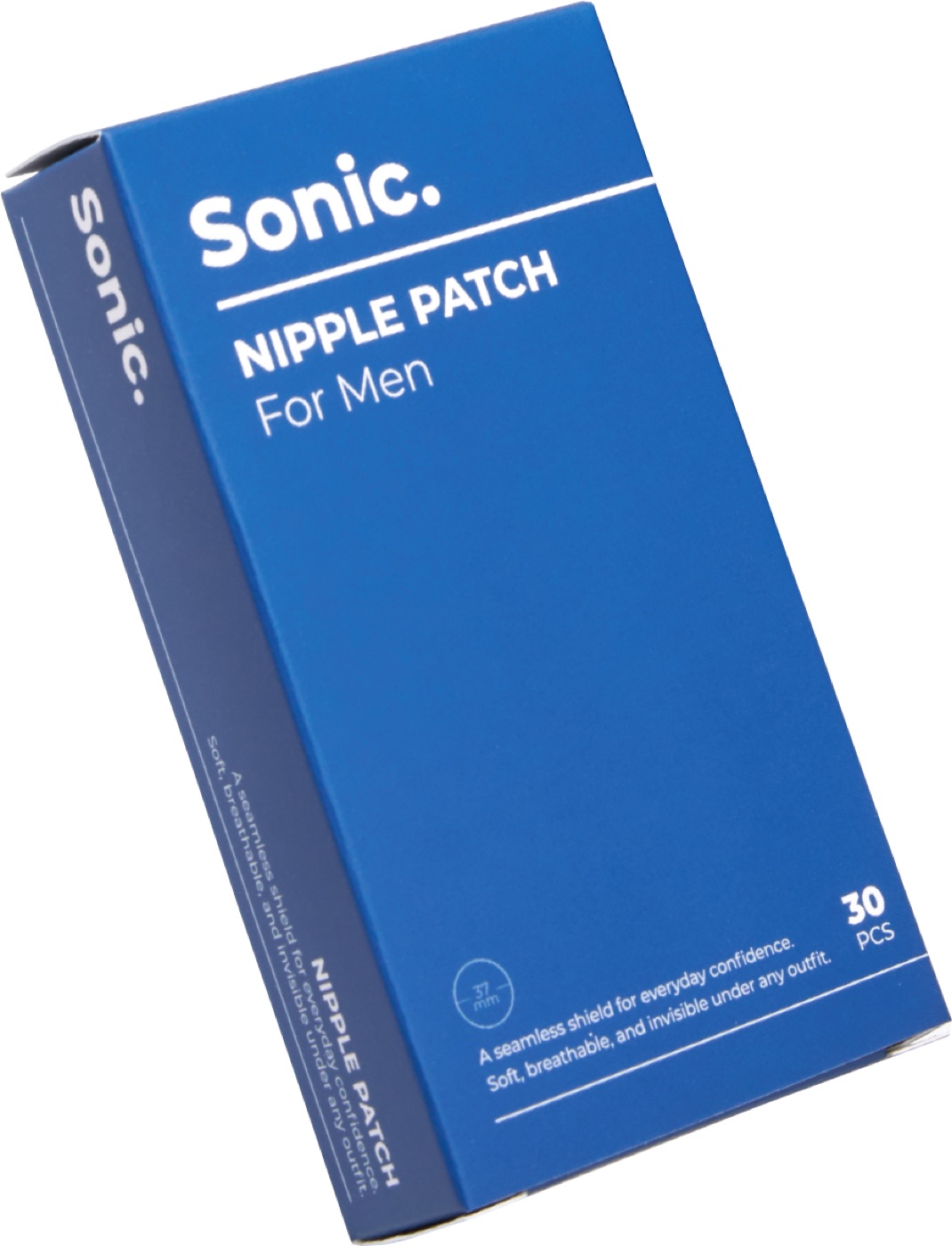
The good news is that the category you actually want exists, and it's cheap. Here's what separates a nipple patch that genuinely vanishes from one that just relocates the problem.
Why an acne patch doesn't work here
Hydrocolloid is designed to swell as it absorbs. That's the whole point of it. Under a thin shirt, that swelling is exactly what you don't want — you've traded a soft outline for a hard-edged disc. Three specific failure modes:
- Edge visibility. Acne patches are die-cut with a blunt edge that catches light and fabric.
- Sheen. Hydrocolloid goes slightly glossy and cloudy against skin. Cotton picks it up.
- Size. Most are 12–15mm — too small to cover the area, so you get coverage and an outline.
They also cost more per use than a purpose-made patch, which is a funny thing to discover after the fact.
The five things that actually matter
1. Thickness — thinner than you think
The number to look for is under 0.2mm. At that thickness the patch stops being an object on your chest and becomes part of your skin's surface. Anything approaching 1mm — most acne patches, all band-aids — will telegraph through white poplin, single-jersey cotton, and any fine-gauge knit.
2. A feathered edge, not a cut edge
This is the single biggest tell and almost nobody mentions it. A quality patch tapers at the perimeter so there's no hard step from patch to skin. A stamped edge creates a shadow line that lighting — office fluorescents, a restaurant downlight, direct sun through a window — will find. Run your thumb outward across the patch: if you feel a lip, your shirt will see it.
3. Matte, skin-toned finish
Skin isn't shiny and it isn't white. A patch should sit in a neutral skin-tone range with a matte surface. Hold it up to a white t-shirt in daylight before you trust it with a real day. White or clear patches actually show more under white fabric, because white cotton is slightly translucent and reads what's beneath it.
4. Adhesive that holds without being aggressive
You want a medical-grade acrylic or silicone adhesive that survives a full workday plus a warm commute, then peels off without taking anything with it. Cheap patches fail in one of two opposite directions: they curl off by lunch, or they grip so hard that removal is genuinely unpleasant. The nipple patches we make for men are built to sit through 8–12 hours and come off in one piece.
5. Breathability
If a patch traps moisture underneath, the adhesive lifts at the edge and you get a rolled rim under your shirt — worse than nothing. Look for a perforated or vapor-permeable backing.
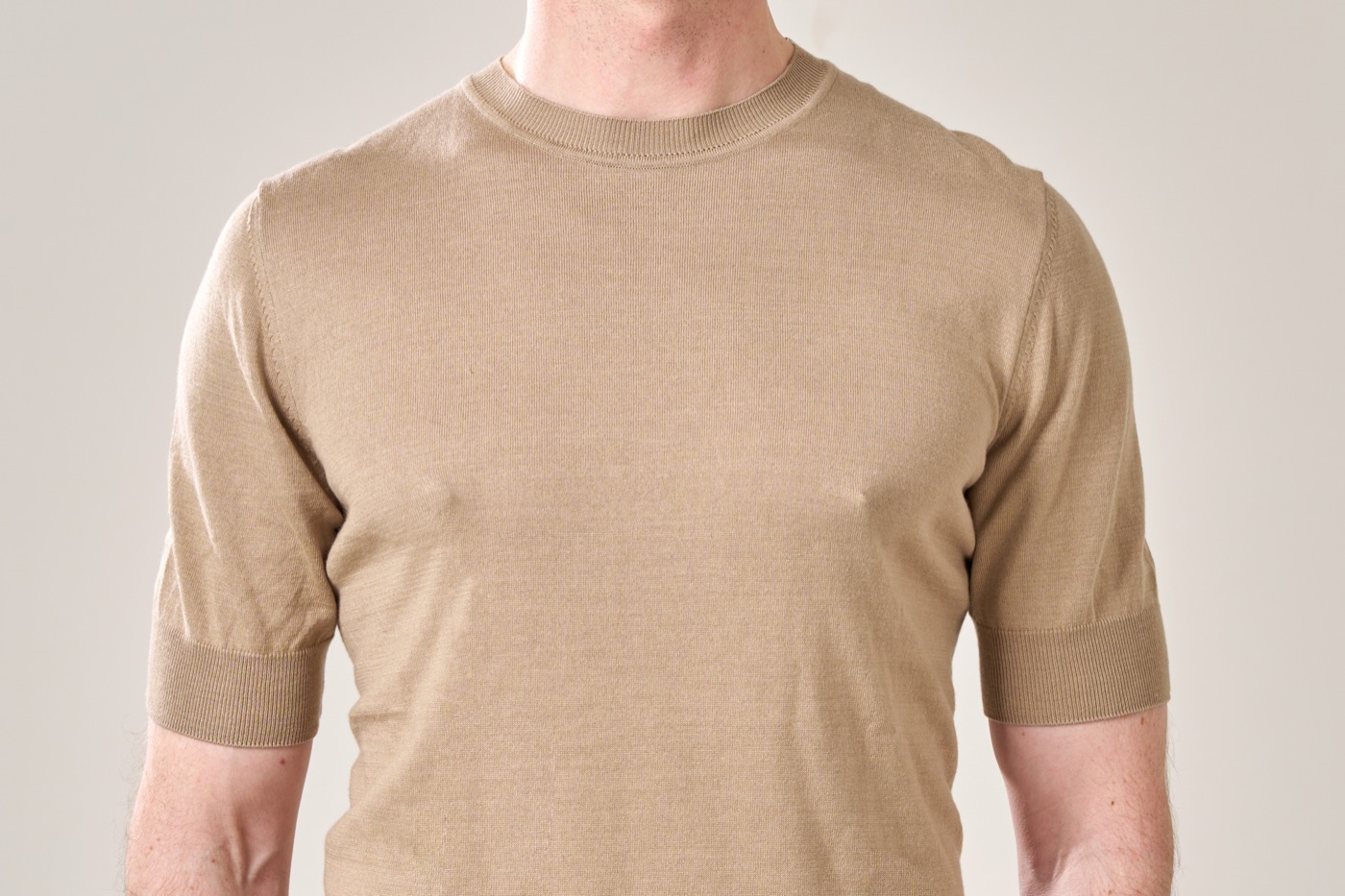
Why this matters more than it sounds like it should
Here's the part that isn't really about patches. Most guys who search for this have quietly rearranged their entire wardrobe around it. Black tees only. Heavier oxford instead of the good poplin. The chunky sweater instead of the cashmere. A jacket kept on in a warm room, all night, because taking it off wasn't an option.
That's a lot of ground to give up over something that costs less than a coffee to solve. Thin white tees, white dress shirts, fine-gauge knitwear, cashmere, polos, linen in summer, actual colors — all of that comes back the moment show-through stops being a variable. That's the real product. The patch is just the delivery mechanism.
A useful test: put on the shirt you've been avoiding, patches on, and stand in front of a window in daylight. If you have to look for it, nobody at the meeting is finding it.
What good looks like in practice
- Sub-0.2mm, tapered edge, matte skin tone
- Wide enough to cover fully with margin — roughly 30mm+, not 15mm
- Holds 8+ hours through sweat, peels clean
- Individually sealed so you can keep a pair in a bag, a car, a desk drawer
- Priced so you use them on a Tuesday, not just for weddings
That last one is underrated. A patch you're rationing is a patch you won't wear on the day you actually wanted the white shirt. Our men's nipple patches are made to be the default, not the occasion.
The verdict on the Mighty Patch question
Use one in a genuine emergency if it's all you have and you're wearing something thick. For anything you'd call "dressing well" — a white tee, a fine shirt, a soft knit — it's the wrong tool, and it'll be visible in exactly the situation you bought it for. The purpose-built version is thinner, wider, cheaper per wear, and invisible. That's not a close call.
FAQ
Can I use a Mighty Patch or hydrocolloid patch on my nipples? You can, but it isn't designed for it. Hydrocolloid is thick, slightly glossy, and swells as it absorbs moisture — under a thin or white shirt it shows as a visible disc. Fine in a pinch under a thick sweater; not a solution.
How thin does a nipple patch need to be to be invisible? Under about 0.2mm, with a tapered rather than stamped edge. Thickness alone isn't enough — a thin patch with a hard perimeter still casts a visible line under white cotton.
Will a nipple patch stay on all day at work? A patch with a proper medical-grade adhesive and a breathable backing should hold 8–12 hours, including a sweaty commute, and peel off cleanly at the end of it. If yours is curling by lunch, the adhesive or the breathability is the problem — not you.