

Men's Nipple Patch: What to Look For Before You Buy
Most guys arrive at the men nipple patch aisle the same way: you buy a nice white tee, put it on, look in the mirror, and put it back in the drawer. Then you do that with the linen shirt. Then the cashmere crew. Six months later your entire wardrobe is black, navy, and thick — not because you like black, navy, and thick, but because it's the only thing that doesn't broadcast.
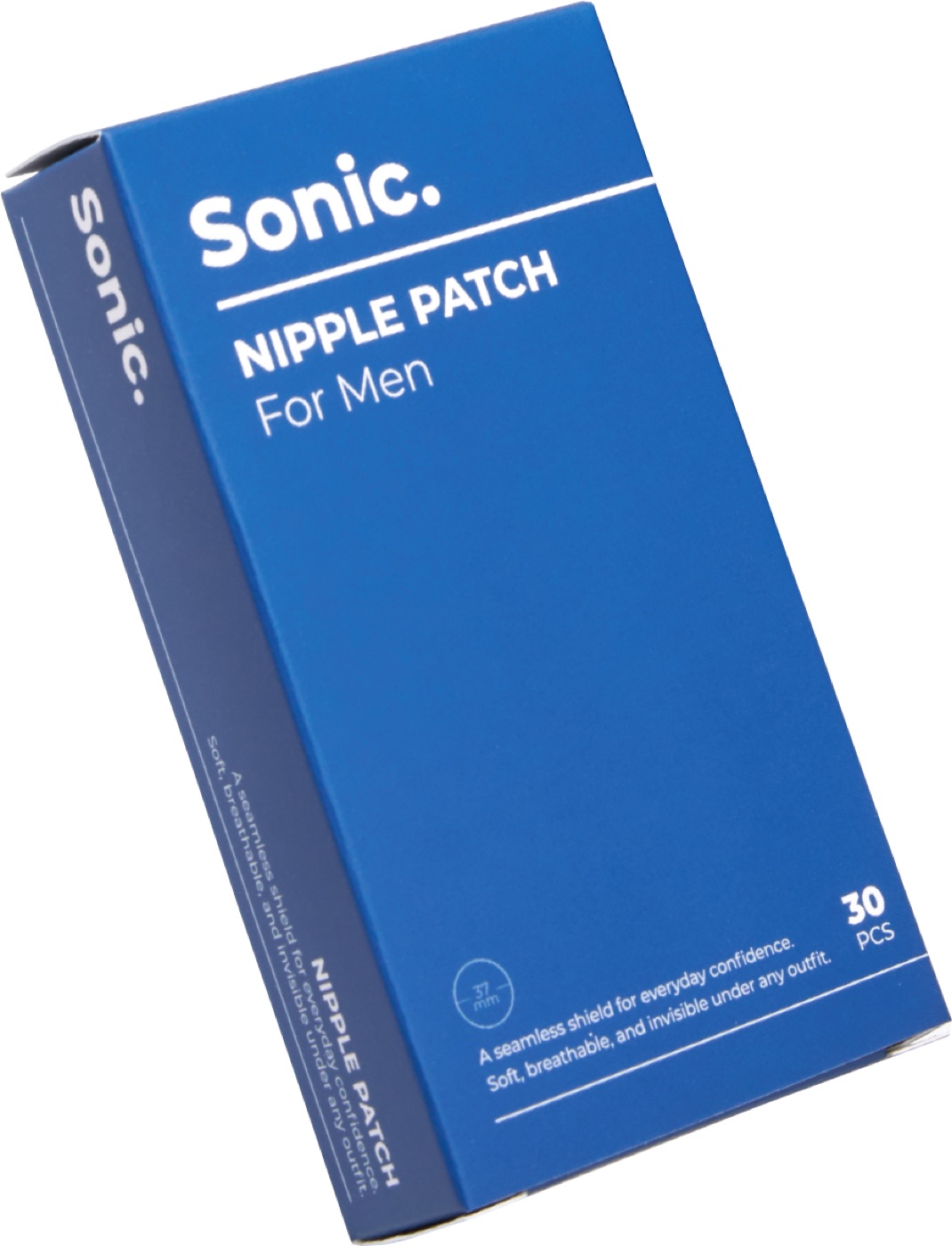
A patch fixes that. But not all of them do, and the differences are small enough that you can't see them in a product photo. Here's what actually matters.
1. Thickness — the whole game
The problem you're solving is an outline under fabric. A thick patch just swaps one outline for a different, rounder outline. Under a white tee in direct light, a bulky patch reads as an obvious circle — arguably worse than the thing you were hiding, because a circle is weird.
What you want is something closer to the thickness of a sticker than a bandage. Thin enough that when you run your hand over your shirt you can't feel a step. If a listing brags about being "extra padded," it's not built for a thin shirt. Ours is built for exactly that — see the Sonic Nipple Patch for men.
2. Tapered edges, not cut edges
This is the detail nobody mentions and everybody feels. A patch that's simply die-cut has a hard 90° edge, and that edge catches light under thin cotton as a faint ring. A patch with a feathered or beveled edge blends into skin instead of stopping abruptly.
Quick test once yours arrive: put one on, put on your thinnest white shirt, and stand under a bathroom light. Look at the edge, not the center. If you see a ring, the edge is too blunt.
3. Matte finish, not shiny
Silicone patches are popular and they have one flaw: many of them are glossy. Skin is matte. Under a thin shirt, a glossy circle picks up light differently than the skin around it, and your brain reads it as "something's there" before it can name what. A matte, skin-finish surface is invisible in a way a shiny one never is.
4. Adhesive that's rated for a day, not an hour
There's a real difference between an adhesive that holds while you stand still and one that holds through a commute, a warm office, a lunch outside, and drinks after. Look for two things: skin-safe medical-grade adhesive, and an explicit wear-time claim. "8+ hours" is a promise you can hold a brand to. Silence about wear time usually means it wasn't tested for it.
The other half of that: it should come off without an event. If removal is the part you dread, you won't wear it, and a patch you don't wear solves nothing.
5. Tone that isn't "one beige"
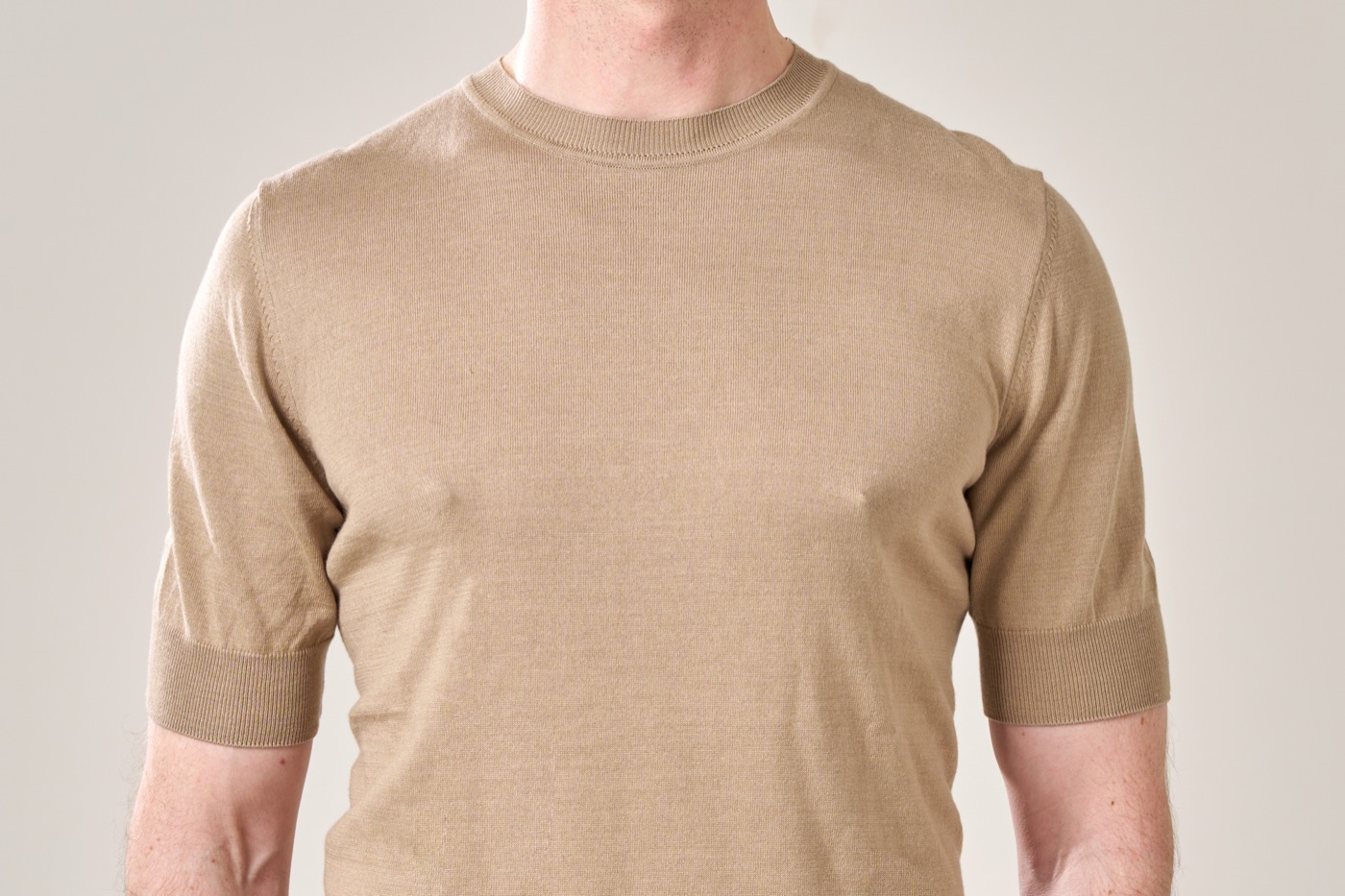
Skin-tone is doing a lot of work here. Under a genuinely thin white shirt, the patch is being seen through the fabric, so a mismatched tone shows as a pale or dark spot. Brands that offer a range — or a tone specifically formulated to sit close to a wider band of skin — are taking this seriously. A single generic beige is a red flag.
6. Sized for a man's chest
Women's nipple covers are usually round, wide, and sized for a different anatomy. Put one on a flat chest and you get a large disc with a lot of unnecessary surface area, which means more edge, more lift, and more visibility. A men's patch should be smaller in diameter and shaped to sit flat against a flatter plane. This is the single biggest reason "I tried nipple covers and they didn't work" — usually they tried the wrong ones.
What this actually buys you
Not "discretion." Wardrobe range.
The honest version of the value: you stop pre-screening your clothes. The white oxford goes back into rotation. You wear the light grey tee that shows everything and shows nothing. Polos in summer. Linen on vacation. The nice knitwear you bought and then quietly retired. You stop putting on a jacket in an air-conditioned restaurant in July because you've been doing the math on the lighting.
It takes about four seconds a side in the morning, and then you don't think about your chest again until you take your shirt off. That's the entire pitch.
A short buying checklist
- Thin — closer to a sticker than a bandage
- Feathered edge — no hard ring under light
- Matte — skin doesn't shine, so your patch shouldn't
- 8+ hour skin-safe adhesive — with painless removal
- Men's sizing — smaller diameter, flat profile
- Skin-tone that's actually thought about — not one generic beige
If a product hits all six, it'll disappear under anything in your closet. If it misses on thickness or edge, it won't — no matter how good the photos look. The Sonic Nipple Patch was designed against this exact list, because it was built by guys who were tired of owning a wardrobe they couldn't wear.
FAQ
Will a nipple patch show under a plain white t-shirt? A good one won't. Thickness and edge treatment decide this — a thin patch with a feathered edge blends into skin, while a thick or hard-cut one creates its own visible circle. If you're testing yours, check it in bright overhead light, which is the harshest case.
How long does one patch stay on? Look for at least 8 hours of rated wear. That covers a normal day — commute, office, dinner — without you checking. Patches without a stated wear time are usually built for a photo shoot, not a Tuesday.
Can I just use women's nipple covers? You can, but they're sized and shaped for different anatomy: wider, rounder, more surface area, more edge to lift and show. Most men who say patches "didn't work" were wearing the wrong size. A men's patch is smaller and sits flatter.