

Nipple Patches for a Suit: What Actually Matters When You're Buying
A suit is a stack of thin fabrics pretending to be armor. Poplin dress shirt, maybe a lightweight wool jacket that comes off the second the room warms up — and suddenly the only thing between you and the room is one layer of 100s cotton. That's the moment men start looking for nipple patches for a suit, usually about four days before a wedding.
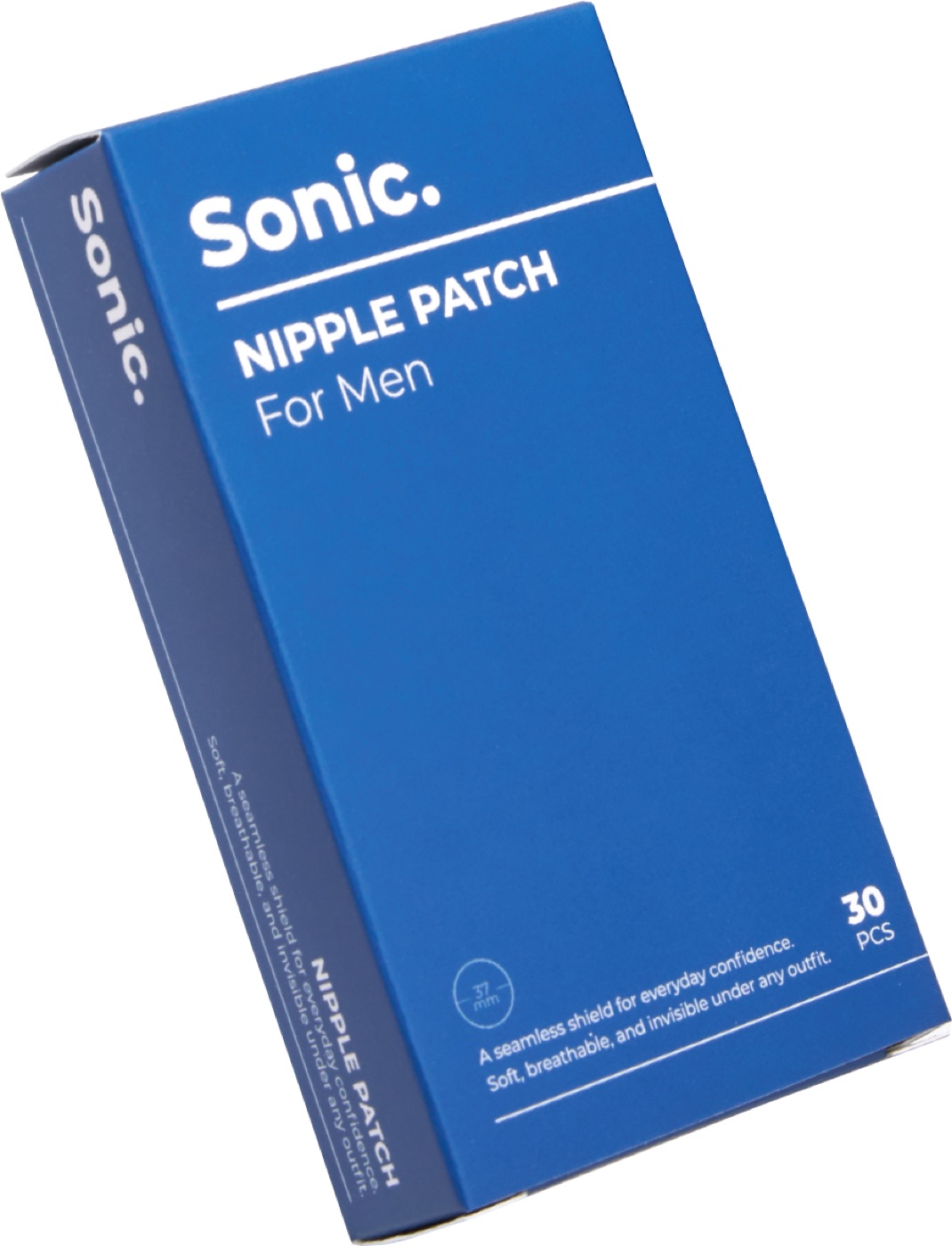
Good news: this is a solved problem. Less good news: most of what's sold online isn't built for what you're about to put it under. A dress shirt is the hardest test a patch can face — it's thin, it's often white, it's tucked and pulled taut across the chest, and you're going to wear it for fourteen hours under warm lights. Here's what to actually look for.
1. Thickness — thinner than you think you need
Under a hoodie, thickness doesn't matter. Under a poplin or voile dress shirt, a thick patch just trades one visible bump for a slightly different visible bump. You've solved nothing and now you're wearing a coaster.
What you want is a patch that reads as skin under tension. When you tuck a shirt and button a jacket, the fabric goes tight across the chest and telegraphs everything underneath. A properly thin patch flattens the area and disappears; a thick one creates a raised disc that catches the light. If the product photos show something with visible depth on the edge, keep scrolling.
2. Edges — feathered, not cut
This is the single biggest tell between good and bad, and almost nobody mentions it. A cheap patch is die-cut with a hard 90-degree edge. Under a white shirt, that edge creates a distinct circular outline — a faint ring your eye picks up before it picks up anything else. You've replaced a natural shape with an obviously artificial one, which is worse.
Look for a tapered or feathered edge that thins toward the perimeter so it blends into the skin instead of stopping abruptly. Run your finger off the edge: if you feel a step, your shirt will show a step.
3. Adhesive — all-day hold that doesn't punish you later
Suit days are long. Ceremony, dinner, a room that's ten degrees warmer than anyone planned for, and a shirt you don't get to change. The adhesive has to survive normal body heat and sweat for twelve-plus hours without creeping at the edges — edge lift is what turns an invisible patch into a visible crease halfway through the reception.
The other half of that equation is removal. Medical tape and adhesive bandages hold fine and then make you regret it. A skin-safe adhesive built for this should peel off cleanly at the end of the night. Our nipple patches for men are made around exactly that trade-off: hold through a full event, come off without a countdown.
4. Tone — matched to skin, not to the shirt
A common mistake is buying white patches because you're wearing a white shirt. White fabric is translucent, not opaque — it transmits what's under it. A white disc under a white shirt reads as a bright spot; a skin-tone patch reads as nothing, because it reads as you.
Skin-tone is also what makes the patch work under everything else in the wardrobe — a pale blue shirt, a light grey knit, a cream linen jacket with nothing underneath. One patch, all of it.
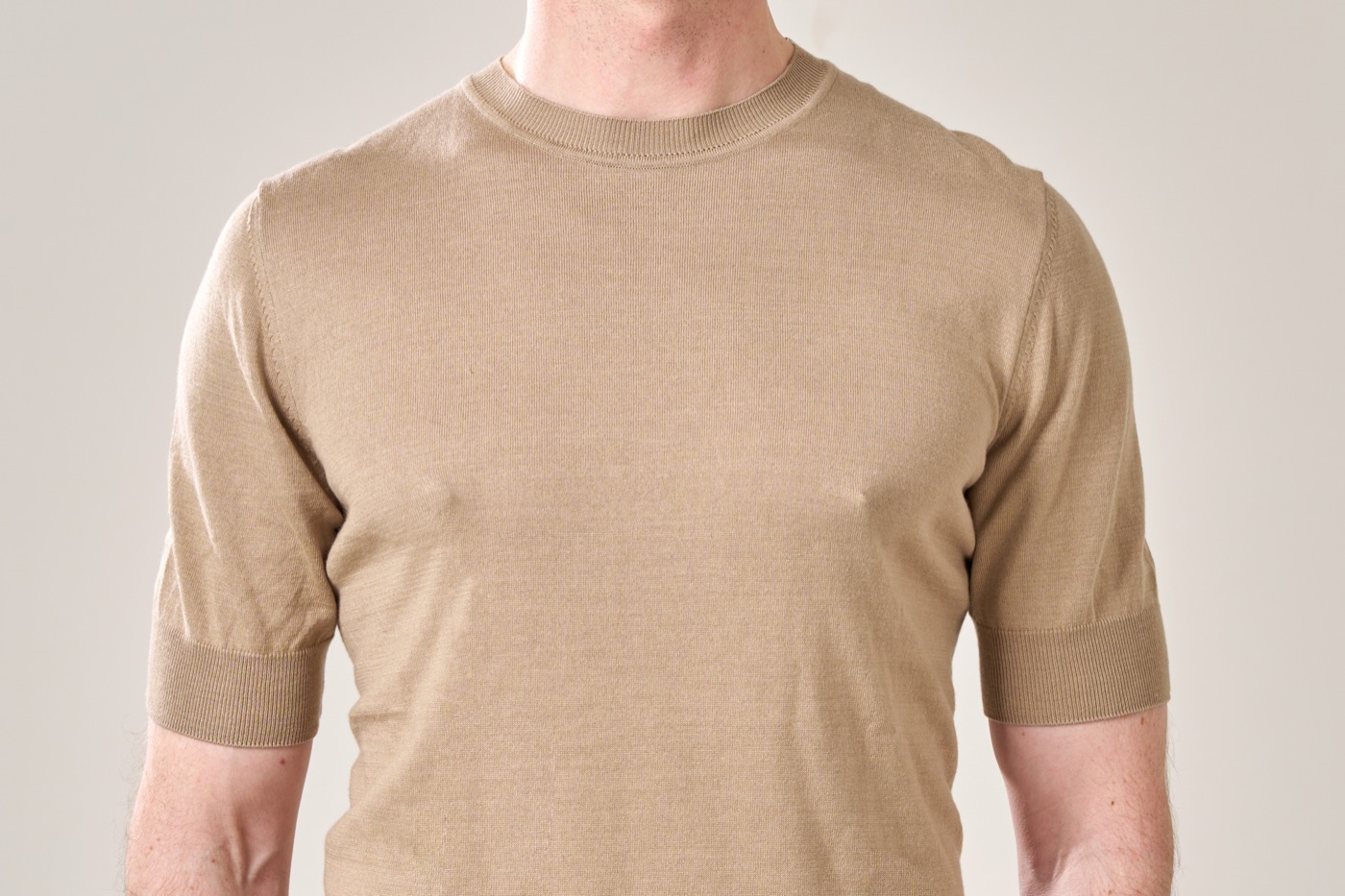
5. Size and shape for a dress shirt specifically
Bigger is not better here. An oversized patch has more perimeter to lift, more area to show under taut fabric, and more surface to wrinkle when you move. You want coverage that's slightly larger than the area you're flattening and no more. A round shape with a soft edge also handles shirt movement better than a square, which can pull into a visible corner when you reach across a table.
Why this matters beyond the suit
Here's the part nobody says out loud: most men who search this have been quietly dressing around the problem for years. Black, navy, charcoal. Thick oxford cloth instead of the fine poplin. A jacket kept on all night in August. An undershirt under everything, which is its own kind of uncomfortable in a warm room.
Solving it for the suit is really about getting the rest of the wardrobe back. The white tee. Cashmere. A cream polo. Linen in July with nothing underneath. Bright colors, thin knitwear, the soft premium fabrics that are worth wearing precisely because they drape close. That's the actual purchase — not a patch, a wardrobe that stops being a list of things you avoid.
The short version
Thin, feathered edges, skin-tone, skin-safe adhesive rated for a full day, sized modestly. If a product doesn't tell you those things, it wasn't designed for a dress shirt. The Sonic Nipple Patch was built for exactly this use case: thin enough to vanish under white poplin, tapered so there's no ring, and made to last from the ceremony through the last song.
Then you put on the suit and think about literally anything else. Which was the goal.
FAQ
Will a nipple patch show under a thin white dress shirt? Not if it's the right one. Thin construction plus a feathered edge and a skin-tone finish means there's nothing for the fabric to outline. Thick patches with hard die-cut edges will show a circular ring — that's a product problem, not a category problem.
How long will they stay on during a wedding or long event? A patch with a proper skin-safe adhesive is designed for a full day of wear, including body heat and sweat under a jacket. The failure mode to watch for in cheap patches is edge lift after a few hours, which is what makes them visible.
Do I still need an undershirt if I'm wearing patches? No — that's most of the point. An undershirt is a workaround that adds a layer and heat; a patch solves the visibility directly, so you can wear a fine dress shirt on its own and stay cool.