

Nipple Patches for Triathlon: What Actually Holds Up
Triathlon is the hardest test you can put a nipple patch through. Salt water or chlorine, then wind and sweat on the bike, then a run in a wet tri top that's clinging to you like it has a personal grudge. If a patch is going to fail, it fails here. So shopping for nipple patches for triathlon is a useful exercise even if you only race twice a year — because a patch that survives a half-iron will absolutely survive the rest of your life, which is mostly white t-shirts and dinner reservations.
That's the part worth saying out loud. Most guys who buy patches for race day discover, a week later, that the real payoff is the wardrobe. The white tee you stopped wearing. The linen shirt you bought in a moment of optimism and never took the tags off. Race day is the stress test; getting your clothes back is the reason people reorder.
What to actually look for
Adhesive that likes wet skin
This is the whole ballgame. Cheap patches use a pressure adhesive tuned for dry skin — it grabs hard for an hour, then lifts the second water gets under an edge. What you want is a skin-safe adhesive that stays bonded through immersion and sweat, and re-seats itself instead of curling. If the product page only says "strong hold" and never mentions water or sweat, assume it hasn't been tested in either.
Thin enough that you forget it's there
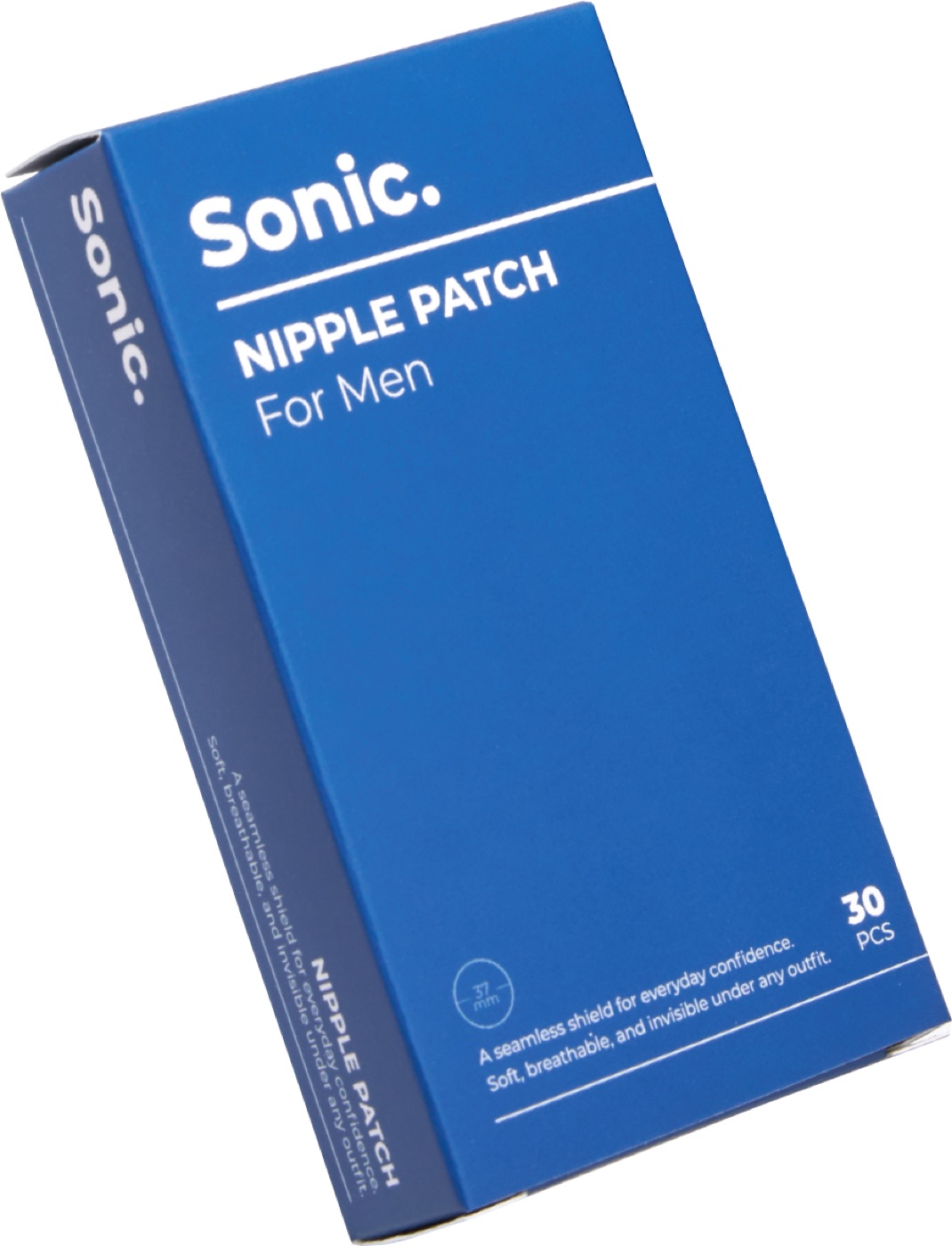
A good patch should feel like a second layer of skin, not a sticker. Thickness is where the cheap stuff gives itself away: anything with a raised rim or a stiff center shows as a visible disc under a compression tri top, and every ridge is a place fabric can catch. The Sonic Nipple Patch is built thin on purpose — it disappears under a race kit and, more to the point, under a white cotton tee.
A round shape with a feathered edge
Squares and thick-rimmed circles print through fabric. Look for a round patch with edges that taper rather than stop abruptly — that's what makes the outline vanish under thin material instead of turning into a faint coaster shape at the finish line.
Skin-tone, and honest about it
Patches sold as "invisible" often mean beige-under-a-black-shirt invisible. Under a white or light race top, you need something that reads as skin, not as a pale circle. Check whether the brand shows it under white fabric. If every photo is on a dark background, that's a tell.
Comes off without taking you with it
Removal matters more than guys expect after four hours of racing. Medical tape and band-aids pull. A patch designed for skin should peel clean, even off a chest that's been soaked and re-dried three times.
What separates good from bad, in one sentence each
- Good: thin, round, feathered edges, adhesive rated for sweat and water, peels off clean.
- Bad: thick, stiff, square, "all-day hold" with no mention of moisture, and a removal experience you'll remember.
- Not a patch at all: balm, tape, band-aids. Balm reduces friction but does nothing about show-through. Tape holds and then punishes you. Band-aids are a visible rectangle under any thin fabric — fine at mile 40, not fine in the finish photo your friend posts.
How this changes how you dress
Here's the actual argument for buying these. Racing is a handful of days a year. The rest of the year is the wardrobe you quietly narrowed without ever deciding to: black instead of white, thick oxford instead of poplin, an extra layer under everything, jacket stays on indoors. A lot of men have built an entire personal style around a problem they never told anyone about.
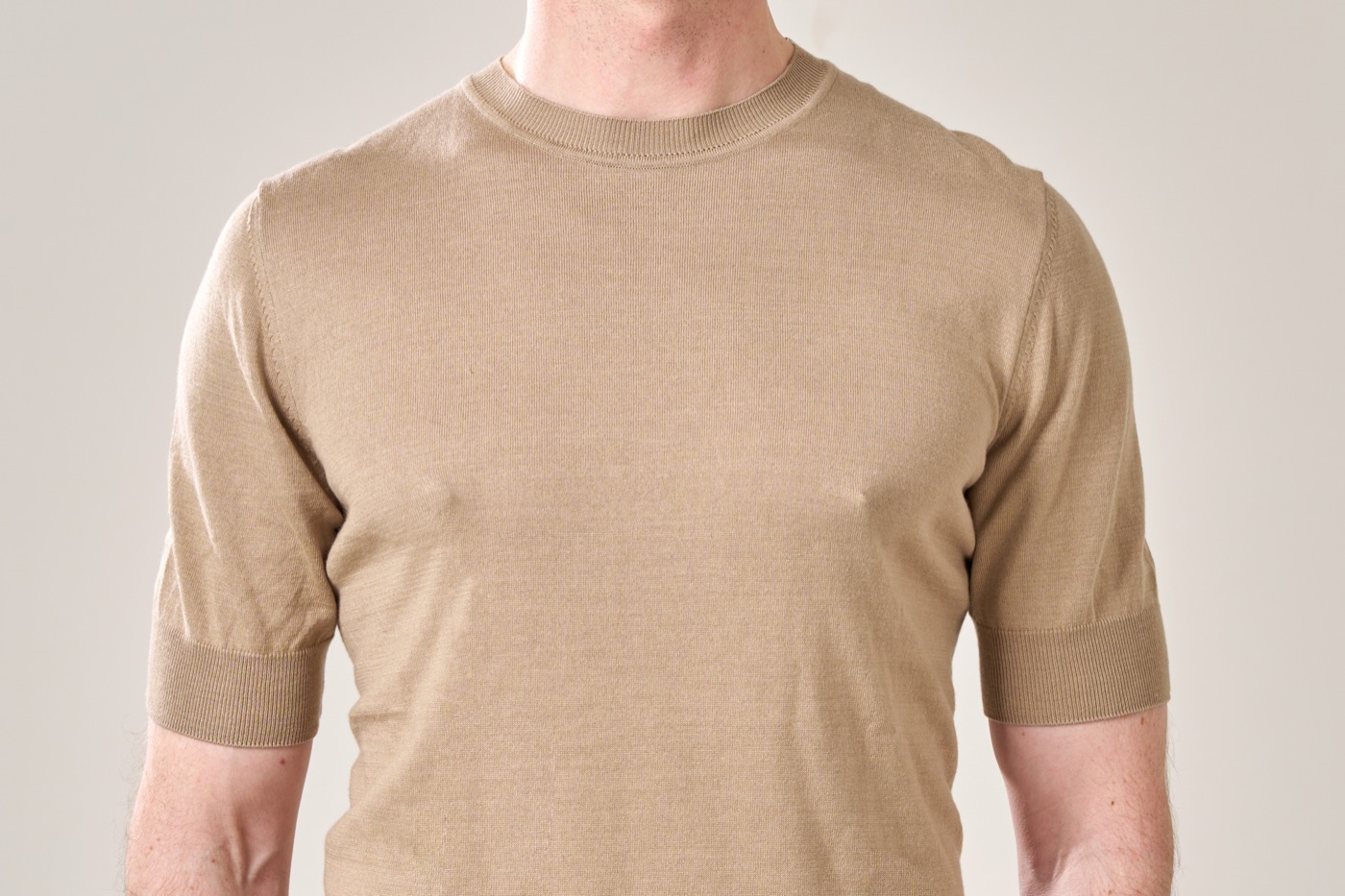
Patches undo that in about ten seconds. White tee, thin merino, a pale linen shirt in August, the cashmere crewneck you liked in the shop and never wore, a polo that isn't navy. You stop doing the reflexive glance-down-in-the-elevator thing. That's the feeling people are actually buying, and it's why most guys who order for a race end up reordering for regular clothes.
Race-day application, briefly
Dry, clean skin — no sunscreen or body glide where the patch sits, since both are specifically designed to stop things from sticking. Apply before you kit up, not after. Press for a few seconds with a flat palm to warm the adhesive. Then forget about it, which is the entire point.
The bottom line
Judge a nipple patch on four things: adhesive that handles water and sweat, thinness, a feathered round edge, and clean removal. A patch that passes all four gets you through swim-bike-run without a thought — and then gets your white shirts back for the other 360 days of the year.
FAQ
Will nipple patches survive the swim leg? A patch with a proper water- and sweat-rated skin adhesive will. The failure mode to watch for is edge lift — thin, feathered edges stay sealed through immersion where thick-rimmed patches curl.
Should I use patches or anti-chafe balm for a triathlon? Different jobs. Balm cuts friction but leaves you visible through a light kit; a patch handles both the show-through and the fabric contact. If you use balm elsewhere, keep it away from where the patch goes.
Do they show under a white tri top or a white t-shirt? Not if they're thin and genuinely skin-toned. That's the test worth applying before you buy — ask to see the patch photographed under white fabric, not just on bare skin against a dark background.