

Reusable Nipple Patches for Men: What Actually Matters
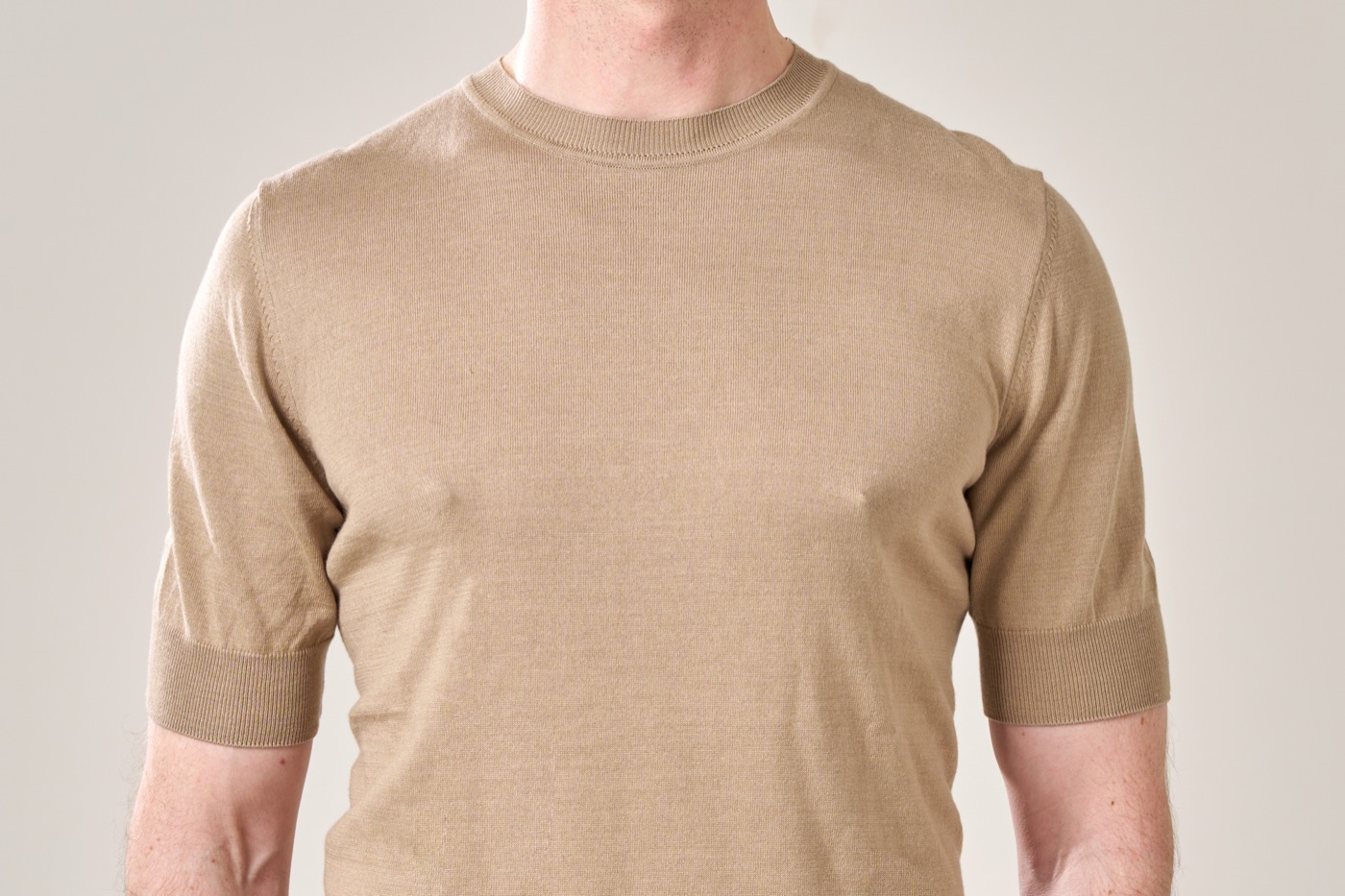
Most guys buy their first pack of reusable nipple patches for men after the same moment: a white tee in a changing room mirror, a linen shirt in strong afternoon light, or a photo from a wedding they'd rather not look at twice. The problem isn't the body — it's that thin fabric shows everything. A patch fixes it in about four seconds. But not all of them do, and the bad ones fail in ways that are worse than doing nothing, because a visible circle under a shirt draws more attention than the thing you were hiding.
Here's what to actually look at before you buy.
Edges: the single biggest difference between good and bad
Everything else is secondary to this. If a patch has a blunt, uniform-thickness edge, it creates a hard line under fabric — a perfect circle outlined in your shirt. You've traded one visible thing for another, and the circle is honestly more conspicuous because nobody can figure out what it is.
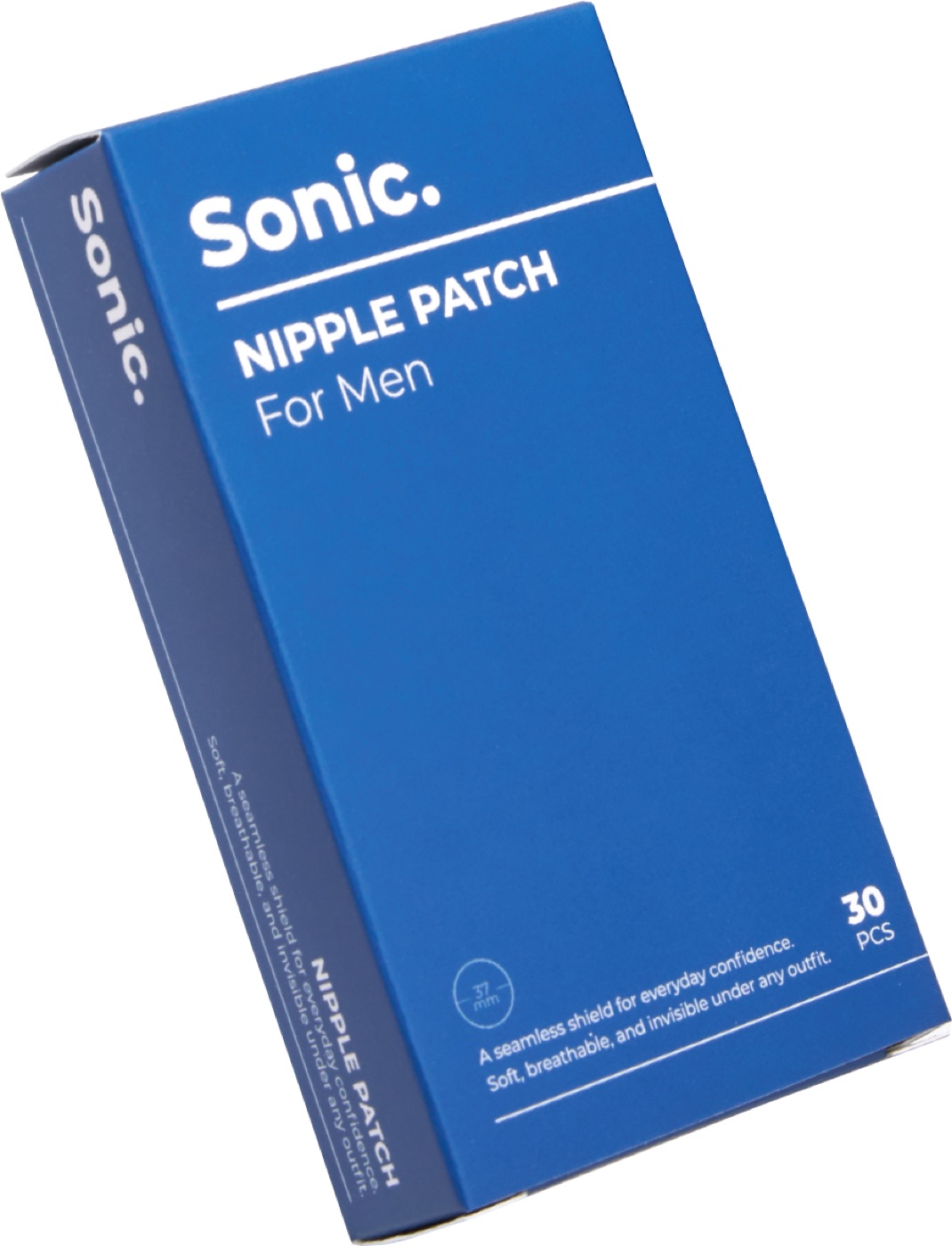
Good patches are feathered — the material tapers toward the rim so it fades into skin instead of stopping abruptly. Run your thumb from the center outward. If you can feel a distinct ledge, that ledge will show under a white oxford. The Sonic Nipple Patch is built around this: ultra-thin through the middle, tapered at the perimeter, so there's no step for light to catch.
Test it yourself before you trust a pack: put one on, wear your thinnest white shirt, and stand near a window. Daylight is unforgiving in a way that bathroom lighting is not.
Thickness vs. coverage — you need both, and they fight each other
A thick patch always covers. It also always shows. A paper-thin patch disappears but may not flatten enough on its own. The whole engineering problem is getting flat coverage at a thickness that doesn't register through fabric.
What this means practically: be skeptical of anything described as "silicone" and sold as thick and squishy. Silicone gel patches are common because they're cheap to mold, but they're bulky, they read as a dome under a t-shirt, and they get warm and slick after an hour. Thin, skin-adhering material beats gel for wear under clothing every time.
Skin tone: it matters less than you think, more than sellers admit
Under an opaque shirt, tone is irrelevant. Under a white or light shirt — which is the entire reason you're here — a patch that's several shades off your skin shows as a pale or dark disc. Beige-for-everyone packs are a red flag; they're built for a photo on a listing, not for wear.
Get close to your own tone. Then check it in the same light you'll be in.
Reusability: read the number, then halve your expectations
"Reusable" means very different things across brands. Some patches survive two or three wears before the adhesive gives up. Real reusability comes down to two things:
- The adhesive can be rinsed and revived. Water and a fingertip should clear away skin oil and lint, and the tack should come back after air-drying. If washing kills the stick, it's disposable with extra steps.
- It stores flat on a backing film. Patches tossed in a drawer collect fluff and curl at the edges — and a curled edge is a visible edge. Keep the film. Put it back on the film.
A pack that genuinely handles repeated wear-and-rinse cycles is cheaper per wear than disposables, and much less annoying than realizing at 7am that you're out.
Adhesive: enough hold for a full day, not enough to punish you
You want it to survive a summer commute, a warm restaurant, and taking a jacket on and off — and then peel away without taking anything with it. Medical-grade skin-safe adhesive does both. Anything described in terms of raw strength is a warning: hold and comfortable removal are a balance, not a maximum.
Peel slowly, at a low angle, in the direction of hair growth. It's painless when you do it that way.
What this actually unlocks
This is the part that gets undersold. Guys who've been self-conscious about show-through don't just avoid white tees — they build an entire wardrobe around avoidance. Black and navy. Heavy cotton. Nothing soft, nothing bright, nothing draped. A whole closet quietly organized around one insecurity.
Patches give the rest of the wardrobe back. White tee with jeans. Fine-gauge merino with nothing underneath. Pale blue linen in August. A cashmere crewneck that finally fits the way it was cut. Pastel polos and light-colored knitwear — the fabrics that make an outfit look expensive are precisely the fabrics that show everything, which is why this small fix has an outsized effect on how you dress.
Two patches, four seconds, and the fabric restrictions are gone. That's the whole product. Browse the Sonic Nipple Patch for men if you want the version built specifically for wear under thin shirts rather than a repurposed women's nipple cover.
A quick buying checklist
- Feathered, tapered edge — not a blunt rim
- Thin and flat, not thick silicone gel
- Matched reasonably to your skin tone
- Skin-safe adhesive that revives after a rinse
- Comes with a storage film to keep them flat
- Sized for a man's chest, not a scaled-down women's product
FAQ
How many times can you reuse a nipple patch? It depends on the adhesive and how you store it. Rinse the sticky side with water after each wear, let it air-dry, and put it back on its backing film — that routine is what determines whether you get a handful of wears or many. Skin oils and lint, not the material itself, are what usually kill a patch.
Will reusable patches show under a white dress shirt? Not if the edges are feathered and the patch is thin. A blunt-edged or thick gel patch will absolutely show a circle under white poplin. Check yours in daylight near a window before you rely on it for something that matters.
Can I wear them all day at work? Yes — that's what they're designed for. A quality skin-safe adhesive holds through a commute, a warm office, and a full day of moving around, then peels off cleanly at night. Take it slow on removal and go with the direction of hair growth.