

Skin Tone Nipple Patches for Men: What Actually Makes One Invisible
Most guys buy their first pack of skin tone nipple patches, wear them under a white tee, look in the mirror — and see two faint circles. Not nipples anymore, which is progress, but not nothing either. That's not a reason to give up on the category. It's a reason to know what you're buying, because the gap between a patch that disappears and a patch that announces itself comes down to about four specifics.
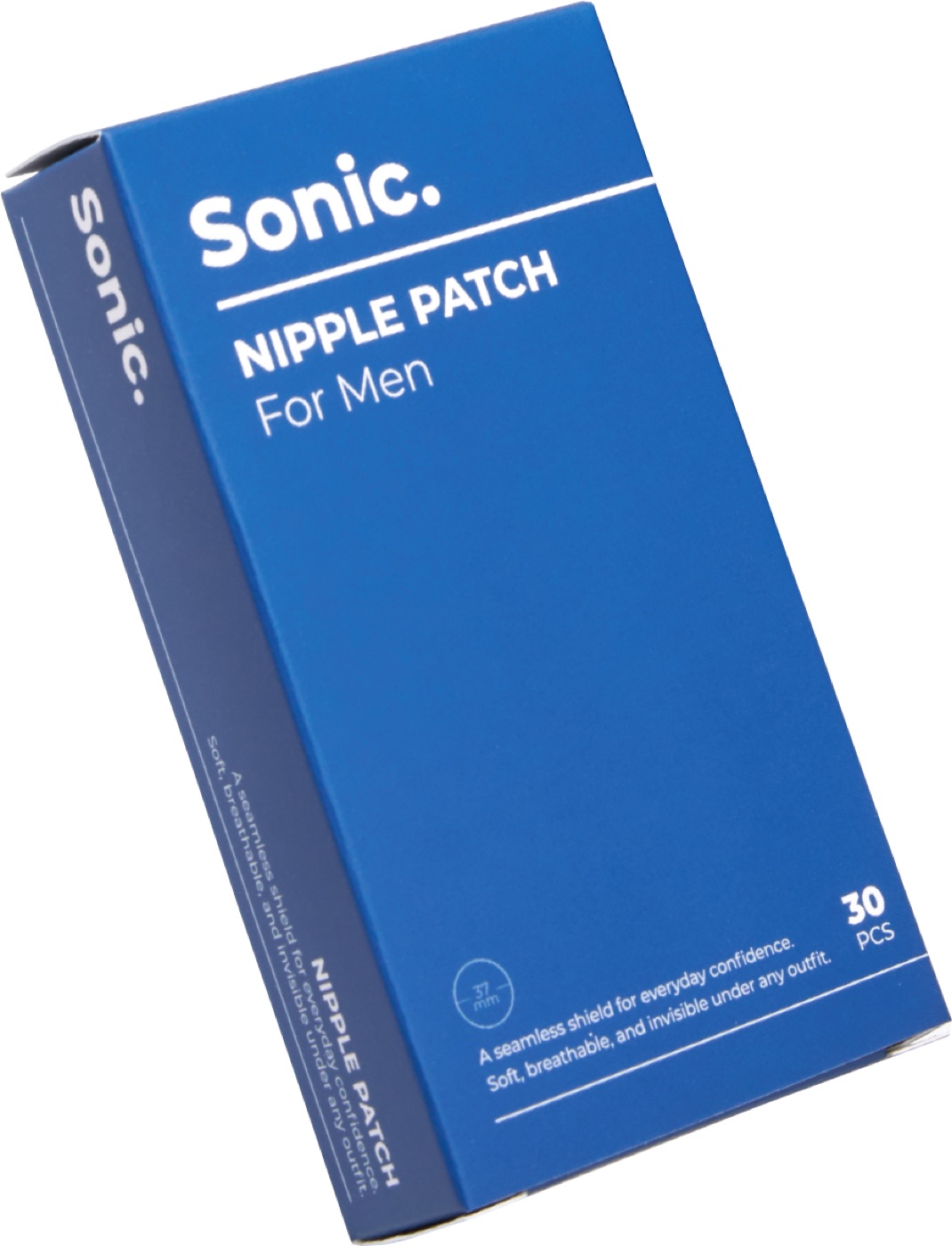
Here's what to look for, and why each one decides whether you can wear the shirt.
Thickness: under 0.3mm or don't bother
This is the one that matters most and the one nobody puts on the label. A thick patch doesn't hide an outline — it replaces it with a different outline. Under thin cotton, fabric drapes over whatever is underneath, and a 1mm foam disc reads as a disc.
What you want is something closer to a second layer of skin than a pad. If a patch feels substantial between your fingers, it will feel substantial under a linen shirt too. Thin and slightly stretchy beats thick and structured every time — the patch should move when your chest moves instead of sitting on top like a coin.
Edges: tapered, not cut
Pick up a patch and run a finger from the center outward. If you hit a distinct step where the material ends, that step will catch light under a white shirt. Cheap patches are stamped out of flat sheet material, so the edge is a clean 90-degree wall.
A good patch feathers — the material thins toward the perimeter so there's no line for fabric to tent over. This is the single biggest difference between "invisible" and "you're wearing something." It's also why round shapes with soft edges outperform anything with a defined border or a printed pattern.
Shade: matched to your chest, not your face
"Skin tone" is doing a lot of unearned work on most product pages. Two things go wrong. First, brands sell one beige shade and call it universal — it isn't, and a mismatched patch is visible through lighter fabrics as a pale spot. Second, guys match to their forearm or face, both of which are usually a shade or two darker than the chest, especially if you get any sun.
Match to the skin around your nipple in daylight. And be aware that under a genuinely thin white shirt, what shows through is less about color than about value — how light or dark. A patch that's slightly lighter than your skin disappears better under white than one that's slightly darker. Our skin tone nipple patches for men are shade-matched for exactly this reason.
Adhesive: skin-safe, and it should survive a shirt change
The failure mode isn't usually the patch falling off mid-day. It's the patch that grips so aggressively it takes hair with it, or one that goes gummy after two hours and shifts a few millimeters — which is enough to bunch the fabric above it.
What you want is a medical-grade skin adhesive that holds through a full workday and a warm room, then peels off in one clean motion. If a brand won't say what the adhesive is, assume it's the cheap kind. And a practical note: nothing sticks to lotion, sunscreen, or chest oil. Clean, dry skin, thirty seconds before you dress.
What this actually unlocks in your closet
Here's the part that gets lost in the spec talk. The reason to care about a millimeter of thickness is that it decides what you're allowed to wear.
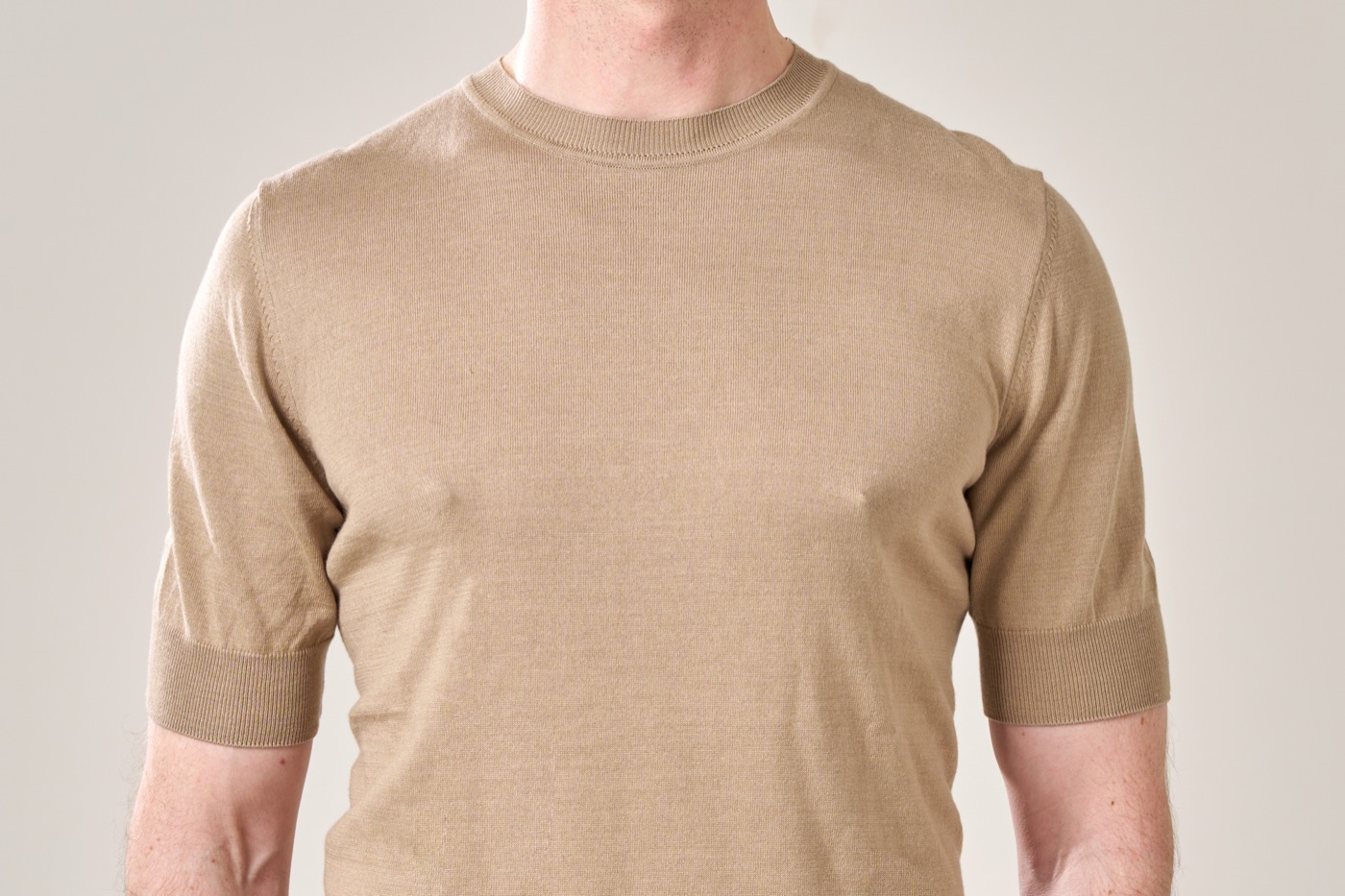
Think about the stuff you've quietly stopped buying. The plain white tee — the single most useful item in menswear — that you own in black only. The pale blue oxford you wear with an undershirt because the alternative is unthinkable. Fine merino and cashmere, which drape beautifully and hide absolutely nothing. Linen in summer, when the fabric is thinnest exactly when a jacket is least available. Polos. Anything in a light color. Anything soft.
Most guys who deal with this have solved it by narrowing their wardrobe to dark, thick, and forgiving, and then telling themselves that's just their style. It isn't a style. It's a workaround that costs you half the good stuff.
A patch that's genuinely thin, tapered, and shade-matched removes the constraint entirely. You put on the white tee, you check the mirror once out of habit, and there's nothing to see. That's the whole product. Not a mechanism — a wardrobe you get back.
A quick buyer's checklist
Before you order any pack:
- Thin enough to fold without creasing. If it holds a crease, it's too rigid.
- Feathered edge. Run your finger out from the center — no step.
- Matte finish. Anything with a slight sheen will catch light through pale fabrics.
- Matched to chest skin in daylight, slightly lighter rather than darker.
- A stated adhesive type, not just "strong hold."
- Sized around 5–6cm. Too small and the edge lands where the outline is; too large and you're managing a lot of surface area for no benefit.
The bottom line
Skin tone nipple patches for men aren't a complicated product, but they're an easy one to do badly, and most of the market does. Thin, feathered, matte, matched, and skin-safe — miss any of those and you've bought a slightly better-looking problem.
Get it right and you stop thinking about it, which is the actual goal. Start with the Sonic Nipple Patch and go put on something white.
FAQ
Will a skin tone patch show under a white shirt if my skin is darker? Not if it's thin and feathered. Under white fabric, edge geometry matters more than exact shade — a tapered patch a touch lighter than your skin reads as nothing, while a thick patch in a perfect match still tents the fabric.
Can I wear the same patch through a full day at the office? Yes. A quality patch with a medical-grade adhesive is designed for all-day wear on clean, dry skin, including a warm room and a commute. They're single-use, so you start fresh each morning.
Do I need these under every shirt? No — a heavy oxford or a textured knit hides plenty on its own. The patches are for the thin, soft, and light things: white tees, dress shirts, cashmere, linen, polos. Which, once you can wear them again, tends to be most of what you reach for.