

Thin Nipple Patches That Actually No-Show (What to Look For)
Buying thin nipple patches sounds simple until you're standing in front of a mirror in a white tee and can see two faint discs where the patch is. That's the whole game: a patch that no-shows isn't just "thin," it's thin in the right places, in the right tone, with an edge that disappears. Get those three things right and your shirt looks like your shirt. Get them wrong and you've traded one visible thing for another.
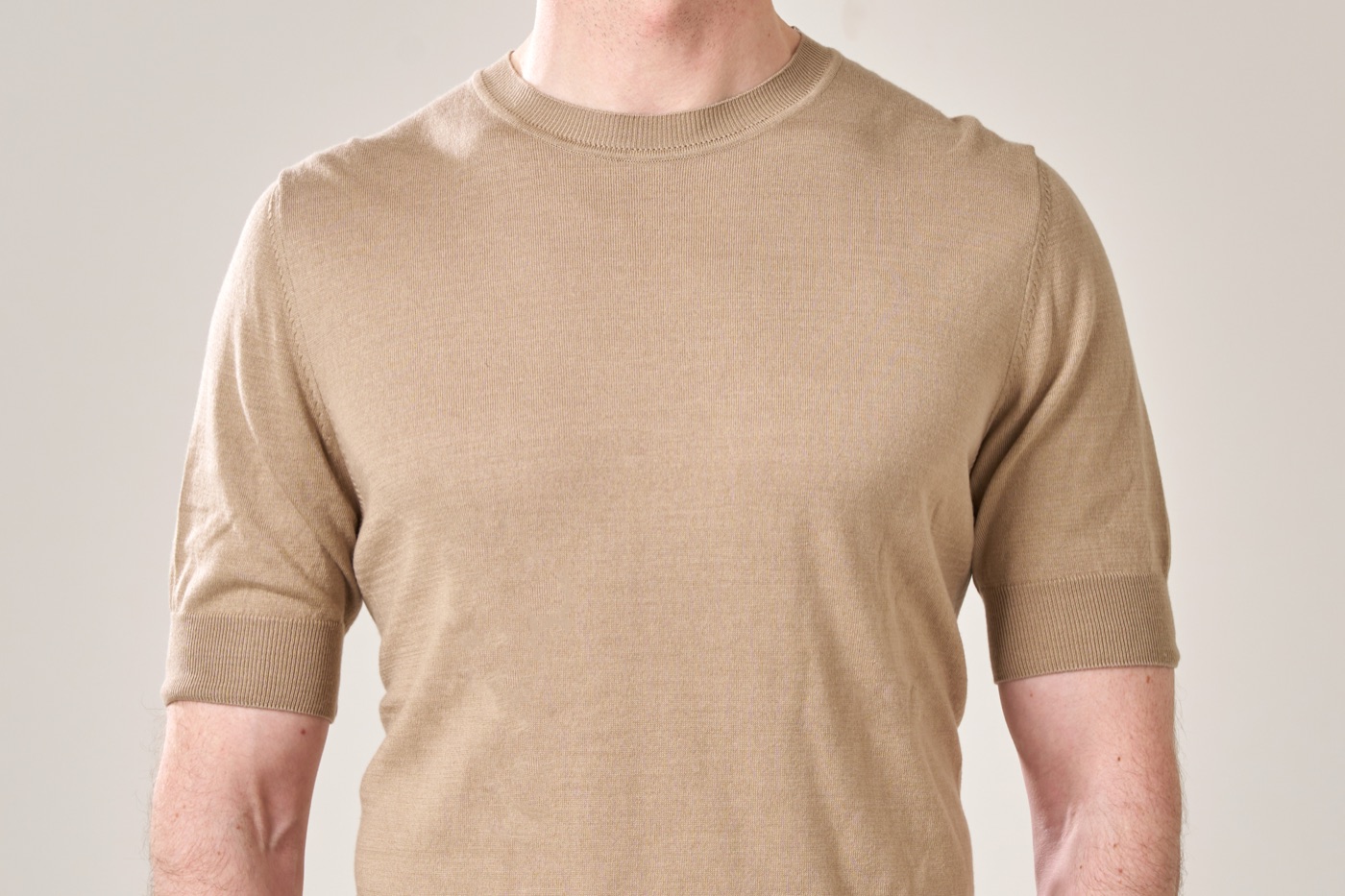
Here's what actually separates a patch that vanishes from one that announces itself — and why each detail matters for how you dress.
The edge matters more than the middle
Almost every patch on the market claims to be thin. Very few taper. A patch with a flat, cut edge creates a hard 90-degree step against your skin, and under thin cotton that step catches light and reads as a circle. A tapered or feathered edge ramps down to nothing, so the fabric has no line to grab onto.
Quick test when yours arrive: put one on, throw on your thinnest white tee, and look at yourself in side light near a window — not straight-on bathroom lighting. Straight-on light hides edges. Raking light finds them. If the outline shows up in side light, it'll show up at a lunch meeting by the window.
Thin, but not so thin it fails at the job
There's a trade-off nobody mentions: past a certain point, thinner stops working. An ultra-thin patch will telegraph the shape underneath instead of flattening it — you get contour instead of a disc, which is arguably worse. The sweet spot is a patch with enough body to smooth the area completely while staying under the threshold where fabric drapes over it.
The Sonic Nipple Patch is built to that spec on purpose: thin enough to disappear, substantial enough to actually flatten. That's a deliberate engineering choice, not a compromise.
Skin tone matters under white and light colors
White cotton is translucent. Under a white tee or a light blue oxford, anything darker than your skin shows as a shadow. This is why the classic band-aid hack fails — it's beige for one specific person, and probably not you. Match the patch to your tone, not to a generic "nude," and check it under white before you check it under anything else. White is the hardest test; pass it and everything else is easy.
Adhesive: the difference between all day and two hours
Cheap patches use a ring of adhesive around a non-stick center. It feels comfortable for an hour and then the edge lifts, which is exactly the failure mode you don't want — a lifted edge under a shirt is a visible bump you can't fix without going to a bathroom.
Look for full-surface, skin-safe adhesive that holds through a warm room and a full day, and that peels off without taking your chest hair with it. That's the real durability test — not sport, just a normal day with a commute, a warm office, and dinner after.
The reason any of this matters: your wardrobe
Here's the honest part. Most guys who search for this have quietly edited their closet down over the years. Black tees only. Thicker fabrics. A jacket you keep on indoors even when it's 78 degrees. Anything soft, light, or expensive stays on the hanger — the cashmere crewneck, the linen shirt in July, the white tee that fits perfectly, the fine-gauge merino polo.
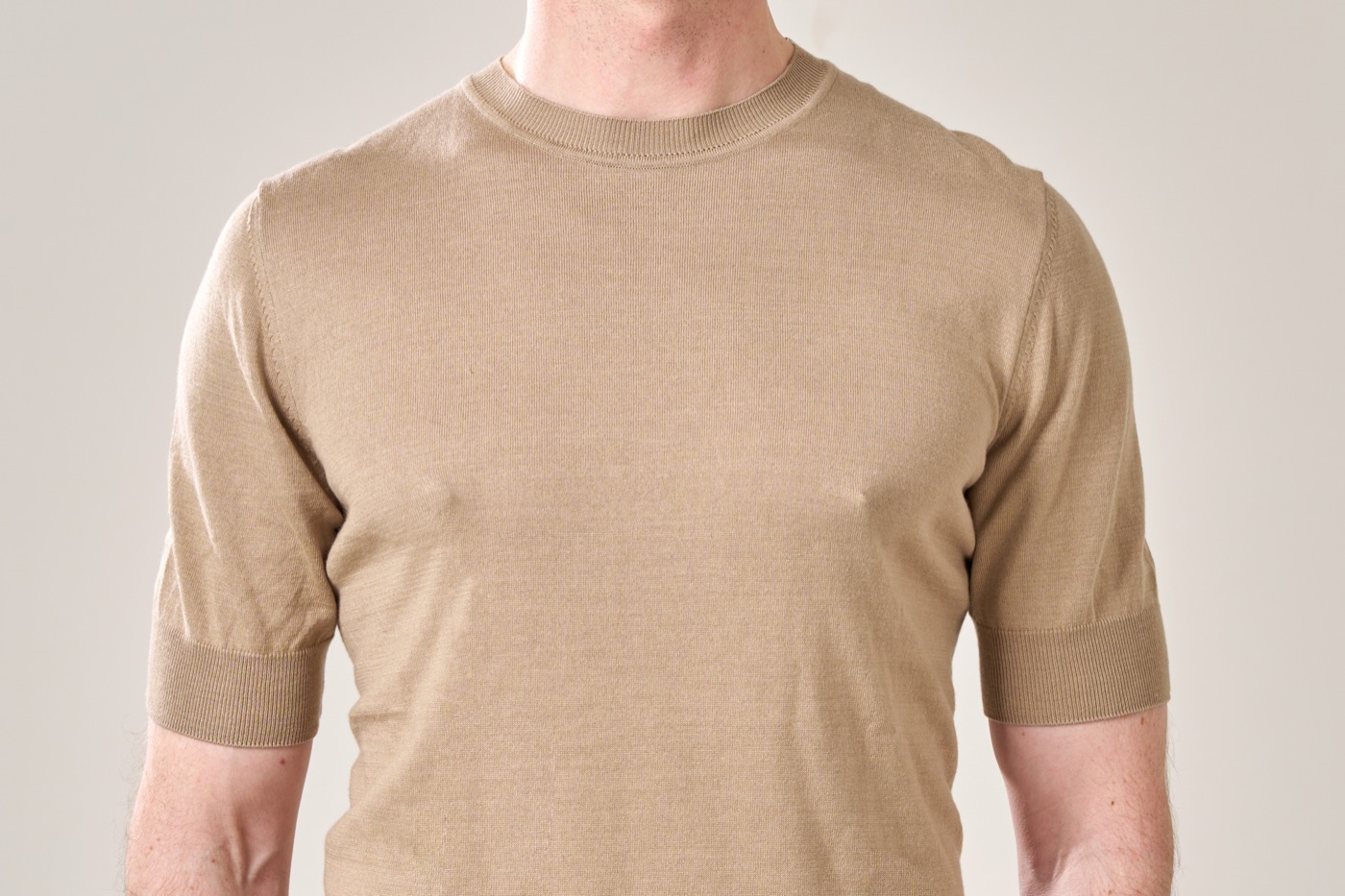
That's not a wardrobe, that's a workaround. And it's a fairly expensive one, because the fabrics you've been avoiding are usually the good ones. Thin, soft, and premium are the same category.
A patch that genuinely no-shows gives that whole category back. You put on the white tee, you forget about it, and the rest of the day is about literally anything else. The fabrics that used to be off-limits — that's the actual product. Sonic's nipple patches for men exist so you can wear the nice stuff without a second thought.
What to check before you buy
A short list you can hold any brand to:
- Tapered edge, not a die-cut cliff. This is the #1 predictor of no-show.
- Skin-tone options, not one generic beige. Check it under white first.
- Full-surface adhesive, so the perimeter can't lift mid-day.
- Matte finish. Anything with a sheen catches light through thin fabric.
- Made for men's chests — sizing and shape designed for a flat chest, not a scaled-down version of something else.
- Clean removal, so you're not dreading the end of the day.
The bottom line
"Thin" is table stakes. What makes a nipple patch no-show is the edge, the tone match, and an adhesive that holds its perimeter for twelve hours. Judge patches on those, wear one under your worst-case white tee in side light, and you'll know within thirty seconds whether it works.
Then go buy the linen shirt you've been walking past.
FAQ
Will a thin nipple patch show under a white t-shirt? A good one won't. The failure is almost never thickness alone — it's a hard cut edge or a tone mismatch. A tapered, matte, skin-matched patch has no line for the fabric to reveal, even under thin white cotton.
Are thinner patches always better? No. Below a certain thickness a patch stops flattening and starts contouring, so you see shape instead of a disc. You want the thinnest patch that still smooths the area completely — that's the spec worth paying for.
How long do they stay on during a normal day? A full-surface skin-safe adhesive should hold through a commute, a warm office, and dinner after — a full day of wear — then peel off cleanly without irritation.