

Korean Nipple Patch for Men: What Actually Separates the Good Ones
If you've gone looking for a Korean nipple patch for men, you already know the search results are a mess. Half the listings are women's fashion tape rebranded. The other half are 3mm foam discs that show up under a shirt more than the thing you were trying to hide. Somewhere in there are the good ones — thin, matte, skin-toned patches that let you wear a white tee in daylight and think about literally anything else.
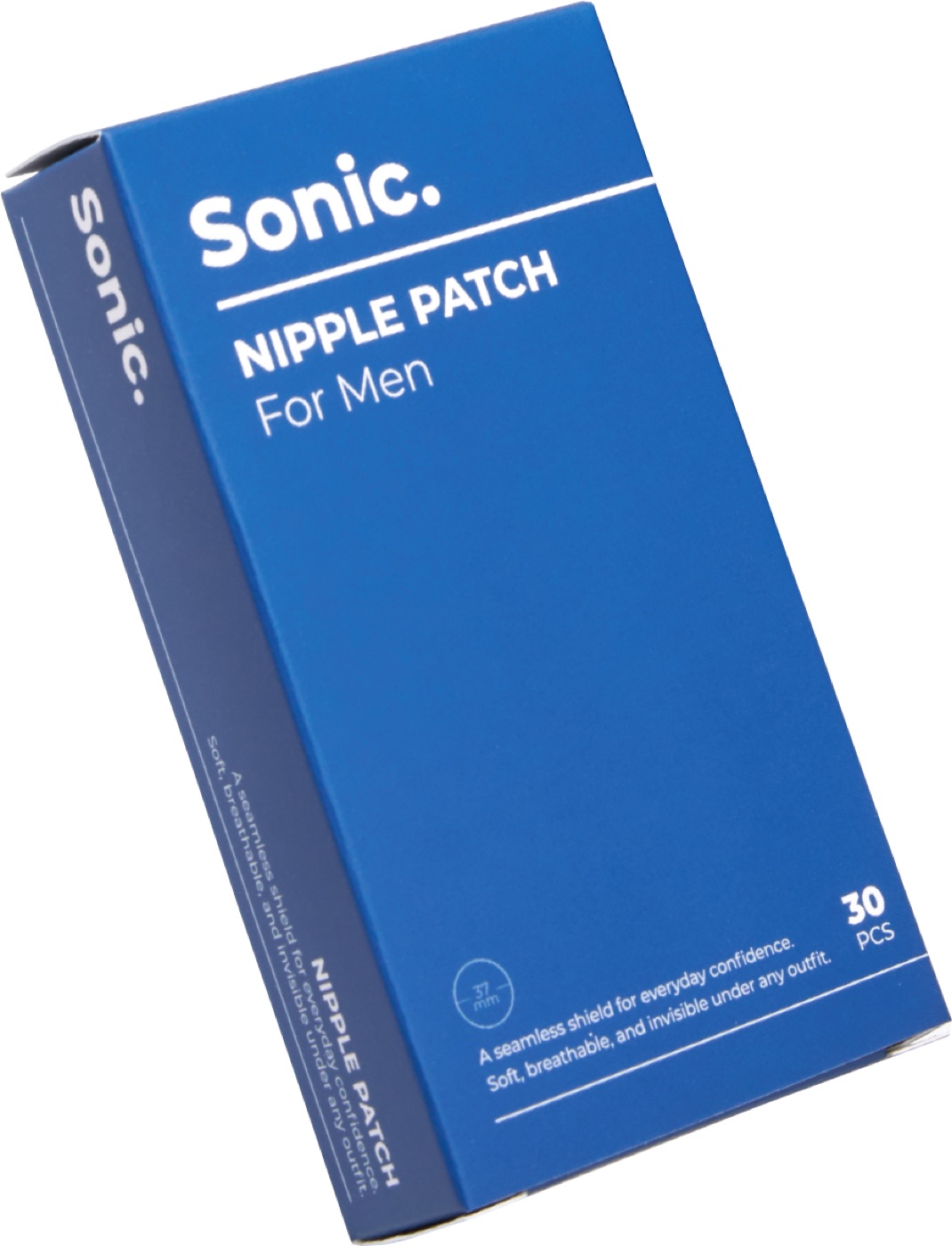
This is a buyer's guide. Not a list of brands, but the four things that actually decide whether a patch disappears or announces itself, and why each one matters for how you get dressed.
Why Korean patches got the reputation
K-beauty spent two decades obsessing over thin adhesives — hydrocolloid spot patches, sheet masks, cushion compacts. The whole category is built around materials that sit on skin without looking like they're on skin. That engineering carried over. When people search for a Korean nipple patch, what they're really after is thinness — the sense that the fix is invisible.
The catch: "Korean" is a marketing word now, and plenty of listings use it for products made anywhere with none of that material discipline. So judge the patch, not the flag on the packaging.
1. Thickness — the edge is what gives it away
Nobody notices a patch because of its middle. They notice the edge, because a thick patch creates a visible ring under thin fabric — a perfect circle where your shirt lifts off your skin.
A good patch is thin enough that it feathers into the skin at the perimeter. When you run a finger across it under a shirt, you shouldn't be able to find where it ends. If you can feel a lip, a cotton-jersey tee will find it too.
This is the single biggest reason cheap patches fail. Foam and thick silicone both do the job of covering — and then create a new outline to worry about.
2. Finish — matte, never glossy
Shiny silicone under a white cotton shirt catches light and reads as two faintly luminous discs. It's a subtle effect and it's exactly the sort of thing you'll notice in a bathroom mirror at a wedding and not be able to un-notice.
Matte finish, always. Test it the way you'll wear it: hold the patch against your skin under whatever your worst-case shirt is — a white oxford, a thin merino crew — and look at it in real overhead light, not the light in the bedroom where everything looks fine.
3. Skin-tone match — closer than you think you need
Under white and pale fabrics, colour matters more than people expect. Fabric doesn't hide colour; it diffuses it. A patch two shades off yours turns into a soft pale blur under a white tee, which is somehow worse than the original problem because nobody can identify what they're looking at.
Look for a genuine neutral skin tone rather than the pinkish "nude" that dominates women's fashion tape. That's the tell for a rebranded product: pink undertone, small diameter, sized and coloured for a different body.
4. Adhesive — a full day, then off cleanly
Two failure modes, opposite directions. A weak adhesive rolls at the edges by hour four, usually right when a shirt starts moving against it, and the rolled edge is far more visible than a flat patch. A brutal adhesive holds fine and then takes chest hair with it.
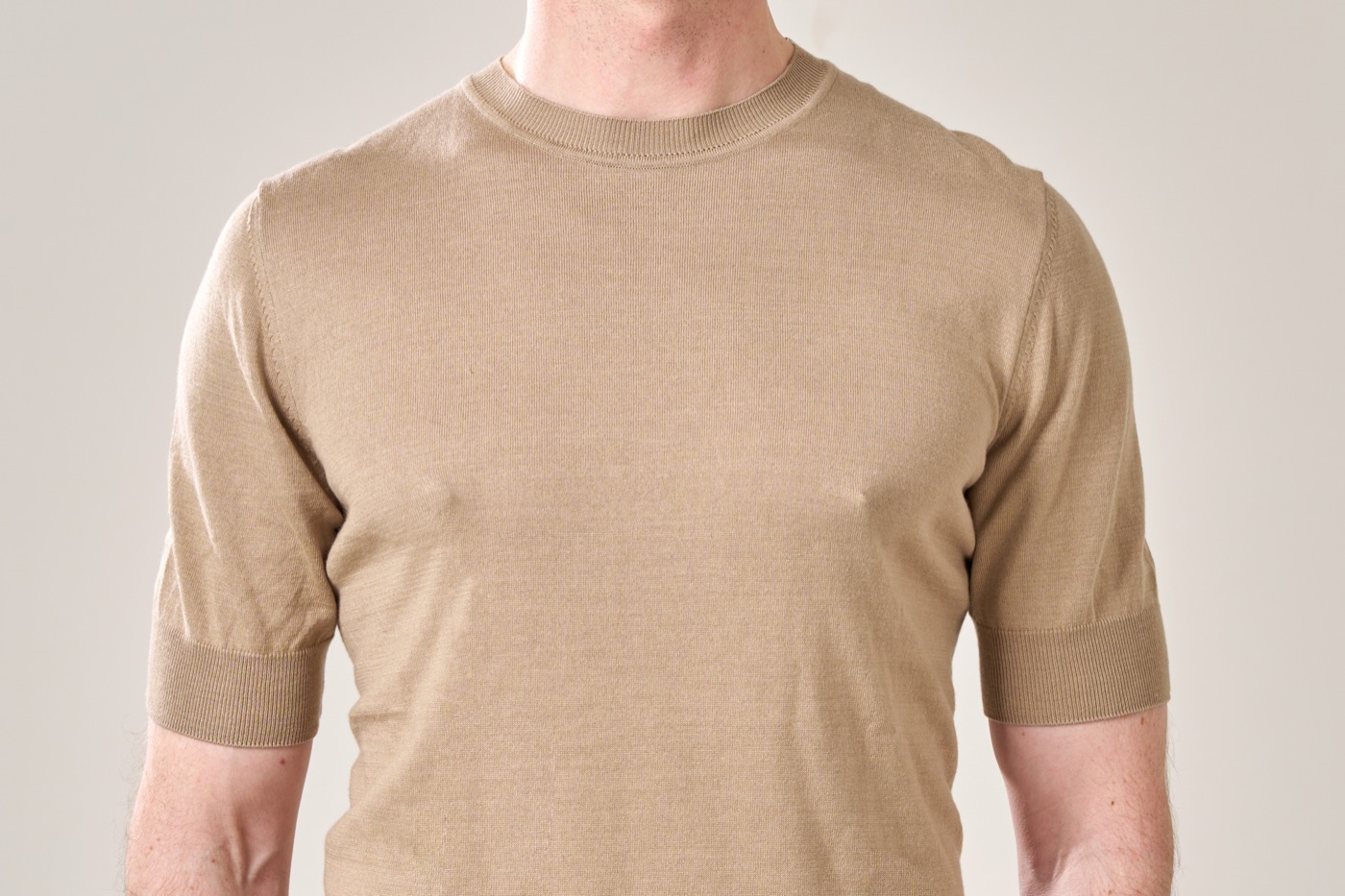
What you want is a skin-safe adhesive that survives a warm day and a couple of shirt changes, and peels off without a countdown. Our men's nipple patches are built around exactly this balance — because a patch you dread removing is a patch you stop wearing, which solves nothing.
What this actually buys you
Here's the part product pages usually skip.
Most guys who search for this have spent years quietly editing their wardrobe. Black instead of white. Heavy oxford instead of fine poplin. A jacket kept on indoors in July. Skipping the cashmere crew because it drapes beautifully and that's the problem. The pattern gets so normal it stops feeling like a decision — it's just "what I wear."
A patch that genuinely disappears gives that range back. Thin white tee, worn as the whole outfit. Light linen in August. A pale knit polo. The good grey marl sweatshirt that shows everything. Bright colours, which read thinner than dark ones for the same reason white does. None of it requires a plan anymore.
That's the real product. Not a piece of adhesive — the ability to get dressed based on what looks good on you instead of what covers you.
A quick buying checklist
Before you order any patch, check for:
- Thin enough to feather at the edge — no ring under jersey
- Matte, not glossy — no shine under white cotton
- Neutral skin tone, not pink "nude" fashion tape
- All-day adhesive that peels off without pain
- Sized for a man's chest, not scaled-down women's coverage
- Enough patches per pack to actually build the habit
If a listing won't tell you thickness or show the patch on skin in normal light, that's usually because the answer isn't flattering.
Sonic's nipple patches for men were designed against that checklist — thin, matte, skin-toned, and made to hold through a full day so the shirt is the only thing anyone sees.
FAQ
Is a Korean nipple patch different from a regular one? The reputation comes from K-beauty's expertise in ultra-thin skin adhesives, and the best patches do follow that approach. But "Korean" on a listing is a marketing label, not a spec. Judge thickness, finish, tone and adhesive instead.
Will a patch show under a white t-shirt? A thin matte patch in the right tone won't. A thick or shiny one will — usually as a faint circular edge rather than the patch itself, which is why edge thickness is the thing to check first.
Can I use women's nipple covers instead? You can, but they're generally smaller, often pink-toned, and frequently made of thicker silicone sized for different coverage. Under a white shirt those differences show. A men's nipple cover is shaped and coloured for the job you're asking it to do.