

Male Nipple Patches: How to Pick a Pair That Actually Disappears
Most guys find male nipple patches the same way: you put on a white tee, catch your reflection, and quietly put the tee back in the drawer. Then you wear the black crewneck. Again. For the fourth time this week.
The fix is small and cheap, but not all patches are built the same — and the difference between a good one and a bad one is the difference between "nobody noticed" and "why do you have two circles on your chest." Here's exactly what to look at before you buy.
1. Thickness is the whole ballgame
If you only check one spec, check this one. A patch has to flatten a small bump without creating a new, larger bump. Anything with foam padding, a raised center, or a silicone gel dome will read as a disc under thin fabric — you traded one outline for a rounder, weirder one.
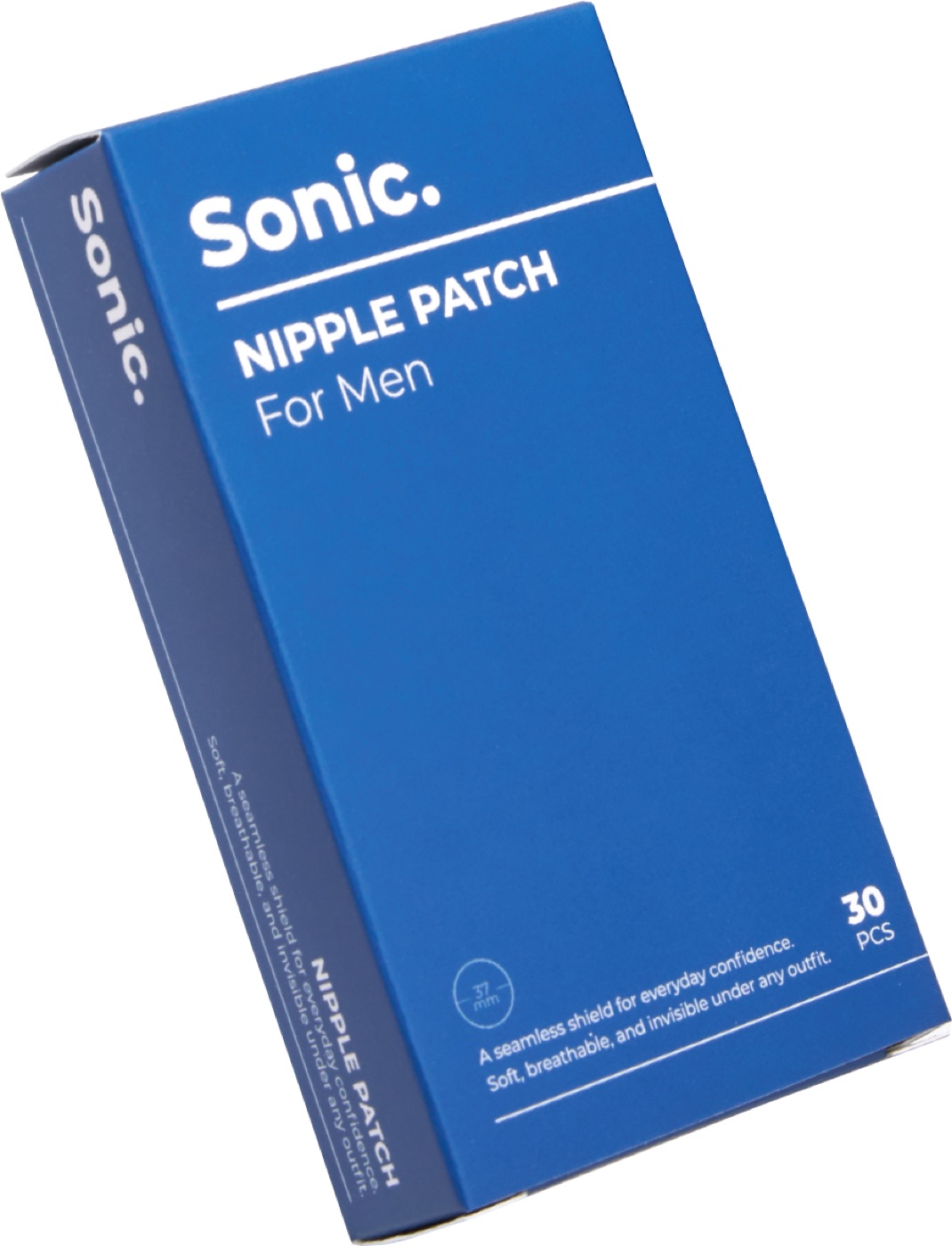
What you want is something that measures in fractions of a millimeter and sits flush enough that you can run a hand over your shirt and not feel a step. Silicone petals designed for womenswear are usually too thick and too domed for a flat male chest. Patches shaped for men — like the Sonic Nipple Patch — are built flat on purpose.
2. Feathered edges, not cut edges
This is the tell nobody warns you about. A patch can be perfectly thin in the middle and still betray you at the perimeter, because a blunt die-cut edge casts a hard line under a soft fabric. Under a white oxford in office lighting, that line is more visible than the thing you were hiding.
Look for a tapered or feathered rim that thins out toward the edge. Practical test at home: put one on, wear your thinnest white tee, and stand in front of a window with the light coming from the side. Raking light is brutal and honest. If you can find the circle, the edge is too abrupt.
3. Matte finish, and a shade that's close enough
Skin-tone matters less than people assume — under a shirt, nobody is color-matching your chest. Finish matters much more. A glossy patch catches light through thin cotton and creates a faint bright spot; a matte one just reads as skin. Get within a reasonable range of your tone, and prioritize a non-reflective surface over a perfect match.
4. Adhesive that survives a normal day, not a lab
The failure mode you care about isn't a marathon. It's an 11-hour day: a warm subway car, a conference room, a long dinner, and shirt fabric dragging across you every time you reach for something. A patch that peels at hour six will curl at the edge and become visible right when you stop thinking about it.
Two things to weigh together: hold and removal. Medical-grade skin-safe adhesive should stay put through sweat and a full day, then come off without taking chest hair with it. Anything that hurts to remove will not get worn twice, which makes it a bad product no matter how well it holds.
5. Single-use vs. reusable
Reusable silicone sounds thrifty until you've washed one three times, watched the tack die, and had it slide down under your shirt mid-meeting. Single-use patches are thinner, more reliable, and you never have to manage a maintenance ritual. Buy in a count that matches how often you actually wear thin shirts — if that's most days, get a supply, not a sample.
What this actually buys you
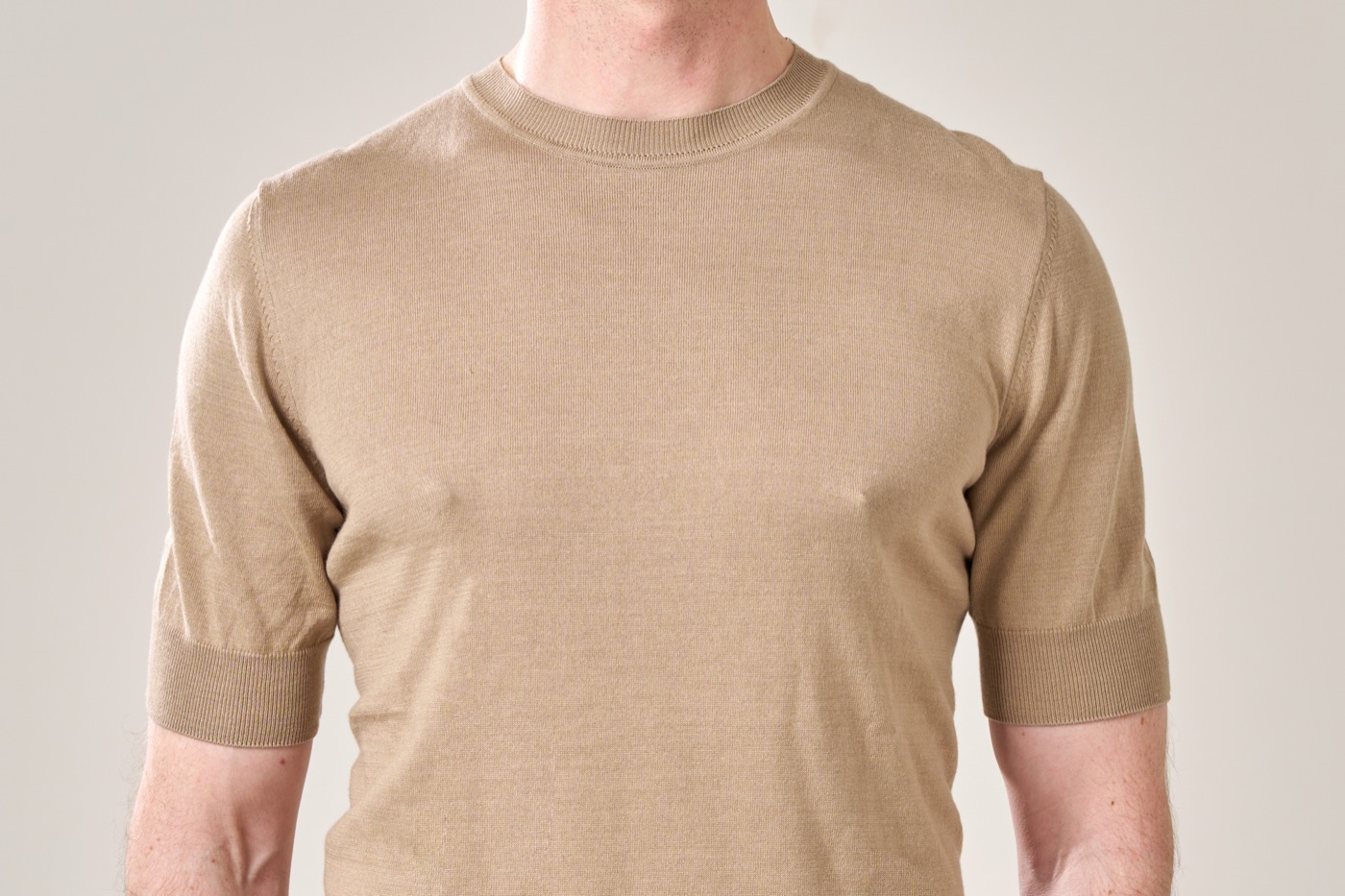
Here's the part the spec list doesn't cover. Most men who go looking for this have quietly engineered a wardrobe around the problem: black, navy, charcoal. Heavy cotton. Nothing tucked. A jacket on standby in July. You stopped buying the good stuff because the good stuff — fine merino, cashmere, brushed linen, a proper white poplin shirt — is thin by design. That's what makes it feel expensive, and that's exactly why it shows everything.
Solving this gives that whole category back. The white tee. The pale blue linen shirt in August. The cream knit polo. The cashmere crewneck worn on skin the way it's supposed to be worn. A well-made nipple patch for men is roughly the cost of a coffee per wear and it removes an entire constraint from how you get dressed. That is a very good trade.
Quick buyer's checklist
- Under half a millimeter thick — no foam, no gel domes
- Tapered edges — check under raking side light in a white tee
- Matte, not glossy — finish beats exact shade match
- Skin-safe adhesive — all-day hold, painless removal
- Single-use — no washing, no dying tack
- Sized for a flat chest — not a repackaged womenswear petal
Get those six right and the product does the one thing it's supposed to do: nothing you can see.
FAQ
How thin do male nipple patches need to be? Thin enough that you can't feel a ridge through your shirt with your palm. If a patch has foam backing or a raised silicone center, it will show up as its own outline under white or lightweight fabric — which defeats the purpose.
Will patches show under a white dress shirt? A good one won't. The two things that give a patch away under white are a hard cut edge and a glossy surface, both of which catch light through thin cotton. A thin, matte patch with a feathered rim reads as skin.
Do I need to shave my chest to wear them? No. A well-designed patch uses a skin-safe adhesive that grips well enough to hold all day and releases without pulling hair. If removal is painful, that's a sign of a cheap adhesive, not a sign you need a razor.