

Men's Nipple Patches: How to Pick a Pair That Actually Disappears
Most men buy their first pack of men's nipple patches for one reason: there's a shirt in the closet they love and never wear. A white tee. A pale blue oxford. The cashmere crewneck someone gave you two Christmases ago that's still folded in tissue paper. You've been running a wardrobe of black, navy, and anything thick enough to hide behind — and you'd like to stop.
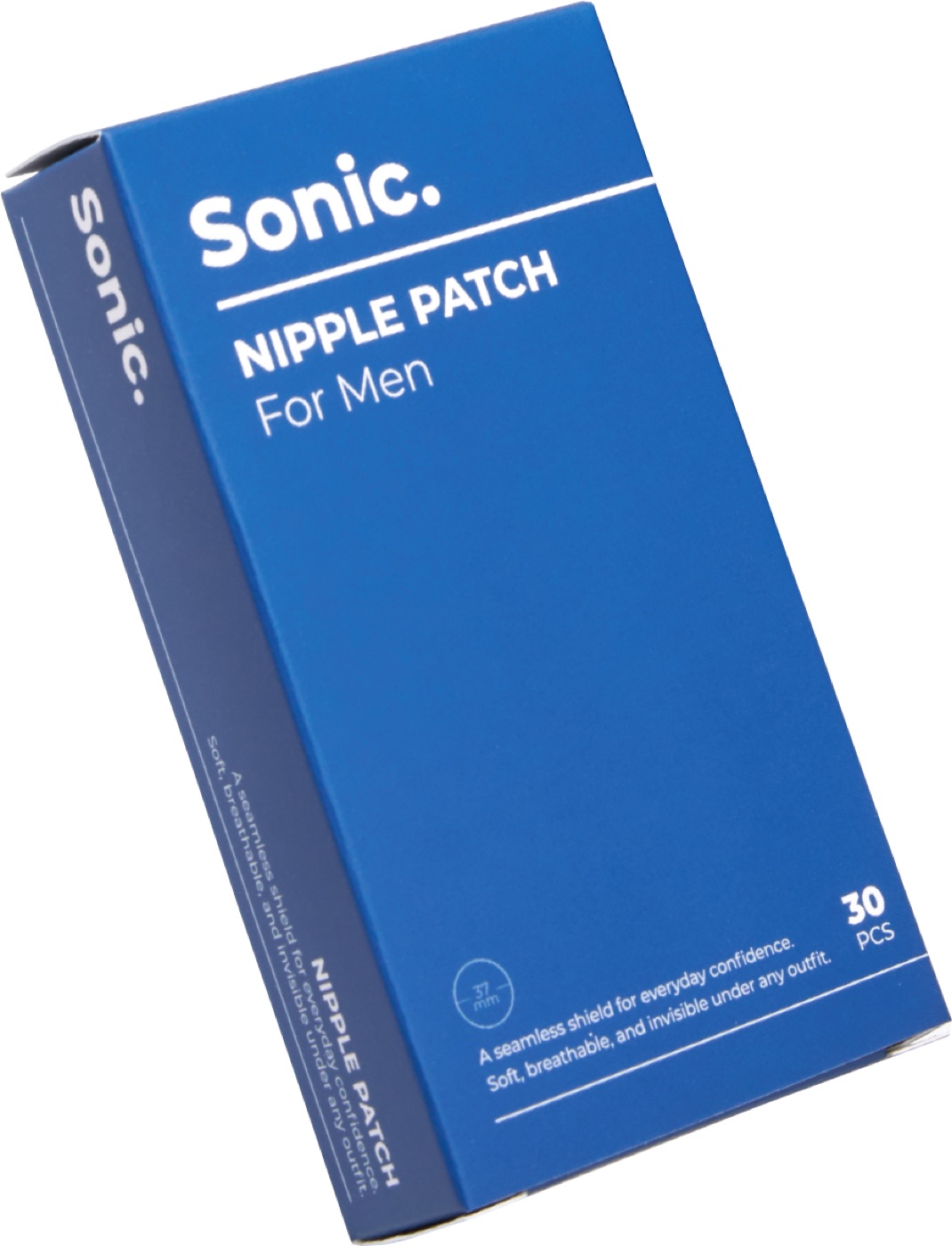
The patch is the easy part. Picking a good one is where people go wrong, because from the outside every product looks identical: a small beige circle in a small box. They are not identical. Here's what actually separates one that vanishes under a white shirt from one that makes things worse.
Thickness: the whole ballgame
This is the spec nobody lists and the one that decides everything. A thick patch solves the original problem and creates a new one — now you have a visible disc under your shirt instead of a visible point. Under thin white cotton, a bulky patch reads as a circle, and a circle is harder to explain than the thing you were hiding.
A good patch is thin enough that you stop noticing it's on within about a minute. If you can feel a distinct edge when you run your hand over your shirt, your shirt can show it. The Sonic Nipple Patch is built to sit essentially flat against the skin — the goal is that the fabric drapes as if there's nothing underneath, because functionally there isn't.
Edges: tapered, not stamped
Related, but worth its own point. Cheap patches are die-cut from flat material, which leaves a blunt 90-degree edge all the way around. That edge catches light and catches fabric. Under a matte heavy tee you'll never see it. Under a thin linen shirt in July sun, you will.
What you want is a tapered or feathered edge that thins toward the perimeter so there's no hard transition line. Hold a patch up to a window before you commit — if the edge looks like a cliff, it'll look like one under your shirt too.
Adhesive: skin-safe, not aggressive
There are two failure modes and both are bad. Weak adhesive means the patch migrates over the course of a day — you find it somewhere near your ribs at 4pm. Aggressive adhesive means it stays put beautifully and then takes a layer of you with it in the shower.
The sweet spot is a medical-grade skin-safe adhesive that holds through a full day of body heat and normal sweat, then releases cleanly. Practical test: a good patch survives a full workday plus dinner and comes off without you bracing yourself first. If a product's own instructions tell you to soak in warm water and peel slowly, that's a tell.
Tone: match your skin, not "nude"
"Nude" is not a color. A patch made in one generic beige shade will read correctly on a small slice of people and read as a pale spot on everyone else — which, again, is worse than the problem you started with. Under a white shirt this matters most, since white transmits the most light and shows the most contrast.
Match to your chest, not your face or forearms — your chest is usually lighter than either. If you're between two tones, go slightly darker. A patch a shade dark disappears into shadow; a patch a shade light glows.
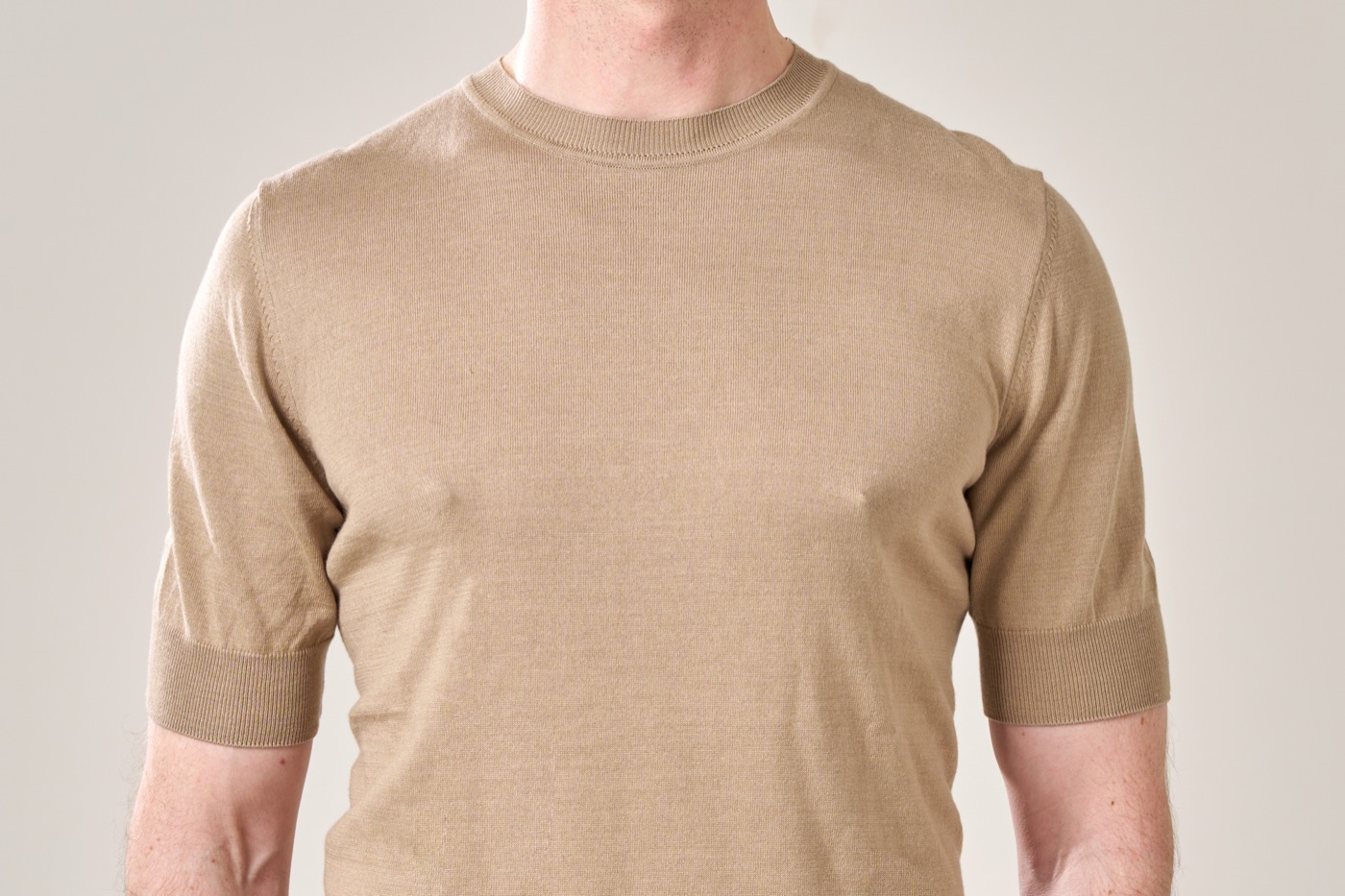
Fabric-by-fabric: where patches earn their money
Not every shirt needs one. Knowing which do is how you stop overthinking it in the morning.
- White tees and white dress shirts. The hardest case in menswear and the main reason to own patches.
- Fine-gauge knitwear and cashmere. Soft fabrics cling and follow every contour. A patch is what makes a thin crewneck wearable without a jacket over it.
- Polos and thin merino. Especially in light colors, especially when the fabric is a single layer.
- Linen. Loose weave, backlit constantly, and worn in exactly the season where an undershirt is unbearable.
- Bright and pale colors generally. Pink, sky blue, sand, pale grey — the shades most men quietly eliminated from their wardrobe.
- Anything black and heavy. Skip it. You don't need one.
Count and cost per wear
Patches are consumable, so judge them on cost per wear, not sticker price. A pack of 30 pairs at a reasonable price that you actually reach for every morning is a better buy than a boutique pack of 5 you ration. Buy enough that you never do the mental math about whether today's shirt "deserves" a pair — that hesitation is how you end up back in the black tee.
Also: check whether they're single-use. Reusable ones exist, but the adhesive degrades with each wear and the middle of a workday is a bad time to find out where in that cycle you are.
The part nobody says out loud
The reason to solve this isn't grooming. It's that a very small physical detail has been quietly editing your wardrobe for years — deciding which shirts you buy, which you keep folded, and whether you take the jacket off at dinner. Solving it takes about ten seconds in front of a mirror and gives you back an entire category of clothing.
That's the whole pitch. If you want the version we make, the Sonic Nipple Patch for men is thin, tapered, skin-safe, and designed to be forgotten about by 9:05am.
FAQ
Are men's nipple patches noticeable under a white shirt? A good one isn't — the thin profile and tapered edge mean there's no disc outline, and a matched skin tone means no pale spot. A thick, blunt-edged patch absolutely can be, which is why thickness and edge finish are worth checking before you buy.
How long does one pair last? A full day, including a normal amount of sweat and body heat. Treat them as single-use: put a fresh pair on in the morning, peel them off at night. Trying to stretch a pair across two days is how you get one falling off mid-meeting.
Do they hurt to remove? Not if the adhesive is skin-safe and sized for chest skin. It should peel like a bandage on your arm, not like waxing. Anything that requires warm water and a slow count of ten is too aggressive for daily wear.