

Reusable vs Disposable Nipple Patches: Which One Actually Disappears Under Your Shirt?
If you're comparing reusable vs disposable nipple patches, you've already made the important decision — you're done letting a thin white tee decide what you wear. Now it's just a spec question. And it matters more than the marketing lets on, because the difference between a patch that vanishes and one that shows as a faint disc under your shirt comes down to about four details.
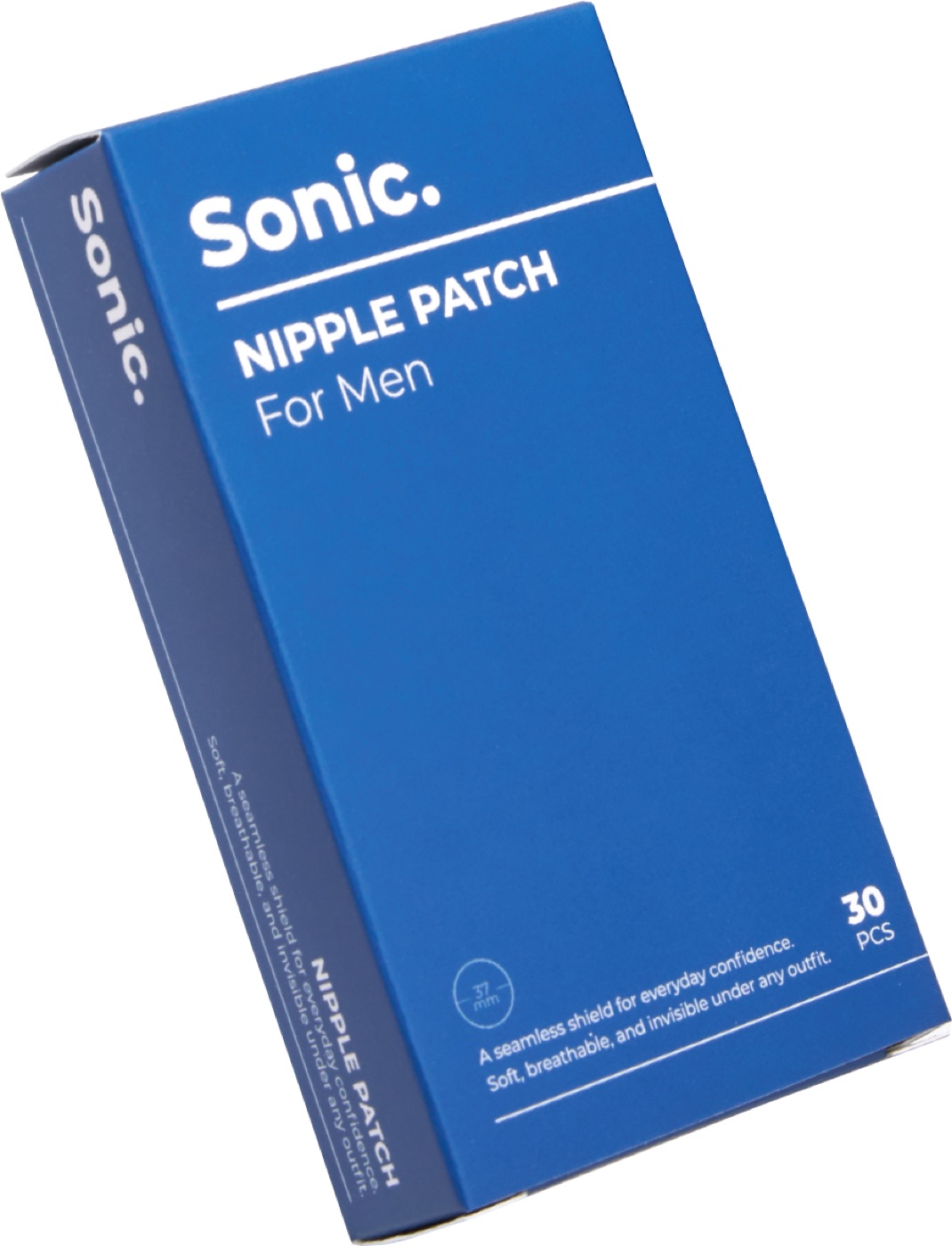
Here's what actually separates good from bad, and which type wins for the way you dress.
The short answer
Disposable patches win for anything thin, soft, or light-colored. They're made to be worn once, so they can be thinner, edged better, and adhesive-backed across the whole surface — which is exactly what you need under a white oxford or a fine-gauge knit.
Reusable patches (usually silicone) win on cost per wear, and they're fine under thicker or darker fabric. But silicone has to be thick enough to survive washing, and that thickness is the thing you see under a cashmere crewneck.
Now the details that actually decide it.
1. Edge feather — the #1 thing people get wrong
Look at the rim of the patch. If it's a clean stamped edge with a uniform thickness, that edge creates a shadow line under thin fabric. You will not see it in the mirror at home; you will see it in a photo someone takes of you at lunch.
What you want is a tapered, feathered edge that thins out to nothing at the perimeter. That's what makes a patch read as skin instead of as a coaster. Most reusable silicone can't feather this way — a paper-thin silicone edge tears after a couple of washes, so manufacturers keep it blunt.
The Sonic Nipple Patch is built around this: thin body, feathered rim, no visible step-off under a white tee.
2. Thickness, measured against your worst shirt
A useful test: hold the patch against a white t-shirt with fabric over it in bright, overhead light — office lighting, not your bathroom. Bright overhead light is the enemy; it's what makes outlines pop.
- Under thick cotton, oxford cloth, flannel, denim shirts — almost anything works. Reusable silicone is genuinely fine here.
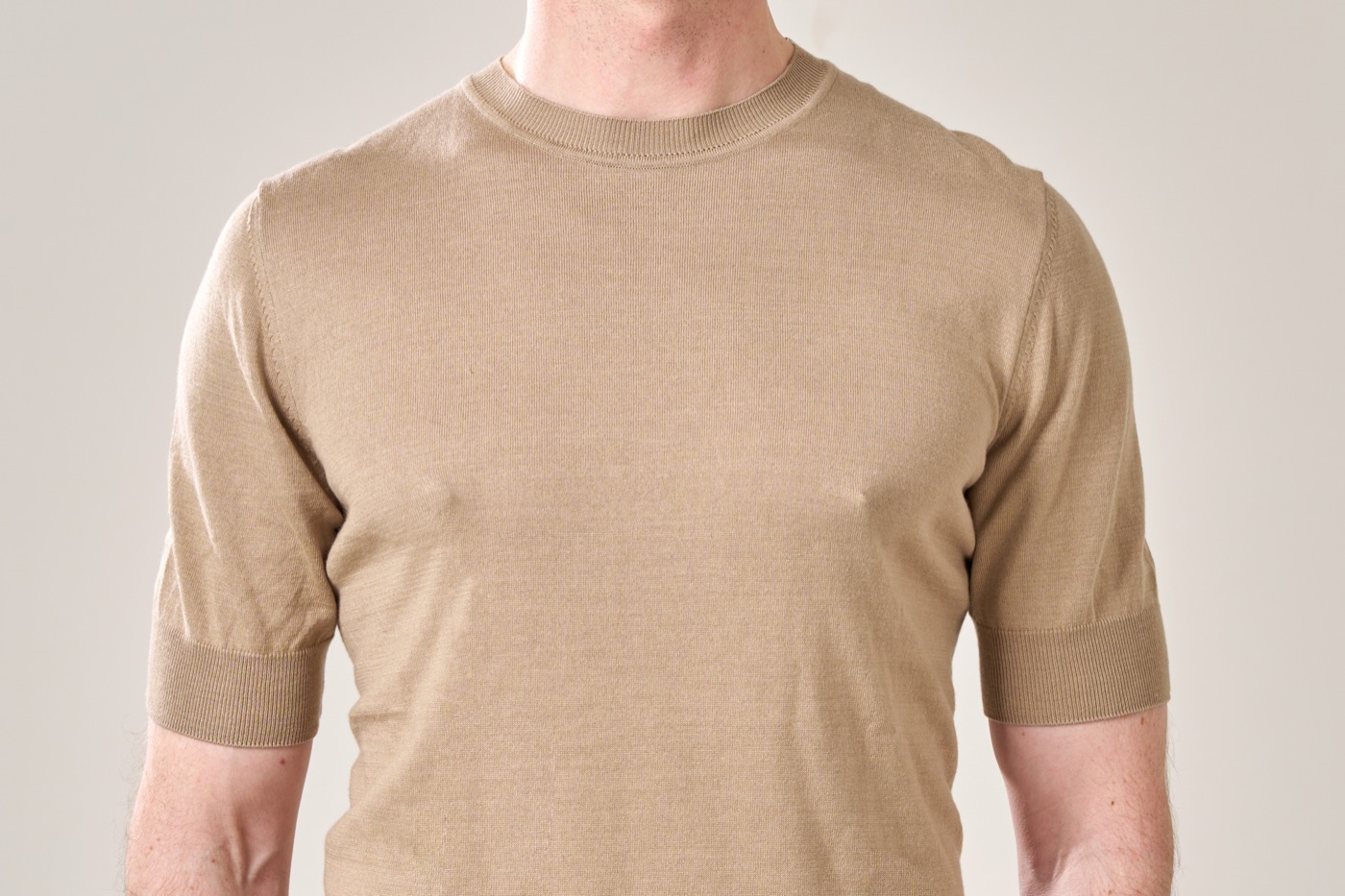
- Under white jersey tees, poplin dress shirts, linen, fine merino, cashmere, silk-blend polos — you need thin. Reusable silicone at 0.6–1mm starts showing as a raised circle, especially where the fabric drapes and catches light.
Since the whole reason to buy these is to wear the shirts you've been avoiding, optimize for the second list. There's no point buying a patch that only works under fabrics that already hid the problem.
3. Adhesive: full-surface vs ring
Cheap patches put adhesive only in a ring around the edge. That's why they lift at the center, bubble, and then show a ring outline through your shirt by 3pm.
You want adhesive across the full back surface — it bonds flat, so there's no air pocket to catch light. This is another place reusables struggle: silicone re-grips by tackiness, and that tack degrades with every wash and every bit of skin oil. Wash five, it's still holding. Wash twenty, you're pressing it back down in a bathroom stall.
Also check: skin-safe medical-grade adhesive, not craft adhesive. If a patch stings coming off or leaves a red ring, that's a bad adhesive, not "normal."
4. Skin tone — matte matters more than the shade
Two things. First, get near your actual tone; a patch two shades off shows as a pale spot under thin white cotton, because white fabric is translucent, not opaque.
Second — and people miss this — the finish matters more than the exact shade. A slightly glossy patch reflects light differently than skin and creates a subtle bright spot. Matte finish, even at an imperfect shade match, disappears better than a glossy perfect match.
What this means for your wardrobe
This is the part worth being honest about. Most men who search this have spent years quietly editing themselves: black tees only, thick fabrics only, jacket stays on, one hand doing that casual arms-crossed thing in every photo. The point of a good patch isn't chafing or the gym — it's the white linen shirt in July. The cashmere crewneck. The pale blue oxford. The bright polo you liked in the store and never wore.
For that job, thin and disposable wins on the merits. Grab a pack of Sonic Nipple Patches, keep a few in your dopp kit and a couple in your work bag, and stop making wardrobe decisions around one detail nobody else was ever going to bring up.
Quick comparison
| Disposable | Reusable silicone | |
|---|---|---|
| Under white tees / fine knits | Invisible | Often visible outline |
| Cost per wear | Higher | Lower |
| Grip after sweat / a long day | Consistent | Degrades with washes |
| Edge | Feathered | Blunt |
| Travel / packing | Easy, flat | Needs a case, needs washing |
FAQ
Are reusable nipple patches ever the better choice? Yes — if you're wearing thick cotton, flannel, or dark colors and you want the lowest cost per wear. They just can't be thin enough to disappear under white or fine-gauge fabric, which is usually the exact reason people buy patches.
How many washes do reusable silicone patches actually last? Manufacturers often claim 20–30. In practice, tack drops noticeably after about a dozen washes and faster if you're using anything oily on your skin. Once the center lifts, the outline shows.
Do disposable patches hold up through a full day and some sweat? A good one does — full-surface medical-grade adhesive holds through a workday, a commute, and a warm room, then peels off cleanly without pulling skin.