

How to Choose Skin Colored Nipple Patches That Actually Disappear
Most guys buy their first pack of skin colored nipple patches for one reason: there's a shirt in the closet they love and never wear. A white tee. A pale blue oxford. That cashmere crewneck someone gave you two Christmases ago that's still folded, tags on, because you tried it once in the mirror and immediately put a jacket over it.
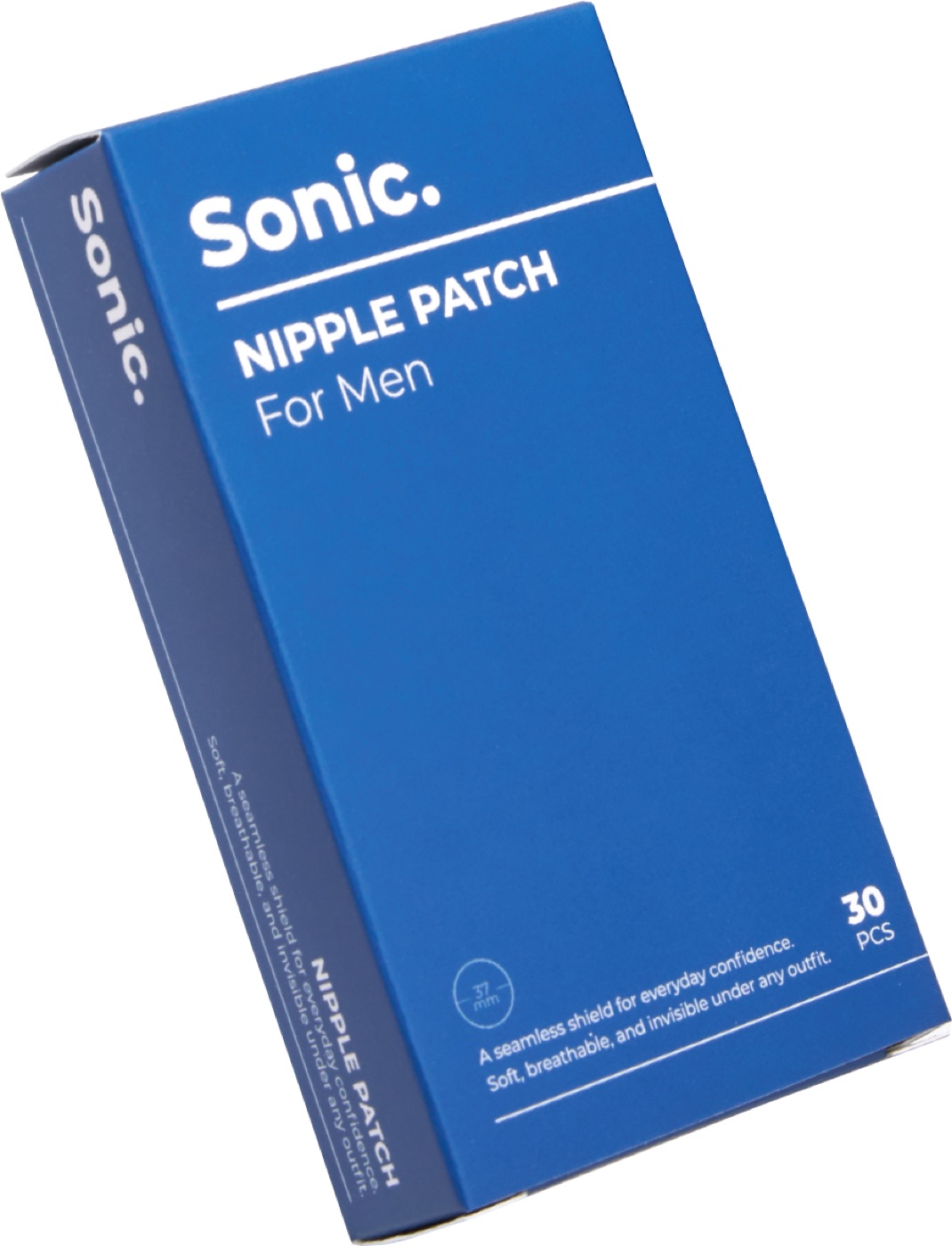
The patch is a two-dollar fix for a three-hundred-dollar wardrobe problem. But not all of them work, and the bad ones fail in a specific, embarrassing way — they replace a nipple outline with a circle outline, which is somehow worse. Here's what separates the ones that vanish from the ones that don't.
The edge matters more than anything else
This is the whole game. A patch can be perfectly skin-toned and still show up under a thin shirt if it has a hard, flat edge where it stops.
What you want is a tapered edge — the patch thins out toward the rim until it's basically nothing, so there's no step for the fabric to catch light on. Cheap patches are die-cut from a uniform sheet: same thickness at the center as at the border. Under a white cotton tee, that border throws a faint shadow ring. You've solved one problem and bought another.
Quick test when your patches arrive: put one on, wear a white tee, and stand in front of a window with the light behind you. Backlight is brutal and honest. If you can trace a circle, the edge is too thick. The Sonic Nipple Patch is built around this — feathered edge, matte finish — because the entire point is that nobody, including you, notices it.
Skin tone: closer is better, but matte beats exact
You'll see brands sell three or four tone options, and yes, matching your skin is worth doing. But under a shirt, the thing that gives a patch away isn't a slight tone mismatch — it's sheen. A patch with any gloss to it reads as a bright spot through thin fabric, even in the right color.
So the priority order is: matte finish first, tone second, size third. If you're between two tones, go slightly lighter rather than darker. A shade too dark reads as a dark disc under a white shirt; a shade too light just blends into the fabric.
Size: bigger isn't safer
The instinct is to buy the largest patch available for maximum coverage. Wrong instinct. A patch should extend maybe a centimeter past the areola — enough to flatten and sit flush, not so much that you're wearing a coaster on your chest. Oversized patches wrinkle when you move, and a wrinkle under a fitted knit is far more visible than anything you were trying to hide in the first place.
Roughly 5–6 cm diameter covers most guys. If a brand only sells one size and it's huge, that tells you they designed for the packaging photo, not the shirt.
Adhesive: skin-safe, not shipping-tape strong
There's a tradeoff brands love to ignore. Aggressive adhesive stays on through anything and takes a layer of you with it. Weak adhesive is comfortable and peels off halfway through dinner.
What you actually want is a medical-grade or hydrocolloid-style adhesive — the kind used on wound dressings. It holds against skin warmth and sweat for a full day, releases cleanly, and doesn't sting on removal. If a product page won't tell you what the adhesive is, assume it's the cheap acrylic kind and expect a red ring.
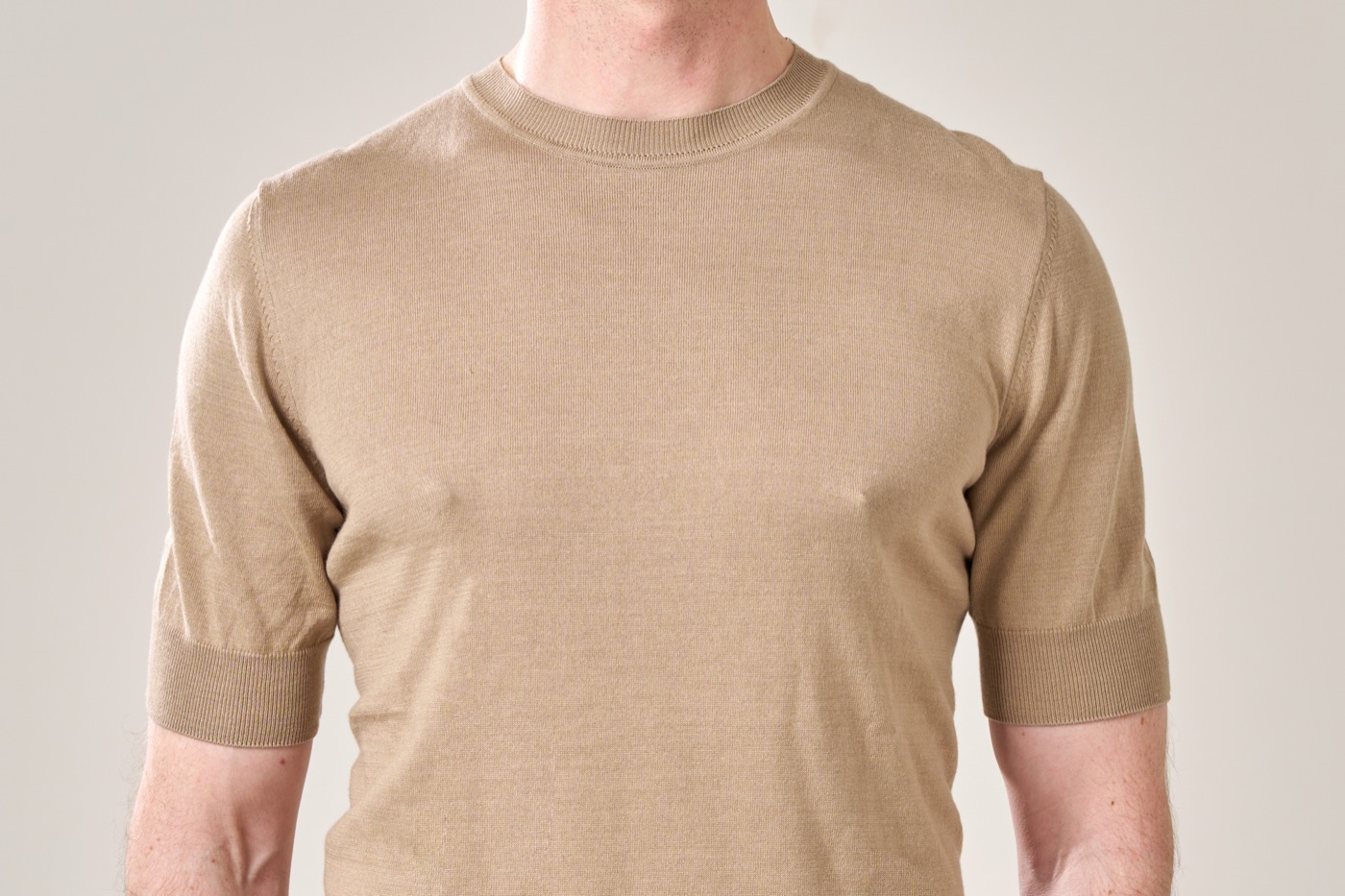
Also: single-use is a feature, not a downgrade. Reusable silicone patches lose tack after a few wears and start lifting at the edge — which is exactly the failure mode you're paying to avoid.
Test them against your worst shirt, not your safest
Here's the thing about buying skin colored nipple patches: you're not really buying stealth, you're buying back the half of your closet you stopped touching.
So don't validate them under a navy oxford. Put them under the shirt that made you self-conscious in the first place — the thin white tee, the light linen, the fine-gauge merino, the pale polo. That's the test that matters, and it's the reason to own them. Fabric-based workarounds all point the same direction: thicker, darker, layered. Which is a wardrobe strategy, technically, if your goal is to dress like a stagehand.
A good skin-tone nipple patch for men removes the constraint entirely. White tee in July, no undershirt. Cashmere with nothing under it, the way it's supposed to be worn. Linen on holiday. The patch isn't the point — the point is you stop doing the discreet lean-forward check every time you pass a reflective surface.
The quick checklist
Before you buy, confirm:
- Tapered, feathered edge — no hard rim under backlight
- Matte finish — gloss is what shows, not tone
- Sensible size — ~5–6 cm, not maximum coverage
- Named skin-safe adhesive — holds a day, peels clean
- Multiple tone options — and pick the lighter of two
Four out of five is fine. Miss the first one and none of the rest matters.
FAQ
Will skin colored nipple patches show under a white t-shirt? Not if the edge is tapered and the finish is matte. What shows through thin white cotton is a hard rim or a glossy surface — not the color itself. Check yours in backlight before you trust them.
How long do they stay on? A quality patch with medical-grade adhesive holds for a full day, including a warm commute and a few hours of sweat. Body oils and moisturizer are the main thing that shortens it — apply to clean, dry skin and you'll get the full wear.
Can I wear them under a fitted knit or cashmere? That's the best-case use for them. Fitted knitwear is where outlines are most obvious, and a thin tapered patch flattens the area without adding a visible layer — which is more than you can say for an undershirt under cashmere.